
Dubai taxi companies to be rated under new five-star system; passengers can view operator scores inside vehicles
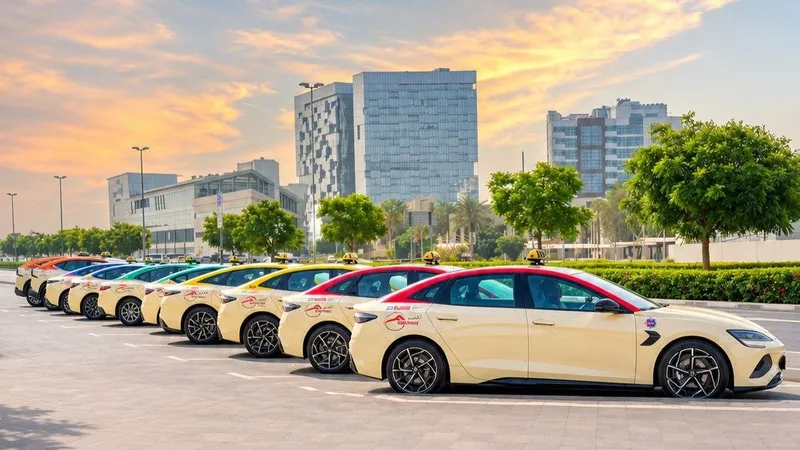
Dubai’s Roads and Transport Authority (RTA) has announced the launch of a new five-star rating system to assess the performance of taxi companies in the emirate. Companies will be evaluated based on service quality, passenger satisfaction, safety, vehicle cleanliness and the use of smart technologies, with five-star operators receiving seven additional taxi plates.
The rating system, unveiled on Sunday, November 15, 2026, is designed to improve service quality, foster competition among taxi companies and enhance the passenger experience.
Companies that earn a five-star rating will receive seven additional taxi plates, as well as a certificate of appreciation and a trophy from the RTA. Four-star companies will receive five additional taxi plates.
Companies rated three stars or below will be subject to measures aimed at improving their performance and service quality.
Company ratings to be displayed on screens inside taxis
One feature of the new system is that taxi company ratings will be displayed to passengers.
The RTA said company ratings would appear on smart screens inside taxis, allowing passengers to see the assessment level of the operator providing the service.
Signs displaying each company’s rating will also be installed at the entrance to its headquarters.
Mattar Al Tayer, Director General and Chairman of the Board of Executive Directors of the RTA, said the initiative goes beyond measuring company performance and aims to establish a framework for continuously improving service quality.
He said directly linking assessment results to incentives would encourage companies to improve service quality, enhance safety, expand smart solutions and strengthen overall performance.
The RTA also said it would periodically review the assessment framework. However, the published report did not specify when the first company ratings would be announced.
Taxi companies to be assessed against 18 indicators
The new rating system is based on four main pillars and evaluates company performance against 18 indicators.
1. Environmental sustainability
This category assesses the number of electric and hydrogen-powered vehicles operated by each company, the driver-to-vehicle ratio, the proportion of productive kilometres out of the total distance travelled, and the average trip rating.
2. Use of smart technologies
Criteria in this category include the proportion of trips booked through electronic platforms, the use of electronic payments, the availability of a driver management system, and compliance with regulations governing drivers’ working hours.
3. Responsiveness and safety
This category assesses serious traffic accidents, service-quality violations, complaints involving dangerous driving, passenger satisfaction, and driver satisfaction with electronic booking services.
4. Reliability and service quality
Indicators in this category include the number of taxis available during peak demand periods, the number of vehicles active on electronic booking platforms, drivers’ trip-request acceptance rates, and vehicle cleanliness.
According to the RTA, the criteria are designed to assess company performance and encourage the continuous improvement of services.
Five taxi companies operate more than 14,000 vehicles in Dubai
Five companies currently operate in Dubai’s taxi sector: Dubai Taxi Company, Kabi Taxi, National Taxi, Arabia Taxi and Metro Taxi.
According to official figures, Dubai’s taxi fleet exceeded 14,346 vehicles in 2025, including 12,380 electric or hybrid vehicles.
Dubai taxis completed more than 120 million trips that year, transporting over 209 million passengers.
Taxis accounted for 27 per cent of all users of public transport, shared mobility services and taxis in Dubai.
Dubai plans to convert all taxis and limousines to clean vehicles by 2040
The launch of the five-star rating system comes as the RTA continues implementing plans to expand Dubai’s environmentally friendly fleet.
According to the authority, hybrid vehicles now account for more than 72 per cent of Dubai’s taxi and limousine fleet, while fully electric vehicles have reached 19 per cent, exceeding the target set for 2026.
The RTA aims to convert Dubai’s entire taxi and limousine fleet to electric and hydrogen-powered vehicles by 2040.
Its long-term goal is to achieve fully emission-free public transport by 2050.
Alongside these initiatives, work is continuing to expand fast-charging infrastructure and test autonomous electric vehicles in partnership with international companies.