
UAE Rail Link to Five Other GCC Countries by 2030; Project 56% Complete
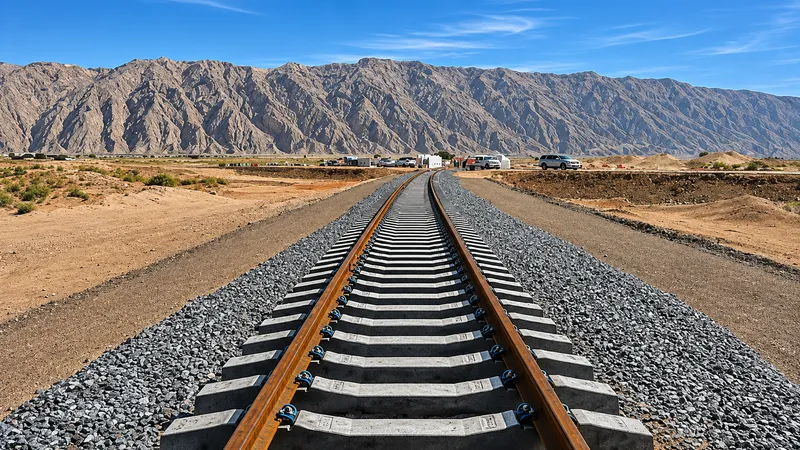
The Secretary-General of the Gulf Cooperation Council said nearly 56% of the joint railway project linking the council’s six member states has been completed, with full operations targeted for December 2030. The 2,117-kilometre rail network will connect the UAE, Saudi Arabia, Oman, Qatar, Bahrain and Kuwait, carrying both passengers and freight.
According to Khaleej Times, GCC Secretary-General Jasem Mohamed Albudaiwi provided an update on the project on Sunday, November 8, 2026, as the six member states signed an agreement in Bahrain.
The agreement, signed at Al Riffa Al Zahir Palace, establishes a common framework for the implementation and operation of the railway lines, allowing member states’ rail networks to connect and operate as an integrated system.
UAE rail route
According to the GCC General Secretariat, the planned railway route will begin in Kuwait and extend to Dammam in Saudi Arabia. The network will also connect to Bahrain and Qatar.
The railway will then enter the UAE from Saudi Arabia and continue through Abu Dhabi and Al Ain into Oman, reaching Muscat via Sohar.
In addition to creating a new travel route between countries in the region, the project is intended to facilitate freight transport and promote regional trade, tourism and economic activity.
According to the GCC Railways Authority, passenger trains are designed to travel at speeds of up to 200 kilometres per hour, while freight trains will operate at speeds ranging from 80 to 120 kilometres per hour.
Previous estimates by the GCC General Secretariat indicate that the network could carry more than 8 million passengers and 95 million tonnes of freight by 2045.
Connecting the UAE rail network to Saudi Arabia and Oman
In the UAE, the regional railway is expected to connect to the country’s national rail network.
The GCC General Secretariat previously confirmed that the UAE had completed construction of the railway line to the Saudi Arabian border.
The UAE and Oman are also developing the 238-kilometre Hafeet Rail project, which will connect Sohar in Oman to the UAE’s national rail network.
Strengthening alternative transport routes in the region
The agreement comes as countries across the region seek to strengthen transport links and establish alternative freight routes following recent disruptions to regional maritime transport.
Speaking at a meeting of GCC transport ministers in Manama, Albudaiwi said disruptions to maritime routes and rising transport and insurance costs had further highlighted the importance of developing the region’s transport and logistics networks.
He also thanked the UAE, Saudi Arabia and Oman for providing alternative freight routes during Iran’s attacks, saying these measures helped maintain supply chains for other GCC member states.
Albudaiwi said integrating transport networks and diversifying supply routes would strengthen member states’ ability to respond to potential future crises and help maintain market stability.
Transport and storage sector grows 5.7%
The GCC Secretary-General also said the transport and storage sector across the council’s member states recorded real growth of 5.7% in 2025, making it one of the fastest-growing non-oil economic sectors in the region.
He noted that GCC leaders had ordered a study in April 2026 to examine ways of strengthening logistics integration among member states.