
The National Interest: UAE Emerges as Leading Ukraine War Mediator, Facilitating 8,500 Prisoner Exchanges and Hosting Trilateral Talks
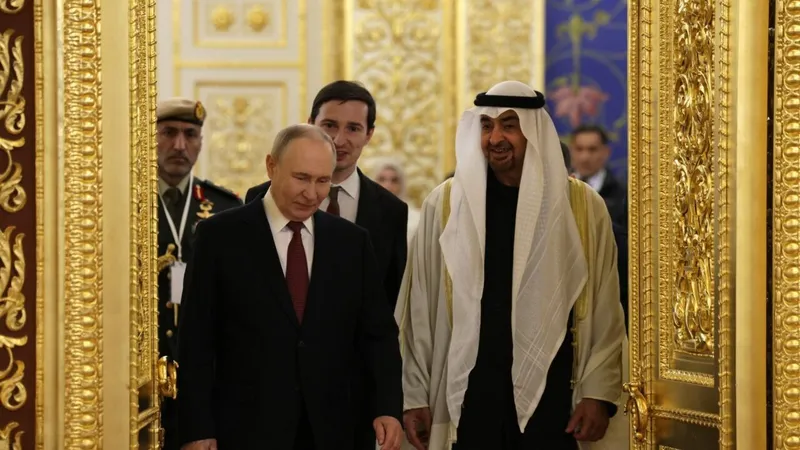
The US publication The National Interest has described the UAE as the leading mediator in the Russia-Ukraine war, saying Abu Dhabi has cemented its role in diplomatic efforts to end the conflict by mediating the exchange of 8,537 prisoners and hosting the latest round of trilateral talks involving the US, Russia and Ukraine. Samuel Ramani, an associate fellow at the UK-based Royal United Services Institute and the author of the analysis published on Friday, November 13, 2026, said the UAE’s role was not an example of “passive neutrality” but the result of a policy of “strategic non-alignment.”
According to official UAE Ministry of Foreign Affairs figures, 8,537 prisoners were exchanged in 27 rounds of Abu Dhabi-mediated exchanges between Russia and Ukraine from the start of the war in February 2022 to October 23, 2026. The latest announced exchange, on October 23, involved 540 prisoners, with 270 from each side. Ramani wrote that the UAE’s role in prisoner exchanges is one of the few issues on which both sides agree. Vladimir Putin thanked UAE President Sheikh Mohamed bin Zayed Al Nahyan ahead of the latest talks, while Volodymyr Zelenskyy described Abu Dhabi as a trusted platform for diplomacy.
The talks held in Abu Dhabi on Tuesday, November 10, and Wednesday, November 11, were mediated by the US and hosted by the UAE. They marked the first trilateral discussions among representatives of Washington, Moscow and Kyiv after a nine-month hiatus. The meetings, the third round of trilateral talks in Abu Dhabi, led to an agreement in principle between Russia and Ukraine on a large-scale prisoner exchange. US envoy Jared Kushner said Washington was working to secure the largest prisoner exchange since the war began.
However, the talks failed to produce a final agreement on key issues, including Russian-controlled territories, ceasefire terms and security guarantees. Davyd Arakhamia, a member of the Ukrainian delegation and head of the ruling Servant of the People party’s parliamentary faction, described the round as one of the most difficult negotiations, saying the Russian delegation had arrived with “very strict instructions.”
After the Abu Dhabi talks concluded, US envoys Jared Kushner and Steve Witkoff met Putin in Moscow on Thursday, November 12, before meeting Zelenskyy in Dublin. Kushner later said efforts were under way to expand the talks to include European countries, but Russian officials stressed that no final decision had been made on the format of Europe’s participation.
In the latest development, Putin said on Thursday, November 19, that Russia was not opposed in principle to European representatives joining the peace talks, but that their positions first needed to be clarified. He said Moscow had invited European representatives to visit Russia and set out their views before a decision was made on the framework for further negotiations.
Meanwhile, Zelenskyy said on November 14 that Russia and Ukraine were discussing a potential exchange of 1,200 to 1,300 prisoners from each side. In an interview with Sky News Arabia on November 16, he thanked the UAE for its role in prisoner exchanges and expressed hope that another round of peace talks would be held in the country. However, the timing of the new exchange and the final number of prisoners involved remain unclear.
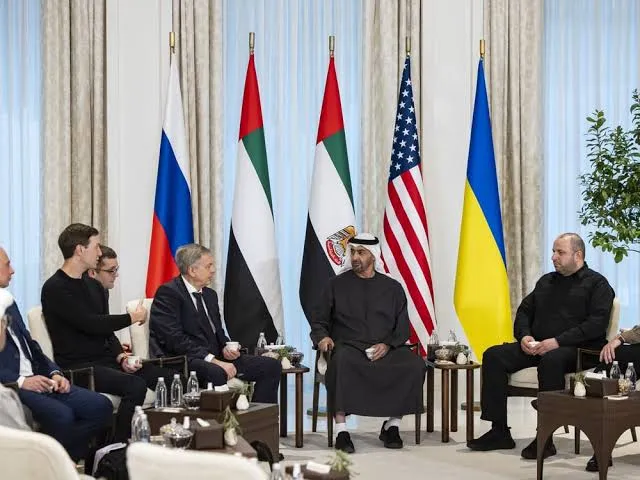
The National Interest writer attributes the UAE’s diplomatic standing to the country’s cautious policy since the start of the war. In March 2022, Abu Dhabi voted in favour of a UN General Assembly resolution condemning Russia’s invasion, but had earlier abstained from a UN Security Council vote on a resolution condemning the attack. The UAE also abstained from the vote to suspend Russia from the UN Human Rights Council and did not join efforts to completely isolate Moscow.
According to Ramani, this approach has enabled the UAE to maintain effective relations with both sides in the war, unlike some other diplomatic initiatives. He argues that Abu Dhabi’s diplomatic channel has gained importance following the stalling of parallel Saudi efforts to advance US talks with Russia and Ukraine in early 2025, and Putin’s continued refusal to negotiate directly with Zelensky.
The UAE’s extensive demographic and economic ties with both countries also underpin its diplomatic role. According to estimates cited in The National Interest analysis, about 150,000 Russian citizens live in the UAE, while Russian nationals have registered around 13,500 companies in the country. The UAE is also home to an estimated 30,000 Ukrainians.
In the economic sphere, the UAE-Ukraine Comprehensive Economic Partnership Agreement came into force on July 1, 2026. The UAE’s economic partnership agreement with the Eurasian Economic Union, comprising Russia, Belarus, Kazakhstan, Kyrgyzstan and Armenia, also took effect on October 6, 2026. The writer argues that these agreements demonstrate Abu Dhabi’s efforts to strengthen its economic and strategic position in Eurasia alongside its role as a mediator.
Cooperation between the UAE and Ukraine has extended beyond the economy. In March 2026, the two countries agreed to expand security and defence cooperation, including efforts to counter aerial and drone threats. In October 2022, the UAE also announced $100 million in humanitarian aid for civilians affected by the war in Ukraine, at the direction of Sheikh Mohamed bin Zayed.
The National Interest also highlights the UAE’s importance along Central Asian trade routes. The writer argues that Abu Dhabi’s expanding economic ties with Eurasian countries not only strengthen its regional influence but also support the development of alternative international trade routes amid disruptions to regional maritime transport, particularly in the Strait of Hormuz.
Ramani concludes that the UAE’s membership in BRICS, alongside its strategic relationship with the United States, has enabled Abu Dhabi to become a venue for sensitive international talks that would ordinarily be difficult to hold between rival powers. However, while Abu Dhabi’s growing diplomatic role does not mean the war is nearing an end and a lasting peace remains difficult to achieve, The National Interest writer concludes that the path to ending the war in Ukraine increasingly runs through Abu Dhabi.