
Dubai Airport Handles More Than 50 Million Passengers in Nine Months, Set to Exceed 70 Million by Year-End
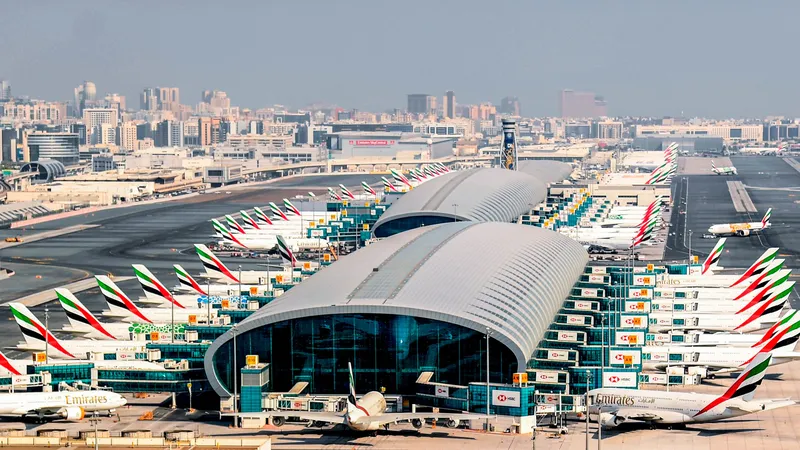
Dubai International Airport (DXB) welcomed 50.4 million passengers in the first nine months of 2026. However, passenger traffic fell 28.1 per cent compared with the same period last year, following aviation industry disruptions caused by regional military conflict early in the year.
According to Dubai Airports, DXB handled 18.8 million passengers in the third quarter, with August the busiest month of the period at 6.6 million passengers.
Passenger traffic from the beginning of the year to the end of September declined 28.1 per cent compared with the same period in 2025. However, the third-quarter decline narrowed to 22.1 per cent, compared with the drop recorded in the first half of the year, indicating that the recovery in air traffic is gaining momentum.
Paul Griffiths, CEO of Dubai Airports, said: “We expect to welcome more than 70 million passengers this year. As more airlines return to Dubai and the flight network strengthens, our focus is on meeting future growth while making journeys simpler and smoother.”
He added that innovation was central to this approach, with streamlined processes and the removal of operational bottlenecks allowing the airport to use its existing facilities more efficiently.
According to Griffiths, combining technology with optimised working practices can create additional capacity without expanding the airport’s current footprint, while also improving the passenger experience.
Air traffic recovery gathers pace
The decline in passenger traffic during the third quarter was smaller than the drop recorded in the first half of the year.
Dubai International Airport welcomed 13 million passengers in the second quarter, bringing total traffic in the first half of the year to 31.5 million, down 31.3 per cent from the same period in 2025.
Dubai Airports previously cited the return of international airlines, improved flight connectivity and higher seat load factors as signs of sustained demand and market recovery.
A total of 57 airlines currently operate at Dubai International Airport, connecting it to 235 destinations across 101 countries. Nearly 50 international airlines were operating at DXB at the end of the first half of the year.
India is Dubai airport’s largest market
India was Dubai International Airport’s largest country market in the third quarter, with 2.6 million passengers.
It was followed by Saudi Arabia with 1.4 million passengers and the United Kingdom with 1.3 million. Pakistan accounted for 800,000 passengers, the United States for 640,000 and Germany for 480,000.
Among city destinations, London ranked first with 784,000 passengers, followed by Mumbai with 528,000, New Delhi with 525,000, Riyadh with 500,000 and Jeddah with 490,000.
Several leisure routes also recorded significant growth in the third quarter. Traffic on the Milan route rose 20 per cent, Phuket 17 per cent, Cape Town 14 per cent, Barcelona 13 per cent and Denpasar 11 per cent.
In September, passengers whose origin or final destination was Dubai accounted for 49 per cent of total traffic, while transit passengers represented 51 per cent.
This ratio varies by season. The share of passengers travelling directly to or from Dubai typically increases during winter, as tourist arrivals rise and the city hosts a range of events.
Flight numbers and cargo volumes decline
Total aircraft movements, including take-offs and landings, reached 243,000 in the first nine months of the year, down 27.6 per cent from the same period last year. Of these, 92,800 movements were recorded in the third quarter.
Air cargo volumes during the period reached 1.215 million tonnes, down 23.2 per cent from the same period last year. The third quarter accounted for 464,000 tonnes.
The average seat load factor during the first nine months of the year was 74 per cent, three percentage points lower than in the same period last year.
The average number of passengers per aircraft movement was 211, down 0.8 per cent year on year.
99.9 per cent of passengers cleared departure passport control in under 10 minutes
The airport maintained strong operational performance in the third quarter.
A total of 99.9 per cent of departing passengers cleared passport control in under 10 minutes, while 99.9 per cent of arriving passengers waited less than 15 minutes at passport control.
Security screening wait times were also under five minutes for 99.7 per cent of passengers.
Dubai International Airport processed 48 million bags during the first nine months of the year, with 91 per cent delivered within 45 minutes of the aircraft’s arrival.
Baggage handling accuracy stood at 99.73 per cent, while the mishandled baggage rate was 2.67 bags per 1,000 passengers.
Record 95.2 million passengers in 2025
Dubai International Airport recorded the busiest year in its history in 2025, welcoming 95.2 million passengers.
In addition to DXB, Dubai Airports also operates Al Maktoum International Airport, also known as Dubai World Central (DWC).
The DWC expansion plan, announced in May 2024, involves an investment of $35 billion and forms part of Dubai’s long-term strategy to increase the city’s aviation capacity.