
UAE Per Capita GDP to Reach 16 Times Iran’s This Year
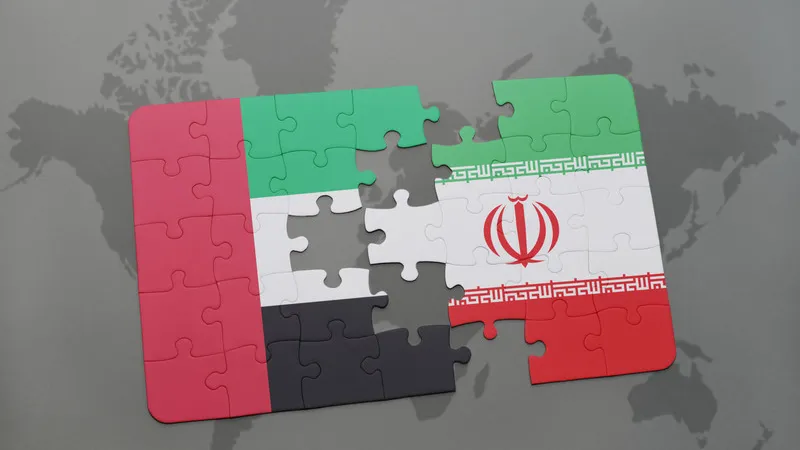
The UAE’s GDP per capita is projected to reach $57,109 in 2026, 16 times Iran’s figure, which is expected to fall to $3,548. The figures were published in the International Monetary Fund’s World Economic Outlook report, released in Bangkok on Tuesday, October 13, 2026.
The report estimates the UAE’s total economy at $661 billion and Iran’s at $312 billion, ranking them as the world’s 29th- and 52nd-largest economies, respectively. The UAE has a population of about 11.6 million, less than one-seventh of Iran’s 88 million, yet its economy is 2.1 times larger.
The IMF forecasts that both economies will contract in 2026, but Iran’s contraction will be almost twice as severe as the UAE’s: 7.6 per cent compared with 3.9 per cent. The IMF’s forecast for the UAE is 7 percentage points lower than its April estimate. The Statistical Centre of Iran also reported a 10.1 per cent decline in the country’s GDP during the first three months of the Iranian year, from late March to late June 2026. The IMF expects the UAE economy to rebound by 7.7 per cent in 2027, contingent on shipping routes returning to normal and the Strait of Hormuz reopening. Iran’s economy is forecast to grow by 3.6 per cent that year. The inflation gap is wider: the IMF estimates inflation at 4.5 per cent in the UAE and 78.6 per cent in Iran in 2026.
Official UAE figures are more optimistic than the IMF’s projections. In its September 2026 quarterly report, the Central Bank of the UAE forecast economic growth of 1.6 per cent in 2026 and 10.4 per cent in 2027. Non-oil sector growth was estimated at 1.3 per cent and 4.9 per cent, respectively. The bank said the 2027 surge would be driven mainly by 26.8 per cent growth in the oil sector, with oil production targeted to reach 5 million barrels per day.
The Federal Competitiveness and Statistics Centre, the UAE’s official statistics authority, said the country’s real GDP grew by 0.4 per cent year-on-year in the first half of 2026, reaching AED 961.9 billion. The non-oil sector grew by 1.8 per cent over the same period, increasing its share of the UAE economy to 79.2 per cent. The authority said the economy contracted by 2.1 per cent in the second quarter as regional developments and travel disruptions affected tourism, transport and trade.
The UAE dirham is pegged to the US dollar, while the rial’s depreciation generally makes Iran’s economy appear smaller in dollar-based comparisons. The dollar traded at about 112,000 tomans on Tehran’s open market in mid-November 2025 and closed at 268,900 tomans on Monday, November 16, 2026.
Using these figures and assuming a stable exchange rate, Iranians in the UAE calculated that if Iran’s GDP per capita grows by 8 per cent annually from 2027 while the UAE’s remains unchanged, it would take about 36 years for Iran to reach the UAE’s current level. If Iran’s overall economy grows at the same rate, it would take about 10 years to equal the current size of the UAE economy.
Purchasing power parity also accounts for differences in price levels, reversing the comparison between the two economies. On this basis, Iran’s economy, at $1.77 trillion, is about 1.8 times the size of the UAE’s $969 billion economy. However, the per capita gap remains: the UAE’s figure of $83,704 is about four times Iran’s $20,159.