
Nuclear Energy Becomes Abu Dhabi’s Largest Source of Clean Power
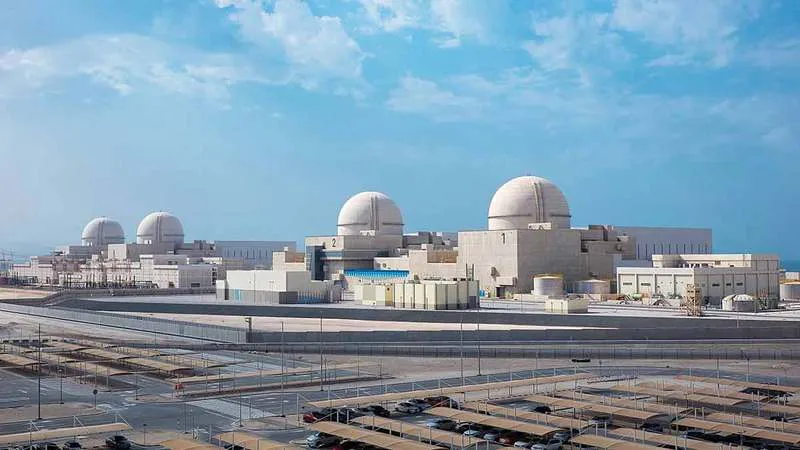
Nuclear energy has become Abu Dhabi’s largest source of clean electricity, accounting for 39.3% of total power generation in 2025, up from 37.3% in 2024.
According to the Emirates Water and Electricity Company’s (EWEC) 2025 annual statistical report, nuclear power generation increased from 39,000 gigawatt-hours in 2024 to 42,379 gigawatt-hours in 2025, a rise of about 8.7%. Nuclear energy therefore supplied nearly 40% of all electricity generated.
Growth in nuclear power generation, alongside solar and wind energy, pushed the share of clean sources to nearly 46% of total electricity generation. By contrast, the share of fossil fuels declined from 56% in 2024 to 54.3% in 2025.
Total electricity generation reached 107,847 gigawatt-hours in 2025, up about 3.2% from 104,519 gigawatt-hours in 2024.
Solar photovoltaic generation reached 6,426 gigawatt-hours in 2025, accounting for 6% of total output. Concentrated solar power generated a further 270 gigawatt-hours, while wind energy produced 250 gigawatt-hours.
Meanwhile, fossil fuel-based generation remained broadly unchanged at around 58,500 gigawatt-hours. However, its share of total output declined as nuclear and renewable energy expanded.
Electricity demand to rise by about 74% by 2033
Alongside the expansion of clean power generation, the report forecast that domestic peak electricity demand, including grid losses, will rise from 14,410 megawatts in 2025 to 25,053 megawatts in 2033, an increase of nearly 74%.
Total demand managed by EWEC, including electricity exports and associated losses, is also expected to increase from 19,343 megawatts in 2025 to 30,462 megawatts in 2033, a rise of about 57.5%.
AI, data centres and electric vehicles included in power demand forecasts
The report includes a separate category titled “Projects”, covering the Gemstone, Enigma and Data AI projects, as well as demand from electric vehicles.
Electricity demand in this category is projected to rise from just 2 megawatts in 2025 to 46 megawatts in 2026, before surging to 1,258 megawatts in 2027.
The figure is expected to reach 2,023 megawatts in 2028 and increase to 2,338 megawatts by 2033, according to the report.
Emarat Al Youm reported that the sharp increase in demand in this category, particularly between 2026 and 2028, indicates that AI and data centre projects could become a significant driver of grid load growth, as servers, processing systems and cooling equipment require a continuous electricity supply.
The trend will also increase the need for reliable round-the-clock generation capacity, grid expansion, energy storage solutions and peak-demand management. This could further strengthen the role of stable, low-carbon nuclear power alongside the continued expansion of solar energy.
However, the projected 2,338 megawatts for 2033 cannot be attributed entirely to AI and data centres, as the category also includes other projects and electric vehicle demand. The report does not provide a separate breakdown for each component.
Growth in residential and industrial demand
According to the report’s forecast, residential demand will rise from 5,186 megawatts in 2025 to 6,575 megawatts in 2033, an increase of about 27%.
Commercial demand is also expected to increase from 5,384 megawatts to 6,419 megawatts, representing growth of about 19%.
Industrial demand is projected to rise from 991 megawatts to 1,678 megawatts, an increase of nearly 69%.
Electricity load associated with ADNOC is also expected to nearly double, rising from 1,347 megawatts in 2025 to 2,616 megawatts in 2033.
In terms of annual electricity demand, total consumption across Abu Dhabi, Al Ain and Al Dhafra reached 85,778 gigawatt-hours in 2025, up about 4.7% from 81,955 gigawatt-hours in 2024.
Power sector carbon emissions intensity falls by more than 23%
As the share of clean energy increased, the carbon dioxide emissions intensity of electricity generation also fell significantly.
According to the official report, carbon dioxide emissions intensity declined from 243 grams per kilowatt-hour of electricity generated in 2024 to 187 grams in 2025, a drop of more than 23%.
The figure is forecast to fall to about 108 grams of carbon dioxide per kilowatt-hour by 2035, with the report giving a precise estimate of 107.7 grams.
The growing share of nuclear and renewable energy, together with improved power generation efficiency, were cited as factors expected to reduce emissions intensity in the coming years.
Overall, EWEC forecasts that domestic peak electricity demand, including grid losses, will increase by nearly 74% by 2033. This growth makes the simultaneous expansion of clean power generation capacity and grid infrastructure a key priority in Abu Dhabi’s energy planning.