
Ship-to-ship transfers in Fujairah: The primary route for bypassing the Strait of Hormuz
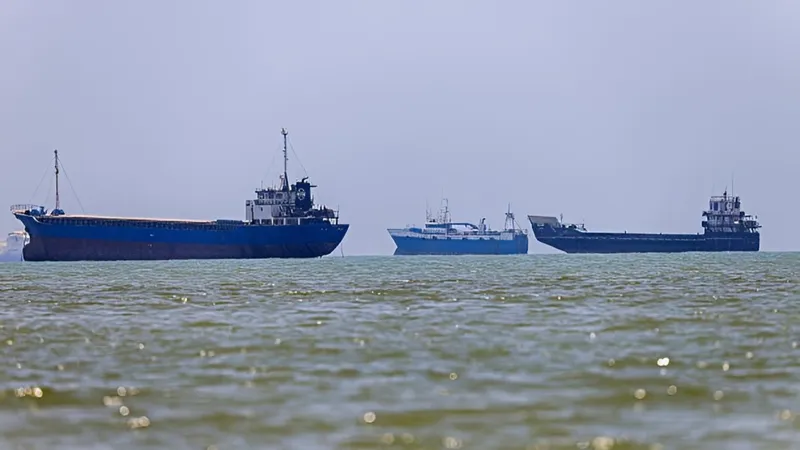
A new report highlights a shift in oil export routes for Arab nations, identifying the UAE’s Port of Fujairah and ship-to-ship transfer operations in the Sea of Oman as the primary alternatives for bypassing the Strait of Hormuz.
According to the HFI Institute, approximately 4.2 million barrels of oil are exported daily through this route. Iraq leads with 1.5 million barrels, followed by the UAE with 1.2 million, Kuwait with one million, and Saudi Arabia with 500,000 barrels. HFI is an energy research center that provides analysis on oil markets, strategic ports, and global supply and demand trends.
The report notes that targeting Very Large Crude Carriers (VLCCs) alone cannot halt Arab oil exports, as the oil is initially transported through the Strait of Hormuz using smaller Aframax tankers. It is then transferred to VLCCs near Oman’s Sohar Port or the UAE’s Port of Fujairah. HFI stated that this logistics chain has operated without interruption for the past three weeks through cooperation between Oman and other Arab nations.
In response to rising regional tensions, Arab countries have accelerated at least seven major oil transit projects to reduce reliance on the Strait of Hormuz. Once completed, these projects will redirect export flows toward the Red Sea, the Sea of Oman, and the Mediterranean Sea.
Business Insider reported that prior to the recent crisis, approximately 15 million barrels of oil passed through the Strait of Hormuz daily. However, regional governments now consider the waterway a high-risk bottleneck and have invested billions of dollars into developing alternative routes.
Among the most significant projects are the expansion of Saudi Arabia’s East-West pipeline to the Port of Yanbu on the Red Sea, the construction of a new UAE pipeline to Fujairah aimed at nearly doubling export capacity by 2027, and Iraq’s plans to transport oil through Turkey, Syria, and Jordan’s Port of Aqaba.
Analysts at Goldman Sachs estimate that these projects will add approximately 3.8 million barrels per day to export capacity outside the Strait of Hormuz by the end of 2027, potentially rising to 7.3 million barrels per day by the end of 2028. This capacity would enable nearly 60% of Gulf oil exports to bypass the Strait of Hormuz.
The report further predicts that the development of these routes could transform the Red Sea coastlines of Egypt, Sudan, Eritrea, and Djibouti into a major global energy corridor. Nevertheless, security threats in the Red Sea, high transportation costs, and the vulnerability of pipelines remain the primary challenges facing these initiatives.