
Dubai bans education staff from contacting students via personal phones and social media
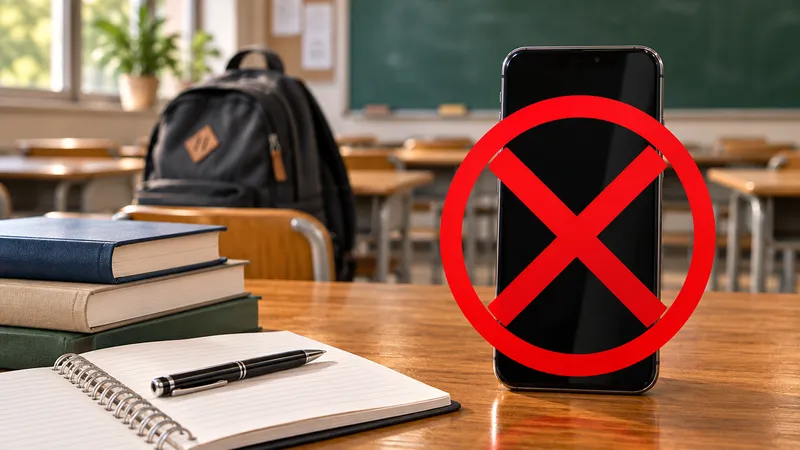
Dubai’s Knowledge and Human Development Authority (KHDA) has banned staff at private education institutions from using personal mobile phones, private contact details and personal social media accounts to communicate with learners under its new safeguarding framework.
Under the regulations, educational communication and teaching must be conducted exclusively through devices and platforms approved by the education institution. The requirement applies not only to teachers but to all adults who interact with learners at or on behalf of education institutions.
The regulations form part of the “Policy Framework for Safeguarding and Protecting Learners in Dubai Private Education Institutions”, issued by KHDA on November 10, 2026. The framework establishes consistent standards for preventing harm, identifying concerns early, reporting and addressing them, and safeguarding learners across Dubai’s private education sector.
What forms of communication are prohibited?
Under the “Professional Conduct and Safe Working Practices” section of the new framework, education institutions must prohibit staff from having personal or secretive relationships with learners, using private contact details, or using personal devices or social media to communicate with them.
All educational communication and activities must also be conducted through devices and platforms approved by the education institution.
In practice, the regulations mean teachers and other staff cannot use personal telephone numbers, personal WhatsApp accounts or personal social media profiles to communicate with learners.
The requirement is intended to maintain professional boundaries and ensure communication takes place through channels that can be monitored and subject to safeguarding measures.
What other restrictions apply to staff?
The KHDA framework also sets out a range of requirements governing staff conduct.
Education institutions must ensure staff do not accept unauthorised gifts, discriminate among learners, show favouritism or behave in ways that breach professional boundaries.
Clear guidelines must also be in place for the professional use of social media, photography and digital content involving learners.
Staff should work in open and visible settings wherever possible. When a one-to-one meeting or use of an enclosed space is necessary, clear arrangements must be in place to supervise and safeguard the learner.
KHDA also requires institutions to monitor staff suitability throughout their employment and take appropriate action if concerns arise about an individual’s conduct or fitness to work with learners.
Which institutions are covered by the regulations?
The new framework is not limited to private schools.
It applies to all private education institutions licensed or approved by KHDA in Dubai, including early childhood centres, private schools, higher education institutions, and technical and vocational education and training centres.
The requirements apply to both in-person and virtual learning environments.
The framework also covers all learners enrolled at these institutions and is not limited to those under the age of 18.
Institutions continue to have safeguarding responsibilities for learners aged 18 and above, although matters such as consent, confidentiality, reporting and referrals must take account of their legal status as adults.
All adults who work with learners, including instructors, volunteers, third-party employees and contractors, must be familiar with the institution’s code of conduct. The framework also requires staff to formally confirm their compliance with the institution’s code when they begin working there and at least once a year thereafter.
What changes does the new framework introduce?
Many private education institutions in Dubai already had internal policies to safeguard children and learners, but the new KHDA framework establishes common, mandatory standards across Dubai’s private education sector.
The standards cover areas including preventing and identifying harm, handling allegations and concerns, reporting safeguarding cases, staff conduct, digital safety and institutional accountability.
On digital safety, institutions must also have preventive and monitoring measures in place to address risks such as cyberbullying, social media use and the responsible use of technology, including artificial intelligence.
Institutions must also appoint a board-level or governing-body lead for learner safeguarding and establish a clear structure for managing safeguarding issues.
At the operational level, a Child Protection Coordinator or Designated Safeguarding Lead and relevant deputies must also be in place.
When does the ban on personal communication take effect?
Although a phased period of up to 12 months has been provided for the full implementation of some parts of the framework, not all requirements are covered by this grace period.
According to KHDA’s official implementation timetable, the rules on “professional boundaries” must be followed from the date the framework takes effect.
These rules include the ban on using private contact details, personal devices or social media to communicate with learners, as well as the requirement to use institution-approved devices and platforms.
Other requirements will be introduced in phases. For example, training for certain staff must be completed within three months, while a board-level safeguarding lead must be appointed within nine months. All other mandatory requirements must be fully implemented within 12 months.
KHDA said the framework was developed to establish consistent learner safeguarding standards across Dubai’s private education sector, strengthen institutional accountability and reduce the risk of inappropriate communication or conduct involving learners.