
Dubai launches new monitoring unit to curb e-scooter violations: A review of e-scooter regulations in Dubai
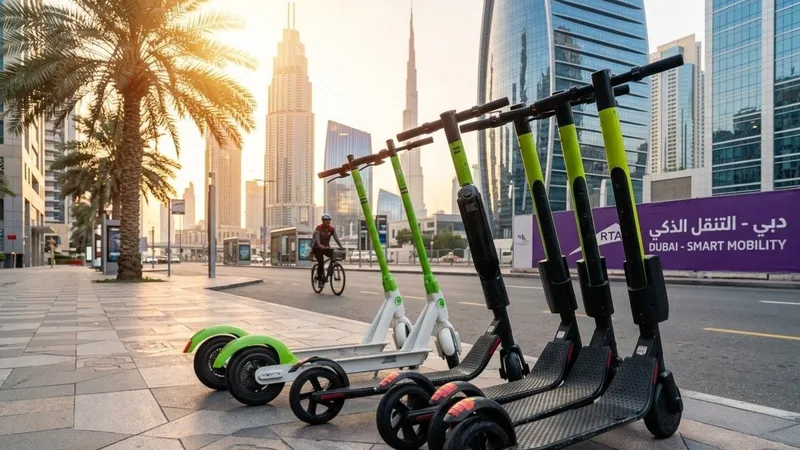
E-scooters weaving through pedestrians, riders without helmets, and children riding double; such scenes have become increasingly common in certain areas of Dubai.
With the rise of e-scooters and bicycles across the city, some argue that while regulations exist, they are not being universally followed. Experts now believe that stricter monitoring could improve safety for both riders and pedestrians.
On April 27, Dubai announced the launch of the Personal Means of Transport Monitoring Unit, a dedicated department to monitor e-scooter and bicycle users and address traffic violations. This unit will begin patrolling cycling tracks, main roads, and designated soft mobility zones across the emirate starting May 1, 2026.
What are the rules?
The following is a look at Dubai's clear regulations for e-scooter and bicycle users, introduced by the Roads and Transport Authority (RTA):
Riders must be at least 16 years old.
Use of designated tracks and lanes is mandatory where available.
In many areas, obtaining a free permit is required, which includes basic safety awareness.
Only one person is permitted per scooter.
Riding on pedestrian-only sidewalks is prohibited.
Riders must adhere to traffic signs and signals.
The use of safety equipment, such as helmets, is mandatory.
Violations can result in fines ranging from AED 100 to AED 300, depending on the nature of the offense. In some cases, the vehicle may be impounded.
If rules exist, what is the problem?
Experts suggest the primary issue is not a lack of legislation, but rather a lack of compliance.
Mustafa Al Dah, a UAE road safety expert, stated that many riders still do not use basic safety gear or possess a sufficient understanding of proper road conduct.
He added that some users are not fully aware of road rules, particularly when operating in vehicle lanes, which significantly increases the risk of accidents.
Why is stricter enforcement important?
Thomas Edelmann, founder and managing director of RoadSafetyUAE, said law enforcement plays a crucial role in improving road safety. He stated: One of the biggest risks we see in micro-mobility is that people simply do not follow the rules. The rules are clear, but many riders continue to ignore them. Enforcement is essential to ensure these regulations are actually followed.
Experts: Education is essential alongside monitoring
Experts argue that enforcement alone is insufficient to enhance e-scooter safety, noting that education also plays a key role.
Thomas Edelmann, founder of RoadSafetyUAE, noted that many children under the legal age operate e-scooters, often without helmets and sometimes riding double. According to him, when children observe adults ignoring the rules, it creates the impression that compliance is optional.
He emphasized that parents and schools must take a more active role in raising awareness and correcting user behavior.
Some residents believe the presence of monitoring units could establish more order. Imtiaz Pasha, a resident of Karama, said that when people know they are being watched, they tend to follow the rules more closely, and even a limited police presence can serve as a deterrent.
Experts say that as the use of e-scooters for short commutes increases, improving safety and developing appropriate infrastructure will become even more vital. According to Mustafa Al Dah, this trend could lead to the creation of more dedicated lanes for micro-mobility users in the future.