
Israel Completes Count of Regular Ballots: Netanyahu Bloc Wins 53 Seats, Opposition 48, Arab Parties 19
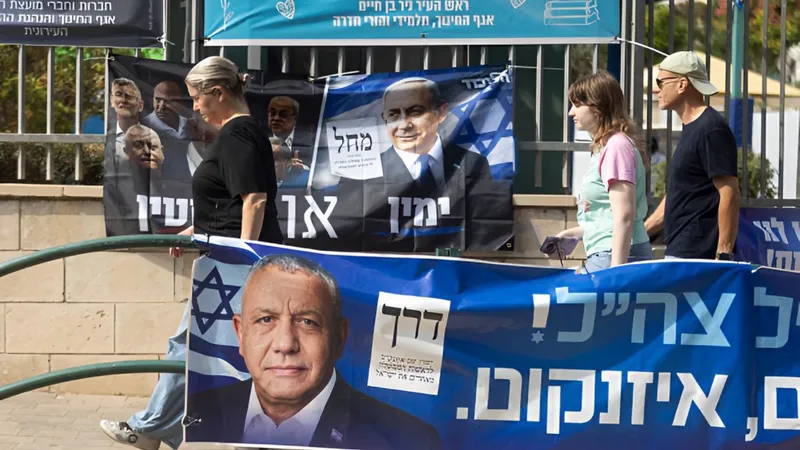
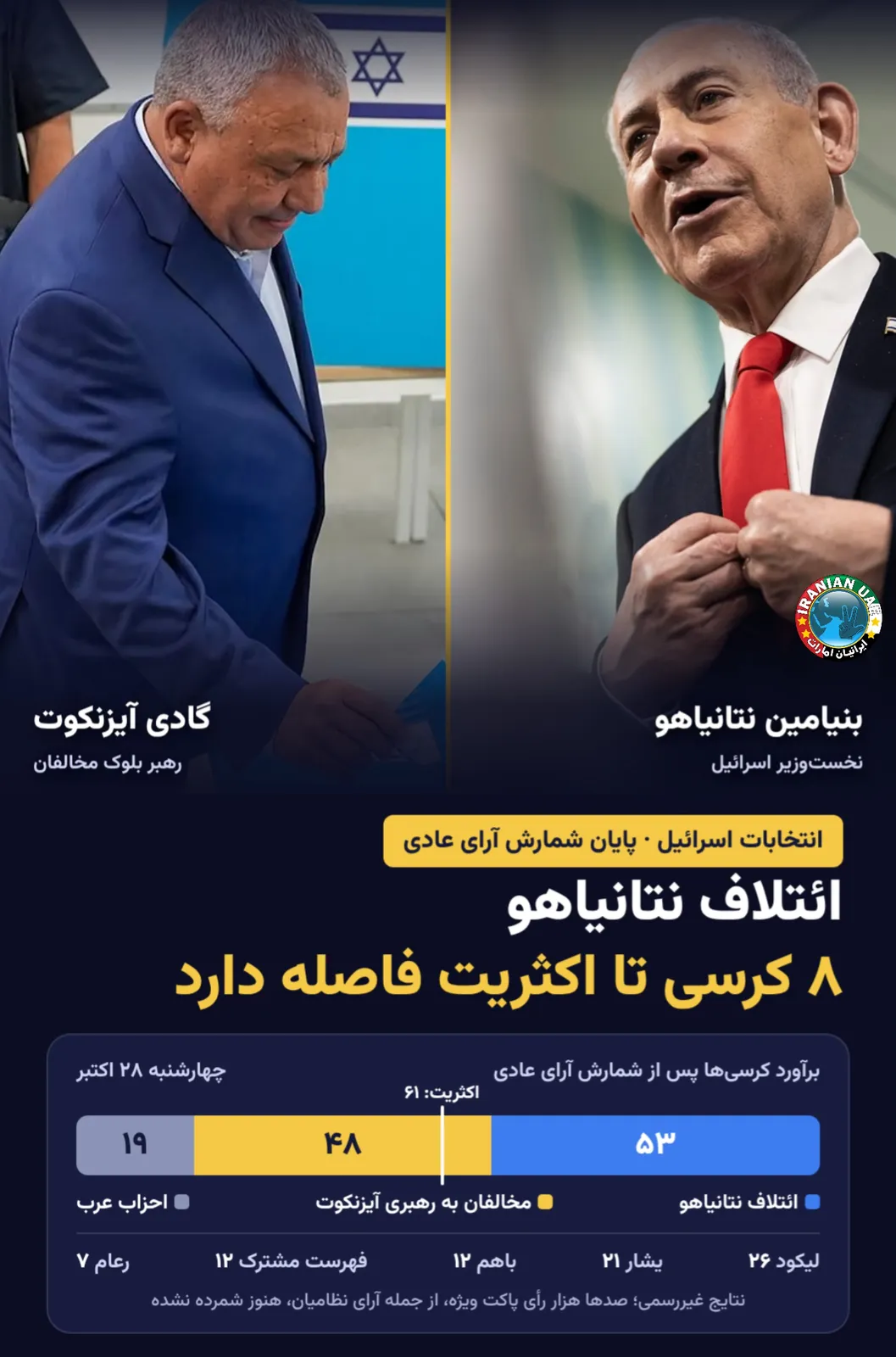
The counting of regular ballots in Israel’s parliamentary election, held on Tuesday, October 27, has been completed, with preliminary results showing Prime Minister Benjamin Netanyahu’s coalition ahead of his main opponents. According to the latest figures released on Wednesday, October 28, Netanyahu’s coalition is projected to win 53 seats, opposition parties led by Gadi Eisenkot 48 seats, and Arab parties a combined 19 seats in Israel’s 120-seat parliament. Neither of the two main blocs would secure the 61-seat majority required to form a government.
Israel’s Channel 12 reported that the counting of regular ballots, which account for about 86% of all votes cast, had been completed, while special ballots had yet to be counted. Based on the current results, Netanyahu’s Likud remains the largest party in the Knesset with 26 seats, followed by Eisenkot’s Yashar party with 21. Naftali Bennett’s Together party and the Joint List of Arab parties are each projected to win 12 seats, while the Democrats would take eight and Mansour Abbas’s Arab Ra’am party seven.
The election saw a strong voter turnout. According to Israel’s Central Elections Committee, turnout stood at 77.7% when polls closed, representing 5,695,682 voters. This was the highest turnout recorded at that stage since 1999 and 7.1 percentage points higher than in the 2022 election.
Under the current seat distribution, Netanyahu’s opponents and the Arab parties would hold a combined 67 seats. However, they have yet to agree on forming a joint coalition. Netanyahu’s bloc, with 53 seats, remains eight seats short of an outright majority. The formation of the next government will therefore depend on the final election results and negotiations among the parties.
Meanwhile, Israel’s Central Elections Committee said that between 430,000 and 480,000 votes cast in special envelopes, including ballots from military personnel, police officers, prisoners and diplomats, had yet to be counted. Counting will begin on Wednesday evening, with full results expected by the evening of Thursday, October 29, although delays until Friday remain possible. These ballots could alter the current distribution of seats.
Israeli President Isaac Herzog on Wednesday called on political parties to enter negotiations and seek to prevent another election. He said that after receiving the official results next week, he would begin consultations with Knesset factions to determine who should be tasked with forming a government.
The final official election results are due to be released on November 4, and the allocation of parliamentary seats will remain uncertain until then.