
How the Strait of Hormuz crisis transformed Fujairah into the UAE's economic lifeline
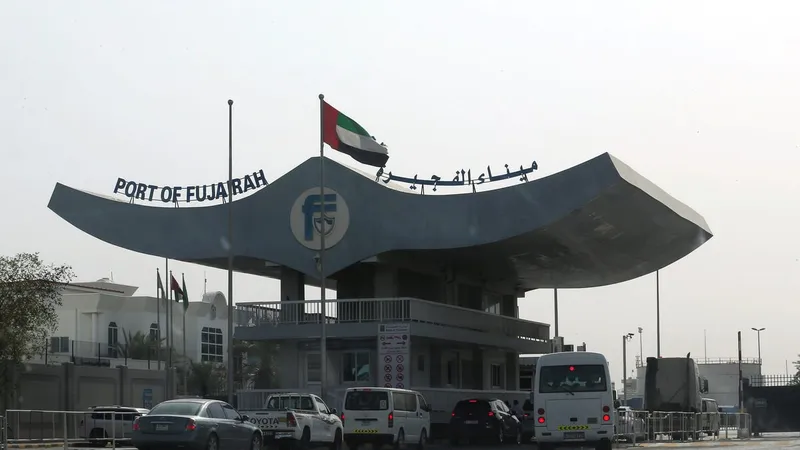
The ongoing crisis in the Strait of Hormuz and the disruption of commercial shipping and tankers have significantly altered Fujairah's position in the UAE's economic and security landscape, transforming this coastal emirate into one of the most critical alternative routes for the transport of oil and goods.
Fujairah is the only emirate located on the country's eastern coast, facing the Sea of Oman. This geographical position allows vessels to access the UAE's ports and energy infrastructure without entering the Strait of Hormuz—an advantage that has become more apparent than ever as regional tensions escalate. The Port of Fujairah is situated approximately 70 nautical miles from the Strait of Hormuz and serves as the UAE's only multi-purpose port on the east coast.
An analytical report by Al-Monitor indicates that oil, energy products, and other commodities have increasingly moved through Fujairah in recent months. This trend could transform the emirate from a less-prominent region into one of the primary economic beneficiaries of the Strait of Hormuz crisis.
In the latest development, DP World and the Fujairah Port Authority signed an agreement in principle on July 22 for a 50-year concession to construct two new terminals on the UAE's east coast. The plan includes the Al-Rughaylat container and multi-purpose terminal and the Dibba general cargo terminal.
Once completed, the Al-Rughaylat terminal will have an annual capacity to handle 2.5 million standard containers (TEUs), 1.7 million tons of general cargo, and the equivalent of 190,000 vehicles. The Dibba terminal will add up to 3.6 million tons per year to the UAE's general cargo handling capacity.
With the operation of these two projects, DP World's total container capacity in the UAE will increase from 19.4 million to nearly 22 million standard containers per year. Construction is set to be carried out in phases and is expected to take approximately 24 to 30 months from commencement.
The new terminals will be connected to Jebel Ali Port and the Jebel Ali Free Zone through DP World's land transport network. Consequently, shipments can be offloaded on the Sea of Oman coast and then transported by land to Dubai, Abu Dhabi, and other commercial centers in the UAE, bypassing the maritime route through the Strait of Hormuz.
Fujairah's strategic role is not limited to container shipping. For years, the Abu Dhabi National Oil Company (ADNOC) has been transporting crude oil produced in Abu Dhabi's onshore fields to the emirate's export terminal via the Habshan-Fujairah pipeline. This pipeline is approximately 406 kilometers long with a design capacity of nearly 1.5 million barrels of oil per day.
ADNOC has also accelerated the construction of a second pipeline to Fujairah, a project intended to nearly double the UAE's oil export capacity via routes outside the Strait of Hormuz by 2027. Sultan Ahmed Al Jaber, Managing Director and Group CEO of ADNOC, previously announced that approximately 50 percent of the construction work on this pipeline has been completed.
Collectively, these initiatives demonstrate that the UAE is establishing a parallel and more resilient route for foreign trade and energy exports. This path reduces the country's reliance on the Strait of Hormuz and Jebel Ali Port, though it will not serve as a complete replacement for them.
Upon the completion of port infrastructure, pipelines, logistics zones, and land networks, Fujairah could become one of the region's primary hubs for maritime trade, fuel storage, and energy exports in the coming years. This transformation is likely to bring extensive investment, employment, and urban development to the emirate.