
British Athlete Swims 15km in Strait of Hormuz Amid Tanker Explosions, Warns of War’s Environmental Toll
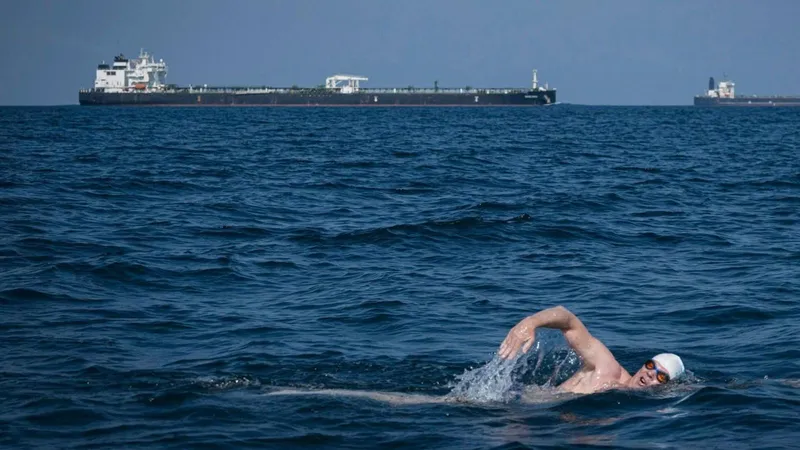
Lewis Pugh, a British endurance swimmer and United Nations ocean advocate, swam 15 kilometres through the Strait of Hormuz over three days to draw global attention to the devastating impact of war on the region’s environment and marine life.
According to Khaleej Times, the US-Iran war has caused extensive environmental damage in addition to human casualties and material losses—an issue environmental campaigners say receives too little attention.
The Strait of Hormuz, one of the world’s most important strategic waterways, lies within the territorial waters of Iran and Oman and connects the Arabian Gulf to the Gulf of Oman. At its narrowest point, between Oman’s Musandam Peninsula and the Iranian coast, the strait is about 39 kilometres wide.
Since US and Israeli attacks on Iran began on February 28, 2026, and the conflict spread across the Middle East, Iran has imposed restrictions on vessels passing through the waterway and targeted ships transiting without authorisation.
Three-day swim near burning ships
Pugh, a 56-year-old British swimmer and the first person appointed Patron of the Oceans by the United Nations Environment Programme, began his swim in waters near Oman’s Musandam Peninsula in the southern Strait of Hormuz. He completed it after rounding part of Cape Hormuz.
According to media reports, he swam a total of about 15 kilometres in several stages over three days. Despite the dangers posed by the military conflict, Pugh completed the route wearing only swimming trunks, goggles and a cap bearing the United Nations emblem.
After completing the challenge, he said on Instagram that his three-day swim in the Strait of Hormuz was intended to draw global attention to the devastating environmental consequences of war.
Speaking about the dangers he faced along the route, the swimmer said:
“Just 30 minutes after I began swimming, an oil tanker a few kilometres away was struck. The explosions sent shockwaves through the waters around me. Over the following days, I witnessed further attacks on commercial vessels and saw ships engulfed in flames.”
Pugh also released a video of his swim showing columns of smoke rising from burning ships not far from him.
Strait of Hormuz: A Vital Habitat for Marine Species
In addition to its strategic importance to global trade and maritime transport, the Strait of Hormuz supports a rich and diverse marine ecosystem.
The strait’s waters connect the deeper, cooler waters of the Gulf of Oman with the shallower, warmer waters of the Gulf, creating favourable conditions for a wide range of marine species.
Nutrient-rich currents in the area support the growth of plankton, coral reefs and seagrass beds, habitats that play a key role in preserving the region’s biodiversity.
The International Fund for Animal Welfare (IFAW) said in a report published in May that whale sharks pass through these waters seasonally, while Indo-Pacific dolphins remain in the area throughout the year.
Another important marine species in the region is the critically endangered Arabian Sea humpback whale population. Unlike many other humpback whales, this population does not migrate seasonally and lives mainly in the Arabian Sea and surrounding waters.
Scientists estimate that only about 100 whales from this population remain.
Around 7,000 dugongs, also known as sea cows, live in the region’s waters, and their survival depends on healthy seagrass beds.
IFAW has stressed that the Strait of Hormuz is not merely a transit route for these species but a vital habitat, the loss of which could seriously threaten their survival.
Warning of War’s Decades-Long Consequences
Lewis Pugh said that while people were enduring widespread suffering during the war, nature was another victim of the conflict—one that was not receiving sufficient attention.
Describing the Strait of Hormuz, he said:
“The Strait of Hormuz is one of the most beautiful places I have ever seen. Towering mountains rise above spectacular fjords. Coral reefs, mangrove forests and waters inhabited by dolphins, sea turtles and dugongs make this region one of the world’s great natural wonders.”
The swimmer added:
“Yet this extraordinary region is now caught in the middle of a war. Oil tankers, gas carriers and other commercial vessels are being attacked, and the environmental consequences will persist for decades.”
Pugh also called for an end to the conflict, the reopening of the Strait of Hormuz and the clean-up of pollution caused by the war.
Lewis Pugh’s Environmental Advocacy
Lewis Pugh has previously undertaken long-distance swims around the world to promote the protection of water resources and raise public awareness of environmental pollution.
In 2023, he swam about 500 kilometres along the Hudson River in the US state of New York to demonstrate how decades of pollution-control efforts could restore a damaged river.
After completing the swim, which took about a month, Pugh told reporters that the Hudson had been one of the world’s most polluted rivers 50 years earlier and that protecting clean, healthy rivers was essential.
He said that during New York’s industrial era, the colour of the river sometimes changed from one day to the next depending on the dyes and pollutants being discharged into it.
However, long-term clean-up programmes improved the river’s condition, allowing him to swim its course from its mountain headwaters to New York City without assistance.
The swimmer expressed hope that such efforts would inspire other countries and communities to restore polluted rivers.
Pugh has also swum in the waters of Antarctica, the Arctic and the Red Sea to remind the public of the need to protect water resources and provide a healthy environment for people and aquatic life.