
UAE Ranks Fourth Globally for Nuclear Facility Protection
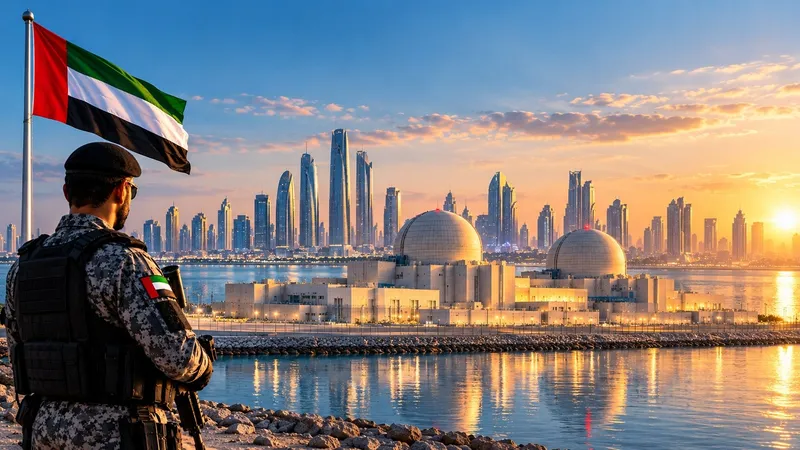
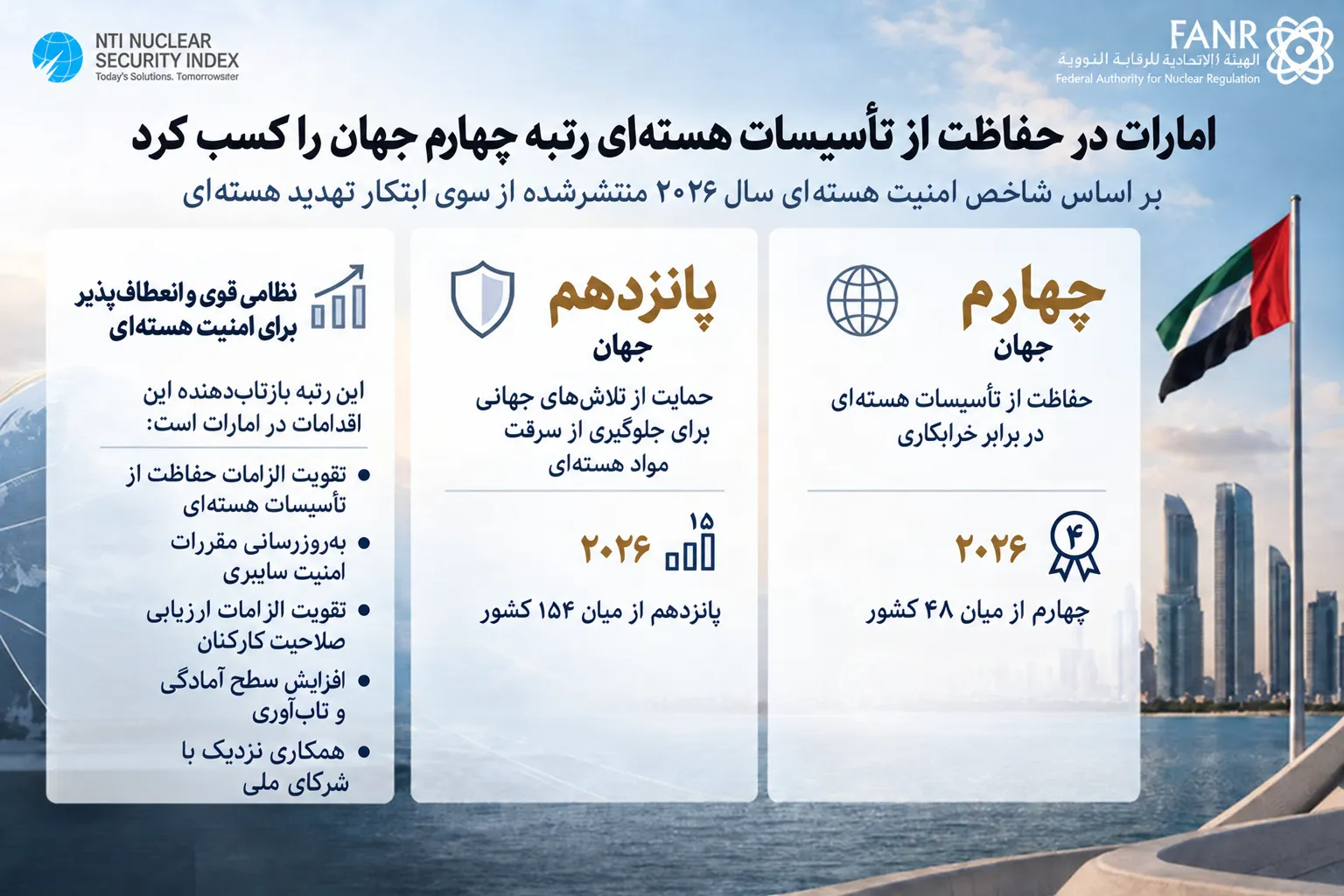
The United Arab Emirates made significant progress in the Nuclear Threat Initiative’s 2026 Nuclear Security Index, ranking fourth globally among 48 countries assessed for protecting nuclear facilities against sabotage.
The result reflects the continued development of the UAE’s nuclear security framework and its efforts to strengthen the protection and resilience of its peaceful nuclear energy programme.
The UAE also ranked joint 15th among 154 countries and territories assessed on their support for global efforts to prevent the theft of nuclear materials, scoring 85 out of 100. This represented a two-point increase from the revised 2023 baseline.
UAE Makes Significant Progress in Nuclear Security Index
The 2026 NTI Nuclear Security Index is an independent assessment of global nuclear security prepared by the Nuclear Threat Initiative in partnership with Economist Impact.
The index assesses countries and territories against a range of nuclear security criteria, including security and control measures, global norms, domestic commitments and capacity, and the overall risk environment.
The 2026 assessment showed that the UAE made significant progress in security and control measures, with its score in this category rising from 66 in 2023 to 86 in 2026.
These measures cover key elements of nuclear security, including physical protection, prevention of insider threats, incident response capabilities, cybersecurity and security culture.
NTI attributed the UAE’s progress to several measures, including stronger requirements for protecting nuclear facilities, updated cybersecurity regulations, enhanced personnel vetting requirements, and steps to improve preparedness and resilience.
UAE Nuclear Official Stresses Commitment to Security Standards
Hamad Al Kaabi, Director-General of the UAE Federal Authority for Nuclear Regulation (FANR), said: “The UAE’s strong performance in the 2026 NTI Nuclear Security Index reflects our long-term commitment to maintaining a robust, sustainable and continuously improving nuclear security regime.”
He added: “This result demonstrates the strength of the UAE’s regulatory framework, effective national coordination and our commitment to implementing high nuclear security standards.”
Highlighting the evolving nature of security threats, Al Kaabi said: “The nuclear security environment continues to evolve, requiring regulators, operators and relevant national entities to remain vigilant and prepared to address emerging risks.”
He added that the UAE would continue to strengthen its capabilities, draw on international experience and work closely with domestic and international partners to ensure the highest nuclear security standards.
UAE Cooperation with the International Atomic Energy Agency
Since its establishment, FANR has developed an integrated regulatory framework for nuclear security and has continuously strengthened it in line with national legislation and the UAE’s international commitments.
The authority is responsible for regulating nuclear facilities and nuclear and radioactive materials, conducting inspections and monitoring compliance with nuclear security requirements in coordination with relevant national entities.
The UAE also continues to work closely with the International Atomic Energy Agency and international partners to exchange expertise, strengthen national capabilities and contribute to global efforts to enhance nuclear security.
UAE Among 12 Countries Leading Global Nuclear Security Progress
In its 2026 assessment, the Nuclear Threat Initiative ranked the UAE among 12 countries recognised as new drivers of global progress in nuclear security.
The group includes countries that have sustained domestic improvements, supported other governments and strengthened engagement with international organisations.
The UAE’s performance in the 2026 Nuclear Security Index reflects its commitment to continuous improvement and to maintaining a security regime capable of responding to evolving risks while helping strengthen the global nuclear security architecture.