
Abu Dhabi unveils new fleet of smart, specialised ambulances
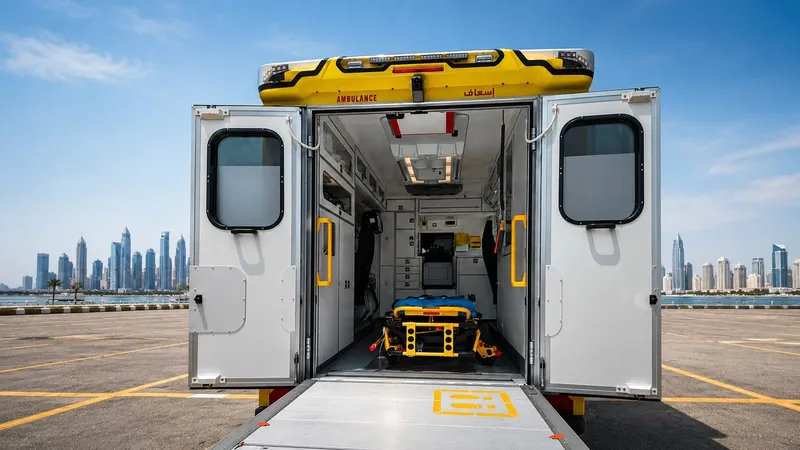
The Department of Health – Abu Dhabi has unveiled a fleet of smart, specialised ambulances designed to treat critically ill patients, mothers and newborns, and people with severe obesity. The vehicles will operate across Abu Dhabi city, Al Ain and the Al Dhafra Region.
One of the new vehicles functions as a mobile intensive care unit and can transport patients requiring advanced life support, including extracorporeal membrane oxygenation, or ECMO, which can temporarily support heart and lung function. The ambulance is also equipped with infusion pumps, an ECG monitor, an ultrasound machine and advanced ventilation equipment, with a larger interior that gives medical teams more room to work.
A second ambulance has been designed specifically for mothers and newborns, particularly when a birth occurs outside hospital or during transport. It carries equipment to keep newborns safe and provide immediate resuscitation for babies who are not breathing after birth. Ambulance crews have also received specialised training to handle such emergencies.
The third ambulance is designed to transport patients weighing up to about 300 kilograms. Health officials said transporting people weighing between 200 and 300 kilograms in conventional ambulances can be challenging and, in some previous cases, has required lifting equipment and assistance from Civil Defence. The new vehicle is equipped with suitable equipment and staffed by teams trained to care for these patients.
At the same time, Abu Dhabi has unveiled its comprehensive Emergency Medical Operations Centre, which provides a single platform displaying real-time information on ambulance locations, hospital capacity, emergency departments, specialist services and weather conditions. The centre has been operational since December 2024 and now receives data from 42 healthcare providers.
According to the Department of Health – Abu Dhabi, the system uses data and artificial intelligence to prioritise emergency cases and select the most appropriate hospital. The authority said the system has reduced response times for heart attack cases by 49.5 per cent.