
Sheikh Mohammed bin Rashid’s heartfelt message to his team: ‘You are leaders’
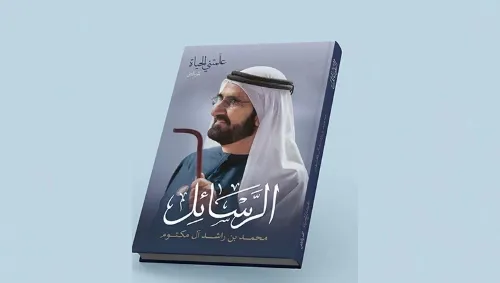
Sheikh Mohammed bin Rashid Al Maktoum, Vice President and Prime Minister of the UAE and Ruler of Dubai, has thanked his team members in his new book, “What Life Has Taught Me.”
In the book, Sheikh Mohammed pays tribute to those who have worked to implement the UAE’s plans, improve people’s lives and advance the nation.
Addressing those who have accompanied him on the UAE’s development journey, he wrote: “I salute you, appreciate your efforts and thank you for the journey we have shared through our work together.”
He also praised their commitment and hard work, saying they had worked “day and night” for the well-being of the people, the progress of the nation and the continuation of its development journey.
“You Are Leaders”
In the book, Sheikh Mohammed also outlines his vision for the future of leadership, telling his team: “You are not government employees; you are leaders.”
He said the message was intended to encourage them to consider the kind of leadership required in an era defined by rapid and interconnected change.
“What kind of leadership do we need in this new era?” Sheikh Mohammed asked, pointing to the growing complexity created by simultaneous technological, political and economic shifts.
He cited artificial intelligence as an example of a transformation that could have far-reaching consequences across multiple fields, from productivity and the labour market to social and political stability, investment and technology.
“The challenge is no longer only the speed of change, but the fact that so many things are changing at the same time,” Sheikh Mohammed said, describing this as the reality facing today’s leaders.
He also highlighted the world’s growing interconnectedness and interdependence, noting that developments once considered local can now have wide-ranging consequences for industries, markets and countries.
Leadership in this new era will differ from traditional approaches, he added, stressing: “What brought us here will not necessarily take us to our next destination.” He said this was the first principle future leaders must understand.
Build Adaptability Instead of Predicting the Future
Sheikh Mohammed said future leaders must move away from rigid long-term plans and fixed five- or 10-year strategies. Instead, they should build organisations and teams capable of adapting, learning, unlearning and relearning.
He said future leadership success would depend more on preparedness than on the accuracy of predictions. Rather than preparing for only one future, leaders should build organisations capable of responding to multiple scenarios, as those with more options are better able to withstand disruption and change.
The strength of future leaders, he said, will not lie solely in their accumulated knowledge and experience, but in their ability to ask the right questions.
“If they think they know everything about the future, they will be its first victims,” Sheikh Mohammed said.
Put People Before Resources
Sheikh Mohammed urged future leaders not to view team members merely as “resources,” noting that machines are becoming increasingly capable of writing, storing information, programming and managing processes.
He said people remain the “foundation of creativity” and imagination, while ideas will become an organisation’s most valuable asset. Any employee, he noted, may have an idea capable of transforming the organisation’s future.
Distinguishing between traditional and future leadership, Sheikh Mohammed said future leaders must focus on empowering employees and unlocking their potential rather than merely supervising them.
He added that future leaders should create an environment where people can experiment, learn from mistakes and take initiative, while building trust instead of relying solely on discipline.
“Any leader who destroys the spirit of initiative destroys the future of their organisation,” Sheikh Mohammed said.
Lead with Speed
Sheikh Mohammed said that when the pace of change exceeds an organisation’s ability to respond, it risks falling behind. While making the wrong decision may once have been the greatest risk, delaying a decision has now become an even greater one, he said.
Future leaders will not have more hours in the day, he said, but they must shorten the time between the emergence of an idea and its implementation. Artificial intelligence will also be a key tool for saving time and accelerating work.
“History will reward those who act before achieving complete certainty,” Sheikh Mohammed said. “A good decision made today is better than a perfect decision made next month.”
Concluding with a message of encouragement, Sheikh Mohammed urged his team members to embrace change, continue learning and create an environment where imagination and innovation can grow and flourish.