
Dubai International Remains World’s Busiest Airport Despite Regional Tensions and 16% Drop in Flights
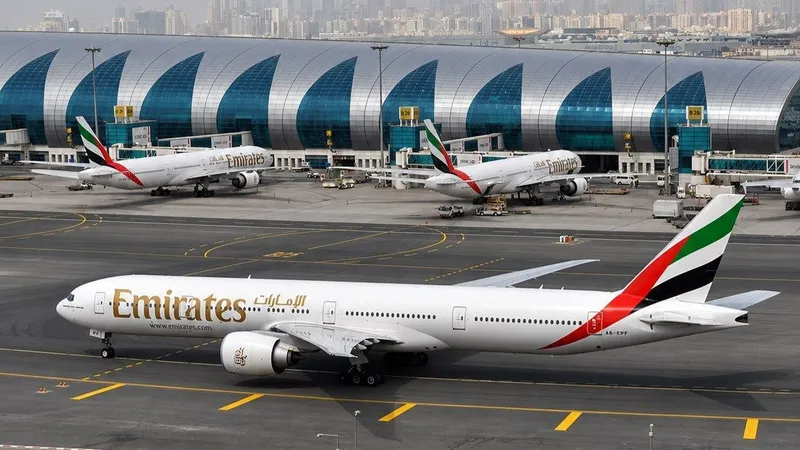
Dubai International Airport retained its position as the world’s busiest international airport in the latest global ranking, with around 4.47 million scheduled seats on outbound international flights in November 2026. However, the airport’s scheduled capacity fell 16 per cent compared with the same period last year.
According to the latest data from aviation intelligence firm OAG, airlines operating at Dubai International Airport scheduled a total of around 4.47 million seats on outbound international flights for November. Estimated two-way capacity amounts to approximately 8.94 million seats.
The report said Dubai retained the top position among the world’s international airports, with around 680,000 more outbound seats than London Heathrow Airport.
Despite this, Dubai’s scheduled capacity in November 2026 was around 16 per cent lower than in November 2025. OAG attributed the decline to continuing disruption caused by conflicts in the Middle East.
World’s 10 Busiest International Airports
In the November 2026 ranking, London Heathrow Airport placed second with around 3.79 million international seats. Its capacity fell three per cent compared with the same period last year.
Seoul Incheon Airport in South Korea ranked third with 3.70 million seats, up nine per cent year on year. It also recorded the strongest capacity growth among the top 10 international airports.
Singapore Changi Airport ranked fourth with 3.58 million seats, while Amsterdam Schiphol Airport placed fifth with capacity of 3.25 million seats.
Hong Kong International Airport ranked sixth with 3.19 million seats, followed by Istanbul Airport in seventh with 3.16 million. Istanbul fell two places compared with November last year, while its international flight capacity declined six per cent.
Paris Charles de Gaulle Airport, with 3.08 million seats, Bangkok Suvarnabhumi Airport, with 2.82 million, and Frankfurt Airport, with 2.65 million, ranked eighth, ninth and 10th, respectively.
Dubai Falls from First to Fourth in Overall Global Ranking
Although Dubai International Airport remains the world leader in international flight capacity, it fell from first place in November 2025 to fourth in November 2026 in the overall airport ranking, which includes both domestic and international capacity.
According to OAG data, Hartsfield-Jackson Atlanta International Airport in the US ranked first globally with capacity of around 5.07 million seats.
Chicago O’Hare International Airport ranked second with 4.64 million seats, while Tokyo Haneda Airport placed third with 4.54 million. Dubai International Airport ranked fourth with around 4.47 million outbound seats.
Dubai International Airport is the main hub for Emirates and flydubai. The extensive networks operated by the two carriers, alongside other international airlines, play a key role in connecting Dubai with destinations around the world.
OAG’s figures are based on airlines’ scheduled seat capacity and do not represent the actual number of passengers using the airport. The figure of 8.94 million seats is therefore an estimate of total two-way flight capacity for November and should not be presented as the number of passengers carried.