
IAEA Chief: UAE nuclear power plant successfully withstood May 17 attack
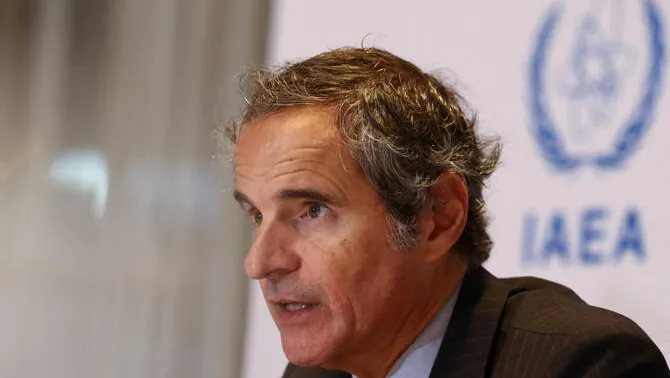
Rafael Grossi, Director General of the International Atomic Energy Agency (IAEA), announced following a visit to the Barakah Nuclear Power Plant in the UAE that the facility successfully passed a "tough test" after a May 17 attack on external power infrastructure linked to the plant. He emphasized that no radiological emergency occurred during the incident and that the plant's safety systems functioned according to protocols.
Grossi, who visited the Barakah plant on Tuesday, June 2, stated that the primary goal of his trip to the UAE was to directly review the management of the incident and express the Agency's support for UAE authorities. According to him, the operational team present at the time of the incident executed all protocols "flawlessly," and the situation was brought under control within a short period.
The IAEA Director General explained that the attack was not directed at the reactor itself but targeted external power infrastructure essential for supporting the plant's safety and operational functions. He described the event as an "indirect attack on the plant" and noted that despite the sensitivity of the incident, the facility remained in a safe state.
Condemning the attack, Grossi said any strike on a nuclear power plant is "unacceptable" and that such actions contradict international legal frameworks and norms. He also warned that targeting infrastructure related to nuclear facilities could have very serious consequences, adding, "Whoever was behind this attack knew exactly what they were doing."
Previously, the UN Security Council had also condemned the attack on the Barakah plant, calling it a violation of international law. In its statement, the Council did not attribute responsibility to a specific party, but the UAE stated that the drones used in the attack were launched from Iraqi territory.
According to UAE sources, the Barakah plant is now operating safely and normally, with its safety systems active. All four units of the plant have been fully operational since 2024, producing approximately 40 terawatt-hours of carbon-free electricity annually, which meets about 25% of the UAE's electricity needs.
The UAE and the IAEA are set to review the lessons learned from this incident in cooperation with the Emirates Nuclear Energy Corporation (ENEC) and the Federal Authority for Nuclear Regulation (FANR), sharing the results with the international nuclear energy community through a specialized workshop. According to UAE officials, the experience from the ConvEx-3 international emergency preparedness exercise, held in the UAE in 2021 in cooperation with the IAEA, played a role in strengthening the country's readiness to manage such events.