
Traffic Rises on US-Controlled Strait of Hormuz Route; 10 Million Barrels of Oil Pass Through Southern Corridor Daily
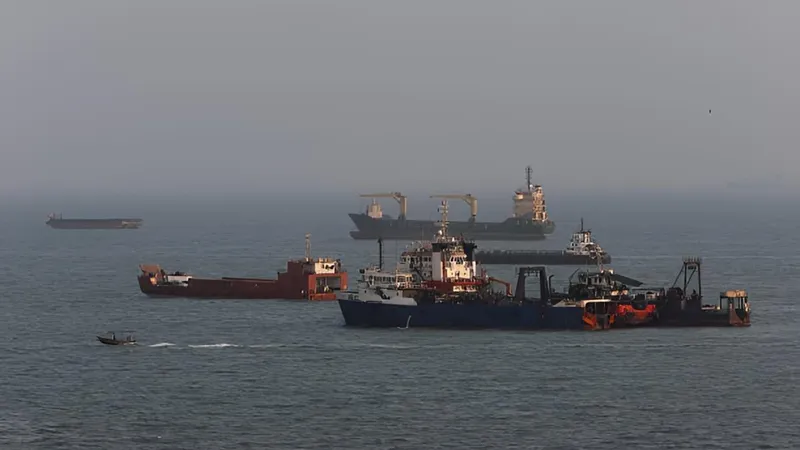
Vessel-tracking data indicates that traffic through the Strait of Hormuz remains limited, while US officials say the military has established a corridor in the southern part of the strait through which about 10 million barrels of oil pass each day.
Reuters, citing data from Kpler, reported that only nine commercial vessels with active tracking transmitters passed through the Strait of Hormuz on Wednesday, August 19. The figure was unchanged from Tuesday.
The figures include only vessels that kept their Automatic Identification Systems switched on while in transit. Ships that passed through the strait with their transmitters turned off were not recorded in Kpler’s data, meaning the actual number of vessels may have been higher.
CNN previously reported, also citing Kpler data, that more than 80 per cent of identified vessels had travelled along a route close to Oman’s coast over the past two weeks. Until a month ago, the route was virtually unused.
Axios, citing two US officials, reported that the US military had established a shipping route in the southern part of the Strait of Hormuz, near Oman’s coast, in recent weeks.
According to the report, between 15 and 20 oil tankers enter or leave the Arabian Gulf along the route each night, delivering nearly 10 million barrels of oil a day to global markets, equivalent to about half the pre-war volume.
In addition to escorting tankers carrying oil, the US military is helping empty tankers enter the Arabian Gulf. After loading oil in the UAE, Bahrain and Kuwait, the vessels leave again through the southern corridor.
One US official told Axios that American forces had controlled the route for the past two months. The official said the Islamic Revolutionary Guard Corps could still disrupt shipping but “does not control the strait”.
US officials said American fighter jets were also flying over the southern corridor to intercept drones and cruise missiles launched by the Islamic Republic. One official said US forces shot down eight Iranian drones and two cruise missiles on Monday night.
US President Donald Trump has repeatedly insisted that the Strait of Hormuz is open. He also told Axios on Wednesday that “a tremendous amount of oil” was leaving through the waterway.
Islamic Republic officials, however, continue to insist that the strait is closed and say vessels may pass only with Iran’s permission and under its supervision. Tehran also considers the route near Oman’s coast to be in breach of the Islamabad memorandum, a claim rejected by Washington.
Before the war, about one-fifth of global crude oil and liquefied natural gas trade passed through the Strait of Hormuz. The limited number of trackable vessels and the increased use of the route near Oman indicate that traffic through the waterway has yet to return to pre-war levels.