
Dubai remains the top destination for global wealth as AI reshapes investment dynamics
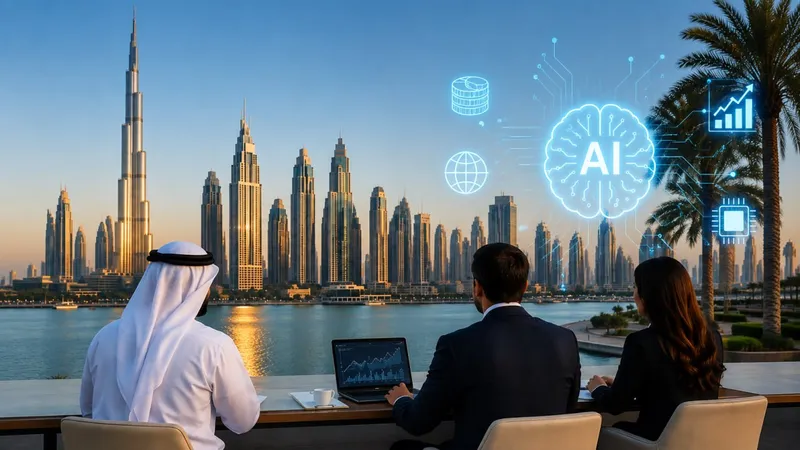
Dubai has solidified its position as one of the world's primary destinations for global wealth and is expected to continue hosting millionaires, ultra-high-net-worth individuals, and "family offices" despite regional geopolitical tensions. These private entities, responsible for managing the assets and investments of exceptionally wealthy families, signal major capital confidence in any destination they choose to inhabit.
Wealth management industry experts attribute Dubai's enduring appeal to a combination of factors: stable policies, clear financial regulations, advanced infrastructure, a seamless business environment, and high investor confidence. According to them, the city is no longer merely a traditional wealth repository but has developed an ecosystem that serves both established wealth and the needs of a new generation of wealth creators. Its strategic location between Asia and Europe, tax exemptions, and the rapid growth of the innovation economy have further bolstered this status.
A significant portion of this transformation is linked to Artificial Intelligence. According to the latest global report on family offices by the Swiss bank UBS, AI remains the primary investment focus for these entities worldwide, with 65% already invested in the technology's value chain—ranging from chip manufacturing to software companies and data centers. The report, based on data from 307 family offices in over 30 countries with average assets of $2.7 billion, shows that these entities do not intend to reduce investment despite concerns over high valuations in some AI sectors. Alongside AI, they are turning to supporting sectors such as energy (37%), infrastructure (37%), and AI-driven healthcare (33%). Conversely, geopolitical tensions top the list of risks, leading family offices toward cautious diversification across assets, currencies, and geographic regions.
Madhur Kakkar, founder and CEO of Elevate Financial Services, states that Dubai's ascent to a global wealth hub was not accidental but the result of deliberate design in policy, regulation, and infrastructure. According to him, Dubai does not only plan for traditional wealth; the Dubai Virtual Assets Regulatory Authority (VARA) has established a dedicated framework for digital asset players. Initiatives such as the plan announced by Sheikh Hamdan, Crown Prince of Dubai, in May 2026 to transition the private sector toward autonomous AI and train 50,000 government employees in the field demonstrate that the city is preparing for the "wealth of the future." Kakkar emphasizes that today's wealthy families are not just seeking a place to preserve capital, but are looking for countries that understand the direction in which capital is moving.
However, experts express serious doubts regarding the replacement of humans by AI in wealth management. Kakkar notes that while the technology is transformative in research, reporting, and data analysis—elevating the work of advisors—it cannot sit at the negotiating table or navigate the complexities of family relationships, legacy concerns, or the emotional weight of major financial decisions. Michael Fournier, Investor Relations Manager at Arzan Investment Management, also views AI as an "augmenter" of expert capabilities rather than a replacement, stating that judgment, risk assessment under uncertainty, and understanding an investor's true objectives remain human tasks.
Both experts point to a generational shift in the industry: younger investors are raising professional standards by embracing AI-based tools, digital platforms, and digital assets. They demand real-time reporting, full transparency, and direct access to investment teams, with some even using AI tools to build personal systems for integrated portfolio monitoring. Industry professionals believe the future of wealth management will not be a competition between AI and humans, but rather a collaboration between the two—a combination that Dubai strives to host as its primary global hub.