
Dubai revises Al Satwa building rules, allows eight residential floors above ground level
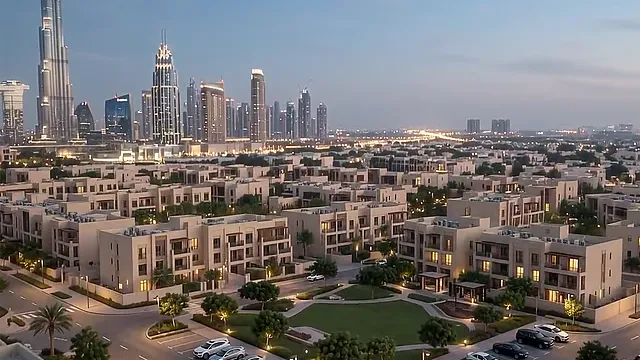
Dubai Municipality has revised planning and construction regulations in Al Satwa, allowing landowners to develop taller residential buildings and mixed-use residential and commercial projects based on the location and size of their properties.
Under the new regulations, announced on November 1, 2026, buildings comprising a ground floor and two or three residential floors may be constructed in parts of the area. Eligible plots measuring 1,000 square metres or more may also qualify for the construction of a commercial ground floor and eight residential floors.
Dubai Municipality said the changes aim to optimise the use of available land, expand investment opportunities, increase residential and commercial space, and support the sustainable development of Al Satwa.
New construction rules for Al Satwa’s inner and outer streets
Under the revised regulations, buildings comprising a ground floor and two floors of residential apartments will be permitted on plots along Al Satwa’s inner streets.
Previously, planning regulations in this part of the area mainly permitted the construction of attached villas.
More development options have also been introduced for plots along the area’s outer streets.
Landowners may construct buildings with a commercial ground floor and two or three floors of residential apartments.
The number of floors permitted will depend on the property’s location and the applicable planning regulations.
Dubai Municipality said the changes will create more opportunities to redevelop existing properties and help increase the area’s residential and commercial capacity.
Eight residential floors permitted above commercial ground floor on 1,000-square-metre plots
One of the key elements of the new regulations is the introduction of construction incentives for plots measuring 1,000 square metres or more.
The incentives apply to plots that already meet the minimum area requirement or reach it through the consolidation of two or more smaller plots.
Subject to planning regulations and the necessary approvals, landowners may also incorporate access routes between plots into the consolidated site.
Under the new regulations, qualifying plots may be developed with buildings comprising a commercial ground floor and eight floors of residential apartments.
The maximum floor area ratio, or FAR, for these buildings has been set at 3.5.
The floor area ratio represents the ratio of a building’s total countable floor area to the size of the plot.
For example, on a 1,000-square-metre plot, an FAR of 3.5 represents a theoretical maximum of 3,500 square metres of total countable floor area. However, the actual floor area permitted for each project will depend on compliance with other planning rules and requirements.
The incentives are intended to encourage owners of smaller plots to consolidate their properties and create larger sites for integrated development projects.
Dubai Municipality expects the measure to improve land-use efficiency, create more opportunities for investors and property developers, and enhance Al Satwa’s appeal as an investment destination.
Preserving the area’s identity while supporting development
Dubai Municipality said the new regulations were developed in recognition of Al Satwa’s important position within Dubai’s urban fabric and the need to balance future development with the preservation of its existing character.
Mansoor Al Rais, Director of the Executive Planning Department at Dubai Municipality, said: “Revising Al Satwa’s planning regulations is part of Dubai Municipality’s efforts to develop existing urban areas through a flexible and sustainable approach that considers their current and future needs.”
He added: “By expanding development options and offering incentives for land consolidation, we aim to give landowners and investors greater flexibility to redevelop their properties and make more efficient use of available land.”
Al Rais said the approach would support Al Satwa’s future development while taking account of its existing urban character and future growth requirements.
Assessment of road and infrastructure capacity
Dubai Municipality said it worked with urban service providers during the review of Al Satwa’s planning regulations to assess the area’s infrastructure capacity and traffic requirements.
The assessments aim to align construction and development plans with the capacity of the road network, infrastructure systems and essential services.
The measure is intended to support better planning for the area’s future growth and ensure that new projects are aligned with the necessary infrastructure.
How can landowners benefit from the new regulations?
Dubai Municipality said landowners and other applicants can visit the Build in Dubai platform to review details of the revised regulations and submit applications for related services.
Platform address:
The revision of Al Satwa’s construction regulations is part of Dubai Municipality’s broader programme to develop existing neighbourhoods, use urban land more efficiently, and create new investment opportunities in residential and commercial projects.
The changes are expected to allow taller buildings on qualifying plots while improving the urban environment and expanding Al Satwa’s development capacity.