
Emaar owner: I will not offer discounts even if sales fall; it would betray previous buyers
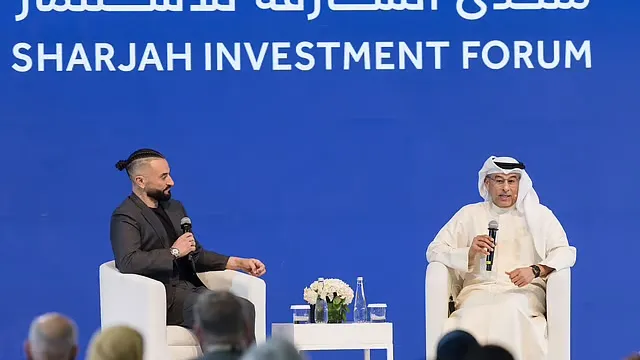
Mohamed Alabbar, founder of Emaar Properties, said he would not offer discounts even when sales decline, arguing that cutting prices would be unfair and betray the trust of customers who bought earlier.
Speaking at the Sharjah Investment Forum during a session titled “The CEO Playbook: Leading Through Constant Change,” Alabbar said his no-discount policy was one of his core business principles.
“I do not offer discounts or special privileges. My approach to business is clear, and everything I do is built on quality,” he said.
Explaining the policy, he said: “I cannot sell you a cup of coffee today and then offer the same coffee to someone else at a 50 per cent discount four months later.”
Alabbar said the same principle applied to property, where selling a unit to a subsequent buyer at a lower price would be unfair to the previous customer.
Sales may fall, but brand reputation matters more
The Emaar founder acknowledged that the policy could lead to lower sales but stressed that protecting the company’s reputation was more important.
“Will our sales decline? That is fine. Let them,” he said.
Alabbar said Emaar had recorded annual growth of between 40 and 50 per cent over the past five years and could withstand one year of declining sales.
However, he stressed that a no-discount policy could be justified only if the product was genuinely worth its asking price. He said construction quality, location, services and the property’s underlying value mattered more than its price tag.
“The only thing that endures in life is your reputation and your name, whether it is the name of a family, a country or a company,” Alabbar added.
UAE property buyer confidence rebounds after ceasefire
Referring to regional developments, Alabbar said the figures indicated that buyer confidence had returned following the war between Iran and the United States and the subsequent ceasefire.
Before the war, around 600 purchases of Emaar units were cancelled each month, he said. That figure rose to 1,200 during the conflict but has since fallen to fewer than 600 cancellations a month.
He added that Emaar continued to sell around 4,000 homes a month.
The value of the company’s booked sales that have yet to be recognised as revenue has also reached around AED 180 billion.
Alabbar said Emaar’s collection rate had returned to 98 per cent, matching last year’s level after a temporary decline during regional tensions.
He also said hotel occupancy had risen above 60 per cent, while the Noon e-commerce platform attracted millions of customers each night. The value of users’ shopping baskets showed that consumer spending appetite remained strong, he added.
Expressing confidence in the region’s economic outlook, Alabbar said: “The situation we are in now will pass. History has proved that.”
He said Emaar based its financial planning on a five-year budget that was reviewed every three to four months.
He added that he would even be prepared to accept a financial loss for one year if economic conditions required the company to slow its growth.
Constant dissatisfaction drives Emaar’s growth
Alabbar, 68, said perfectionism and constant dissatisfaction with current performance were among the main drivers of Emaar’s growth, traits he said he had inherited from his father.
“My team and I are always dissatisfied. If the company grows by 40 per cent, we ask why it could not be 50 per cent,” he said.
He said this approach was also reflected in Emaar’s after-sales service, with the company now repairing homes that are 10 to 15 years old even after their warranties have expired.
Explaining the decision, Alabbar said: “When we earn a great deal from our customers, we have a moral duty to give some of it back to them.”
He described dissatisfaction as “a blessing”, adding that he remained constantly attentive to and concerned about the company’s finances, employee performance and growth.
Alabbar acknowledges costly mistakes
Elsewhere in his remarks, the Emaar founder discussed several business decisions that had proved to be mistakes.
He described his investment in the United States as an emotional decision and acknowledged that it had resulted in losses.
Alabbar also said he had spent 15 years in the retail sector without making a profit, although the experience taught him valuable lessons about design.
He said his greatest professional regret was not recognising sooner the importance of recruiting the best talent.
Criticising the way some employers in the region treated their staff, Alabbar said: “In the Middle East, we do not reward people fairly.”
Alabbar warns business owners over AI adoption
Alabbar urged entrepreneurs and company executives to begin integrating artificial intelligence into their operations as quickly as possible.
“If you do not use AI, your business will face challenges 12 months from now,” he warned.
Companies using the technology would become smarter, faster, more cost-effective and more efficient, he said.
Alabbar said he used AI to examine personal health issues and assess ideas for new projects, although his AI assistant did not always agree with his business proposals.
Alabbar’s advice to young entrepreneurs
The Emaar founder concluded by advising young people seeking to launch a business to pursue work they genuinely care about.
“Do what you love and pursue it with all your strength. Do not hold back along the way,” he said.
Drawing on his own experience, Alabbar said he had changed career paths several times before the age of 37.
“When you are genuinely passionate about something and devote your time and energy to it relentlessly, no one can defeat you,” he concluded.