
Is low mobile battery impacting UAE restaurant revenues?
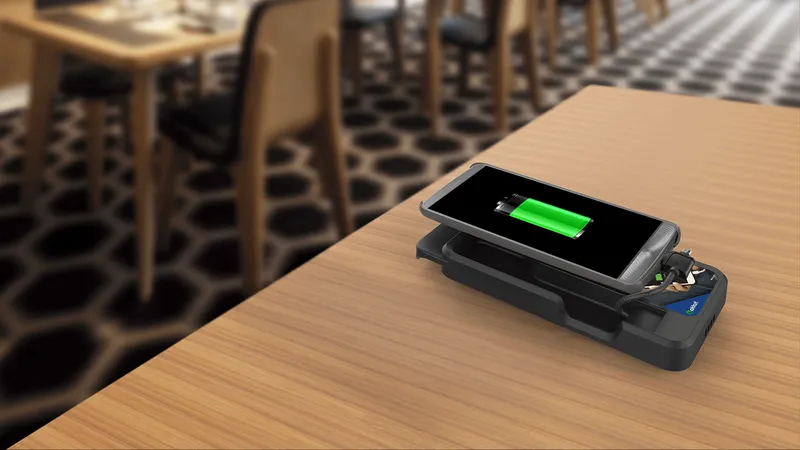
Running out of mobile phone battery may cause restaurant and cafe customers in the UAE to leave earlier, resulting in lost opportunities to order more drinks, desserts, or coffee—an issue that could impact the revenue of hospitality venues, according to the founder of Dubai-based power bank sharing company RAY.
Igor Kosolap, founder and CEO of RAY, said feedback from restaurant and cafe staff indicates that when customers' phone batteries run out, they typically either ask staff to charge their devices or leave the premises sooner.
According to him, it is very rare for a customer to remain in a venue for a long period with a powered-off phone.
RAY, which installs portable power bank rental stations in restaurants, cafes, and other locations, stated that customers using these power banks often stay 20 to 30 minutes longer—the time typically required to increase a phone's charge from 20 percent to 80 percent.
Given that the average time a customer spends at a table is estimated at around two hours, this increase can extend the duration of a customer's stay by approximately 15 to 25 percent.
During this additional time, a customer may order tea, dessert, or another drink. RAY estimates that an extra order can add about 10 to 20 percent to the customer's bill, depending on the type of venue and the initial total.
However, Kosolap emphasized that the company does not yet have definitive and comprehensive statistical evidence to show that installing a charging station directly increases a restaurant's overall revenue.
He said that conducting a precise study and reaching meaningful statistical results in this field is not as simple as it is for digital products.
RAY Revenue Model
Restaurants do not pay for the installation or maintenance of RAY equipment. The company provides the stations and power banks and manages payments, customer support, and equipment maintenance. Venues only pay for electricity costs, estimated at approximately 2 to 5 AED per month.
Customers pay 10 AED for the first hour of use, and if they keep the power bank for the rest of the day, an additional 30 AED is added to the rental fee. RAY typically shares about 20 percent of the rental revenue with the host venue.
The startup has so far installed more than 400 stations in approximately 250 to 300 venues across the UAE and claims that its simple payment process has resulted in its stations generating two to four times the revenue of some competitors.
RAY now plans to increase its number of stations to 2,000 by the end of 2026, although Kosolap noted that regional disruptions and supply chain delays could affect this timeline.
The company is also preparing to expand its operations outside the UAE, with its next international market expected to be announced this autumn.