
The 1997 Storm Resilience Lesson: How Sheikh Mohammed Pulled Off the World's Richest Horse Race From the Heart of the Flood.
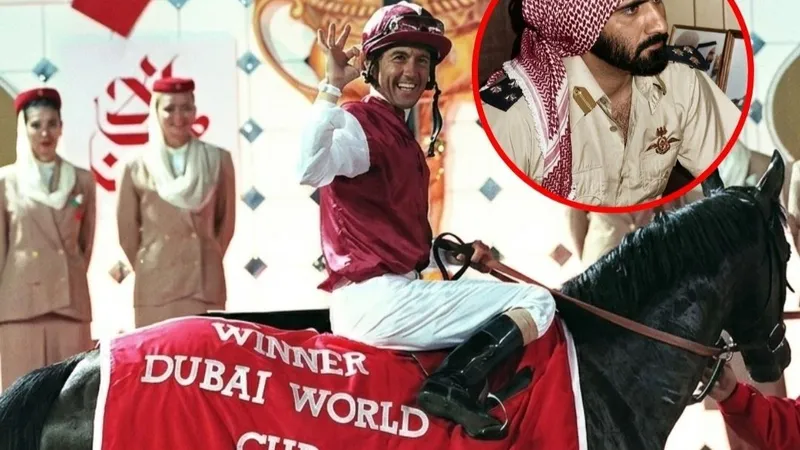
Dubai World Cup: When Rain Threatened to Wash Away a Dream
It was Dubai World Cup day at Nad Al Sheba in March 1997, a day meant to showcase world-class horse racing under the clear desert sky at the packed Nad Al Sheba Racecourse. But by mid-afternoon, torrential rain began to fall on the venue, soon inundating the track and sending most of the 60,000 spectators scrambling for cover – a rare sight in the usually sunny city.
The excitement that usually electrified the stands gave way to disbelief and disappointment, as fans and participants alike feared that the biggest day in horse racing might be washed away before it even began.
Legendary race caller, Derek Thompson, never one to let the atmosphere completely dissipate, leaned into the microphone, his distinctive voice cutting through the roar of the rain: "Don't worry, it's just a passing shower of rain clouds, everything will be alright, and we should be back on the track."
However, Thompson's positivity couldn't mask the reality. The track was waterlogged, and in the stands, whispers of cancellation rippled through the crowd.
Then came the moment that would define the event and the story of Dubai horse racing for decades. His Highness Sheikh Mohammed bin Rashid Al Maktoum, Vice President and Prime Minister of the UAE and Ruler of Dubai, completely soaked but resolute, went to inspect the damage to the main track.
He paused, looked at the thousands watching his every move at Nad Al Sheba and on television screens around the world, and made a gesture that seemed to say, "It's over (there will be no race today)."
It was more than a symbolic gesture; it was a silent acknowledgment that the weather had won. Realizing the conditions made racing impossible that day, Sheikh Mohammed immediately convened an emergency press conference at the royal majlis in Nad Al Sheba. With calm authority, he addressed trainers, owners, jockeys, and officials, stating that while the races could not proceed as scheduled, he was willing to hold the Dubai World Cup six days later.
Sheikh Mohammed invited the international delegations to extend their stay, promising hospitality and an opportunity to enjoy the city, and preparations to salvage the event began. Behind the scenes, a massive effort took shape: helicopters, crews, and track workers worked around the clock to drain the water, dry the track, and ensure Nad Al Sheba would be ready for the rescheduled race.
When the sun finally returned, the process of preparing Nad Al Sheba to be race-worthy was rapidly expedited. And a poetic surprise awaited: Sheikh Mohammed's own five-year-old bay horse, Singspiel, trained in Britain by Sir Michael Stoute and ridden by the great American jockey Jerry Bailey, went on to a decisive victory in the rescheduled race six days later.
Sheikh Mohammed's determination transformed a dramatic setback into a moment of celebration, proving that his unwavering commitment could overcome even the most daunting challenges. For the world of horse racing, it was a lesson in resilience and resolve.