
Dubai Uses AI for Round-the-Clock Drone Flight Monitoring
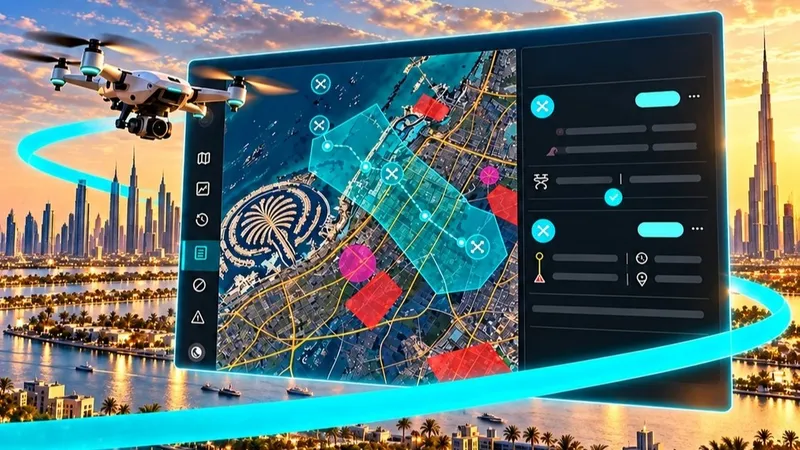
Dubai is using an AI-powered smart system to monitor drones and other low-altitude aerial operations around the clock. The system can detect potential violations and risks to civil aviation safety and send immediate alerts to the relevant authorities.
The Dubai Civil Aviation Monitoring System (DMS), developed by the Dubai Civil Aviation Authority, monitors drones, hot-air balloons, sky-facing searchlights, lasers, fireworks, parachuting activities and, in the future, flying taxis.
The system also monitors construction activities, cranes, telecommunications towers and high-voltage power pylons that could affect flight safety.
Saeed Balhoul, Director of Information Technology at the Dubai Civil Aviation Authority, said the rapid growth in drone use over the past five years had increased the need for an integrated system to manage aerial activities.
He said drones are now used for surveying, inspecting power lines and solar panels, photography and food delivery. Their use to transport medicines and blood between hospitals and emirates is also under consideration.
Under the system, drone and flying taxi operators must obtain a no-objection certificate (NOC) before beginning operations. Flight routes, times and operating areas are registered in the system. If approved conditions are breached, an automatic alert is sent to the operator and the regulatory authority.
However, the system does not issue fines directly. Dubai Civil Aviation Authority specialists review the alerts, and legal action is taken if a violation is confirmed. Flight permits may also be suspended until the issue is resolved.
If an unauthorised flight is detected, Dubai Police are notified. Officers inspect the flight location, the operator’s identity, the drone’s technical certification and its radio-frequency identification tag.
The system does not replace air traffic control and focuses mainly on commercial and personal activities at low altitudes. Military threats remain the responsibility of the country’s defence systems.
Development of the technology began in 2023, and its first trial was conducted in mid-2025. Its dedicated control room opened in September 2026.
The system is now fully operational and recently won first place in the Best AI Innovation in Transport category at the 14th Dubai Award for Sustainable Transport.