
Could the Foldable iPhone’s Lack of Face ID Disrupt Access to UAE Digital Identity and Banking Services?
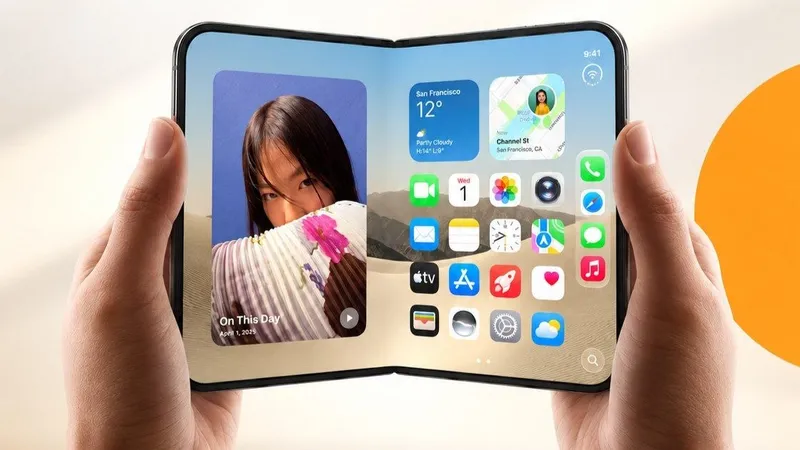
The removal of Apple’s Face ID facial recognition feature from its new foldable phone, the iPhone Duo, has raised concerns among buyers in the UAE. Some users fear its absence could affect access to banking apps, digital identity services and government platforms. However, technology experts say alternative authentication methods are available, although some apps may require updates.
Several consumers in the UAE have delayed purchasing the iPhone Duo because it lacks a facial recognition sensor. Their main concern involves apps that use biometric authentication for account access or to approve financial and government transactions.
According to Apple’s official specifications, the iPhone Duo, the company’s first foldable phone, uses Touch ID instead of Face ID, with the fingerprint sensor built into the device’s side button.
Mohammed Youssef, an iPhone Duo buyer in the UAE, said he initially faced difficulties accessing some apps because Face ID was unavailable, having previously relied on facial recognition to use various services. He said that after changing his login settings, he was able in some cases to use the phone’s front-facing camera for facial verification and the fingerprint sensor to access apps.
Another consumer, Ashraf Naji, said he had delayed buying the iPhone Duo because of concerns that the lack of Face ID could make digital services more difficult to use than on his previous phone or require additional authentication steps for transactions.
Experts: No Face ID Does Not Mean Apps Will Stop Working
Mohammed Al Faqi, a technology and digital security expert, said the absence of Face ID on the iPhone Duo would not necessarily prevent users from accessing banking and government apps, as facial authentication can also be carried out using the phone’s front-facing camera.
He said users switching from older iPhone models may need updated versions of apps to use the new authentication methods.
He explained that some apps on previous iPhone models relied directly on the device’s Face ID system for authentication. On the iPhone Duo, however, their authentication systems may need to be modified to use the front-facing camera to verify the user’s face.
Technology expert Ahmed Al Zarooni also stressed that the phone’s front-facing camera could be used for facial authentication, while a fingerprint sensor offered another method of verifying identity. However, some apps will require software changes to support these methods.
Jess Kim, another technology expert, highlighted the distinction between logging into an app and identity verification. Kim explained that signing into an account does not necessarily require facial recognition, while a person’s identity can be verified using the front-facing camera without a dedicated Face ID sensor.
Status of UAE Banking and Digital Identity Apps
Experts stress that the absence of Face ID does not necessarily mean the iPhone Duo is incompatible with banking and government services. However, each app’s functionality depends on the authentication methods supported by its provider.
For example, the UAE’s digital identity platform, UAE Pass, uses facial recognition technology to verify users’ identities. This process is different from Apple’s Face ID and can be carried out through the camera and the app’s own authentication system.
However, until the compatibility of different app versions with the iPhone Duo is officially confirmed, seamless access to all UAE banking and government services cannot be guaranteed.
Users are therefore advised to check whether their essential apps support fingerprint sensors or alternative authentication methods before changing phones.