
Dubai Municipality Sets Minimum Sleeping Space for Labour Accommodation
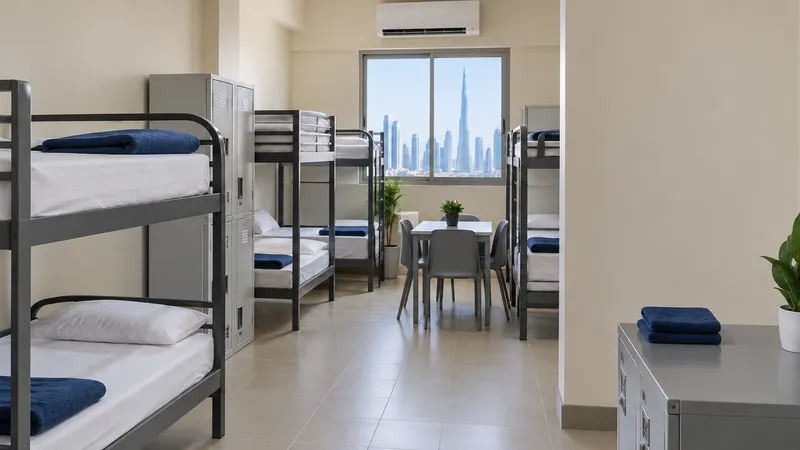
Under new planning and design standards announced by Dubai Municipality, workers’ accommodation in the city must provide at least 3.7 square metres of sleeping space per person.
The standards also stipulate a gross floor area of between 8.9 and 10.3 square metres per person to provide the services required in workers’ communities.
Between 0.75 and 1.5 square metres per person must also be allocated for recreational and open spaces.
Dubai Municipality released details of the new standards on September 18 while announcing the completion of several projects and initiatives aimed at improving living conditions in workers’ communities. The measures were implemented in cooperation with relevant government entities.
The programme was carried out under the Workers’ Accommodation Policy and included infrastructure improvements, building upgrades, and the expansion of services, community spaces and recreational facilities.
Inspection of 1,417 Buildings
Dubai Municipality has launched a smart, integrated system for classifying workers’ accommodation and inspected 1,417 buildings to assess their structural condition and compliance with public health and safety standards.
Under the Model Workers’ Accommodation initiative, 19 complexes were recognised as model facilities. Of these, three received platinum ratings, nine received gold ratings and seven received silver ratings.
A shared government database has also been established to help relevant authorities plan projects and identify areas in greatest need of improvement.
The database contains statistics and performance indicators that can support future decision-making and investment in these areas.
Walkways and Parking
Field surveys conducted in several workers’ communities assessed existing infrastructure and the need for walkways, bridges, pavements and other facilities.
The municipality said these needs were being addressed according to priority, while solutions to expand parking in workers’ communities were also under review.
Other measures include establishing shops, community facilities and sports amenities to give workers greater access to shopping, recreation and physical activities.
Focus on Safety and Services
Dr Naseem Mohammed Rafee, Acting CEO of the Environment, Health and Safety Agency at Dubai Municipality, said the policy’s implementation plan places particular emphasis on updating legal and regulatory frameworks.
The measures include reviewing relevant laws and regulations to align them with best practices, strengthen compliance with standards and accelerate the delivery of development projects.
“Our goal is to develop infrastructure and public facilities in workers’ communities and upgrade buildings in line with the highest engineering, technical, health and safety standards,” she said.
“We are also expanding the delivery of essential service projects tailored to the specific needs of each community. This strengthens coordination among various service sectors and improves the efficiency of these projects,” she added.
Dubai Municipality said the measures support the objectives of the Dubai 2040 Urban Master Plan and the Dubai Quality of Life Strategy 2033.