
UAE: No party should dominate the Strait of Hormuz
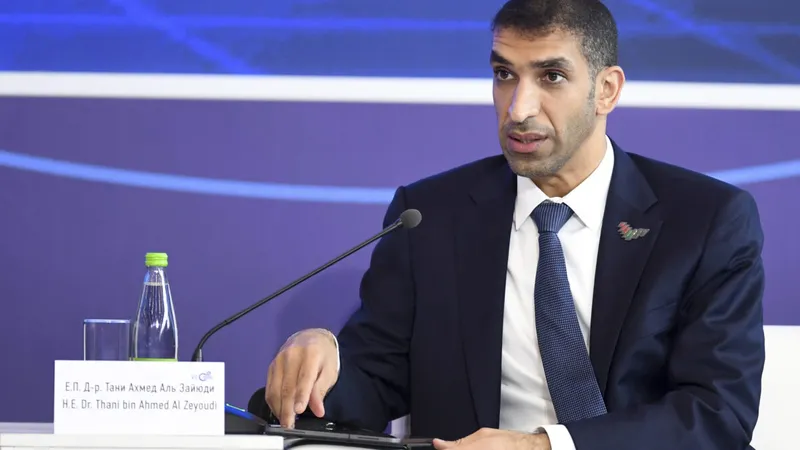
Thani bin Ahmed Al Zeyoudi, UAE Minister of State for Foreign Trade, announced that no party should be allowed to dominate the Strait of Hormuz or use this strategic passage as leverage against the global economy.
Al Zeyoudi made these remarks during a session titled "The Ripple Effect: How Conflict with Iran Shapes Global Economies and Policies" at the GLOBSEC 2026 forum in Prague. He emphasized that the Strait of Hormuz must remain a free and open international waterway, vital for global trade and energy supplies.
Speaking to international officials, economic leaders, and policymakers in the Czech capital, the Minister said the UAE has activated alternative trade routes and accelerated its long-term logistical transformation plans to mitigate the economic consequences of regional instability.
"The Strait of Hormuz must remain open and accessible for international shipping," Al Zeyoudi said. He added that no party should be able to control such a strategic maritime passage or turn it into a tool of pressure against global markets.
He further pointed to a series of immediate measures taken by the UAE following what he described as "Iran's aggressive actions against GCC member states, including the UAE," as well as Tehran's closure of the Strait of Hormuz—an action he said disrupted global energy supplies and pressured international trade flows.
Among these measures, Al Zeyoudi mentioned the activation of alternative trade routes to bypass the Strait of Hormuz and maintain the continuity of supply chains.
He also announced the launch of an economic support fund worth AED 1 billion, aimed at ensuring business continuity and providing targeted support to small and medium-sized enterprises.
"The logistics restructuring program, which was originally scheduled to be implemented over a decade, is now being executed within a few years," Al Zeyoudi said. He added that recent geopolitical developments have accelerated existing economic and infrastructure strategies.
The UAE Minister of State for Foreign Trade also highlighted the country's long-term trade strategy, stating that the Comprehensive Economic Partnership Agreement program remains one of the main drivers of the UAE's foreign trade growth.
According to him, the UAE has so far concluded 35 trade agreements with partners across six continents. These agreements helped increase the country's non-oil foreign trade to $1.03 trillion in 2025, strengthening the UAE's position as a resilient and influential hub in global trade.