
An Emirati farmer has increased the production of native grape seedlings in Ras Al Khaimah to 10,000.
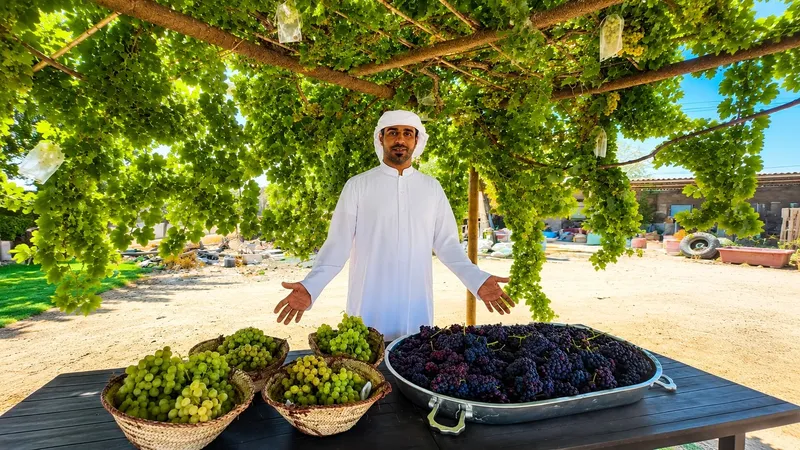
An Emirati farmer in the mountainous Asfani region of Ras Al Khaimah has boosted the production of native grape seedlings from approximately 500 per year to more than 10,000 per season. He attributes this surge to the rising demand for traditional varieties that are well-suited to the UAE’s climate.
Marwan Saif Rashid Al Mazrouei cultivates local red and green grapes in the Asfani agricultural area, located about 90 kilometers from Ras Al Khaimah city. This year’s harvest commenced in May and continued through June. According to Al Mazrouei, higher temperatures accelerate the ripening process, whereas milder weather helps prolong the harvest season.
Some of the mother vines on the farm are over 25 years old. The vines undergo heavy pruning in February and begin bearing fruit in May. Essential steps for maintaining crop quality include fertilization, pest control, and regular pruning.
Each of the 30 to 40 mature vines on the farm produces around 30 kilograms of grapes, depending on cultivation conditions. However, the grapes are not sold commercially, as the farm’s primary focus is the propagation and supply of seedlings—a craft Al Mazrouei learned from his father and subsequently expanded.
The native red grape variety produces smaller fruit, but its seedlings grow more rapidly once planted. Conversely, the local green variety yields larger grapes but requires more time for the seedlings to become established. These seedlings are offered in various sizes, with fresh stock becoming available at the start of the planting season in September and October.
While the farmer has also begun limited cultivation of several international varieties, he notes that the demand for native seedlings continues to exceed the farm’s current production capacity.