
Dubai Begins Testing Driverless Electric Vehicles: Is This the Future of Urban Travel?
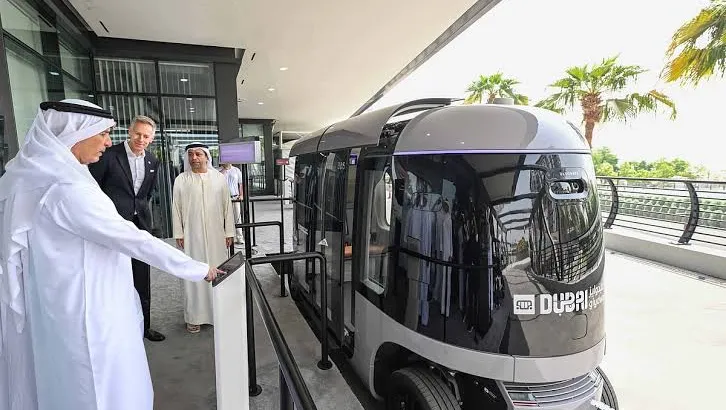
Dubai’s Roads and Transport Authority (RTA) announced on Sunday, October 11, 2026, the launch of a four-week trial of the Glydways smart mobility system on Bluewaters Island. The project uses self-driving electric pods to transport passengers without drivers and away from urban traffic.
The compact vehicles, which can carry four to six passengers, operate on dedicated lanes and can travel at speeds of up to 50 kilometres per hour, with a range of up to 250 kilometres on a single battery charge.
The trial aims to assess the potential for the wider use of autonomous transport systems to make travel easier for residents and tourists while reducing reliance on private cars and conventional taxis.
How do the driverless pods work?
Unlike conventional buses and taxis, Glydways pods operate on narrow, dedicated lanes separated from street traffic. This could reduce journey times and make passenger transport faster and more predictable.
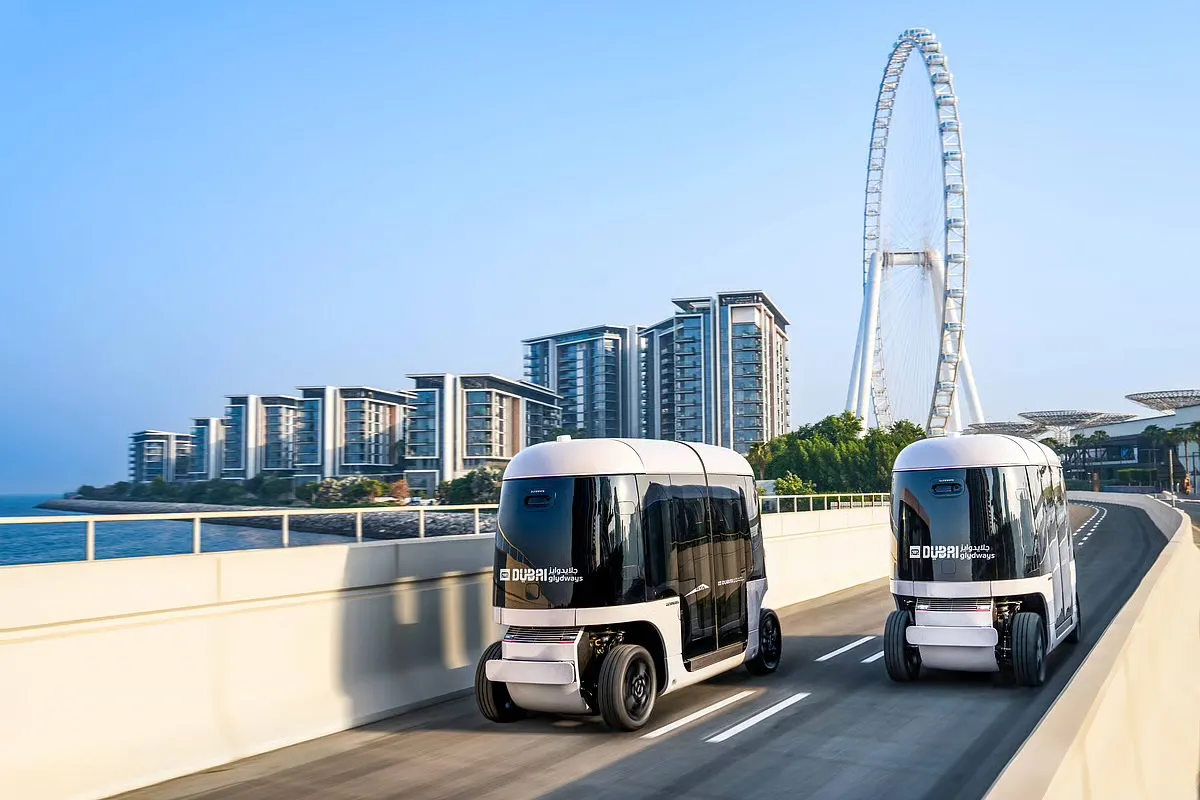
The system is designed to provide round-the-clock, on-demand services, offering direct journeys between passengers’ points of origin and destinations, unlike traditional bus routes.
Each pod is equipped with artificial intelligence, 20 advanced LiDAR sensors, radar and high-resolution cameras, enabling it to detect its surroundings and operate safely.
Passengers can also adjust the pod’s interior temperature and entertainment features to suit their preferences.
The technology can coordinate the movement of more than 10 pods travelling in succession, with intervals of less than one second.
According to Dubai’s Roads and Transport Authority, the Glydways network is designed to carry more than 20,000 passengers per hour across both directions, combining the benefits of small vehicles with the capacity of high-volume public transport systems.
Four-Week Trial Begins on Bluewaters Island
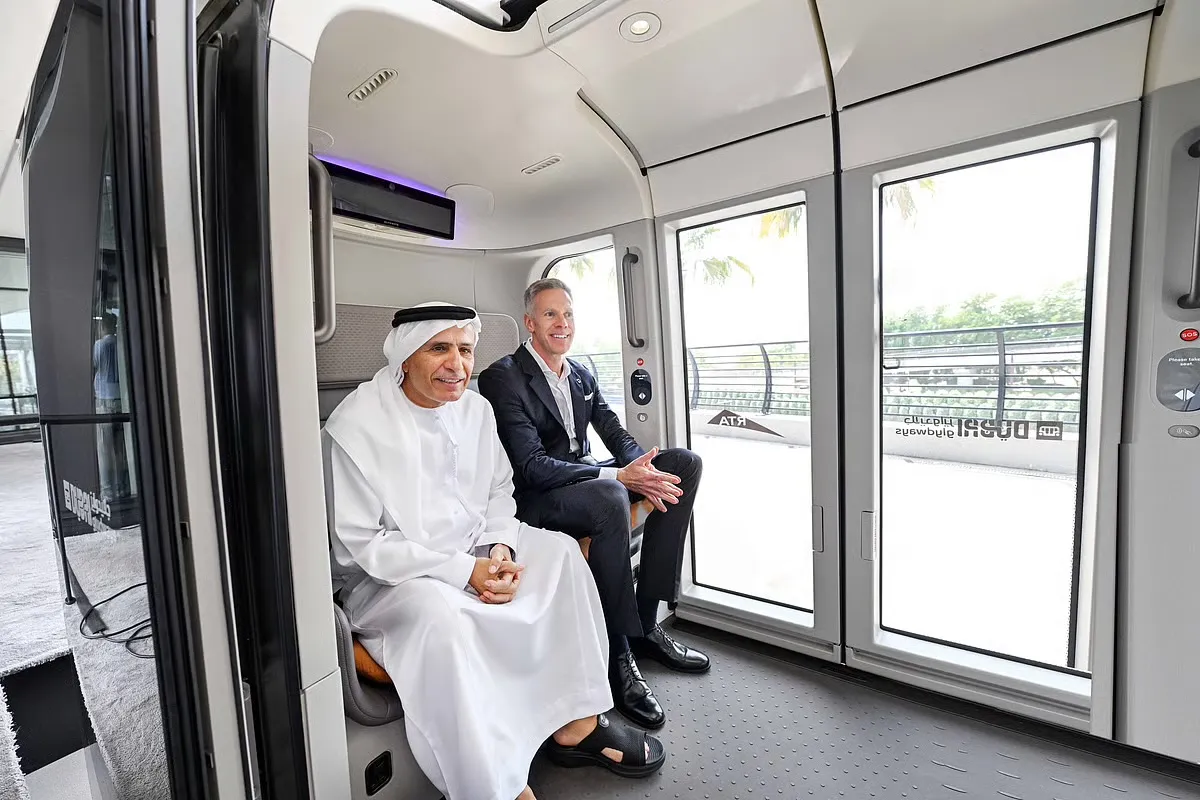
Mattar Al Tayer, Director General and Chairman of the Board of Executive Directors of Dubai’s Roads and Transport Authority, officially launched the initiative after taking a five-minute test ride in one of the autonomous pods on Bluewaters Island.
The system will undergo a four-week trial in partnership with Glydways and Dubai Holding.
During this period, experts will assess the pods’ safety, reliability, journey times and passenger experience to determine whether the technology could be expanded to other areas of Dubai.
Connecting Dubai Neighbourhoods to Metro Stations
One of the initiative’s main objectives is to improve connectivity between Dubai Metro stations and residential communities, business districts, offices and tourist attractions.
Dubai’s Roads and Transport Authority is considering several potential routes, including a 2.8-kilometre link between National Paints Metro Station and Bluewaters Island.
Other areas under consideration for the system’s potential future rollout include Jumeirah Village Circle (JVC), Dubai Festival City, Business Bay and Mohammed Bin Rashid City.
However, these routes remain at the proposal and assessment stage, and any network expansion will depend on the results of the initial trial and further evaluations.
If rolled out on a wider scale, the system could help address first- and last-mile transport challenges, particularly the distance between public transport stations and passengers’ final destinations.
Significant Reduction in Construction and Operating Costs
Another advantage of Glideways technology is its lower infrastructure costs compared with traditional rail transport systems.
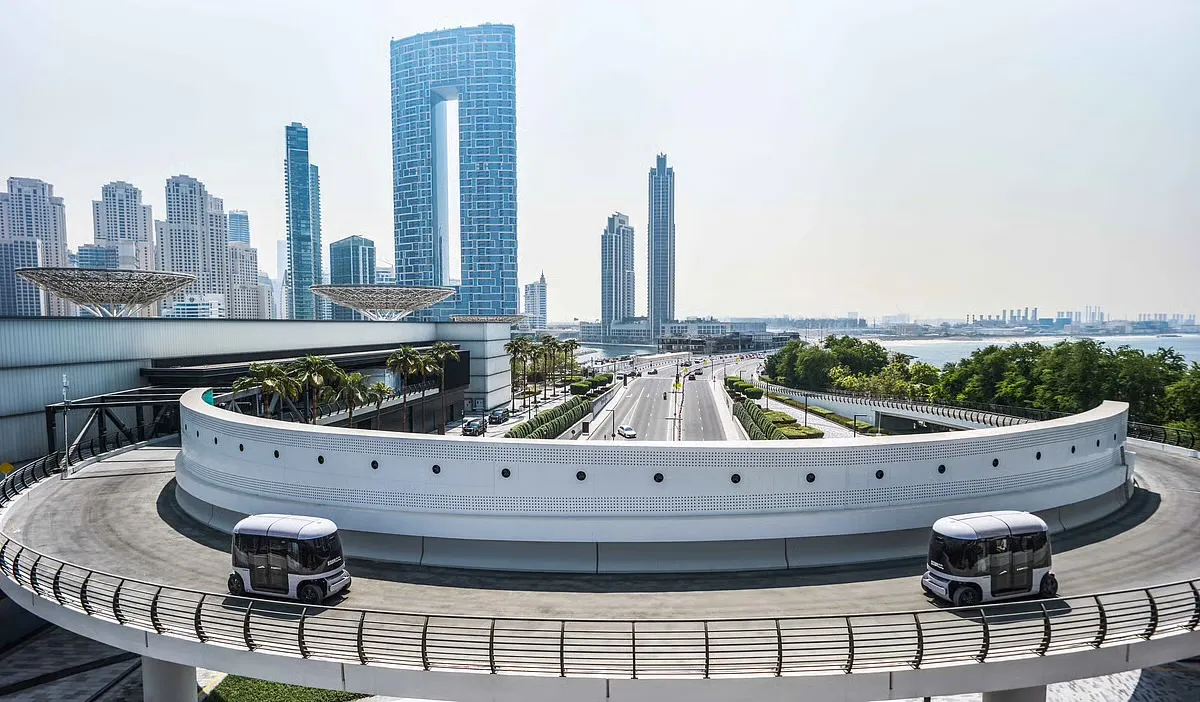
The pods travel along dedicated narrow guideways built using lightweight structures, which can be installed at ground level or as elevated routes.
According to Dubai’s Roads and Transport Authority, the technology could reduce initial capital costs by up to 90 per cent and operating costs by up to 70 per cent compared with similar transport systems.
This advantage could make it easier to deploy autonomous transport networks in densely populated neighbourhoods and areas where conventional rail lines would be costly to build.
A New Step in Dubai’s Smart Mobility Development
Highlighting the project’s importance, Mattar Al Tayer said the launch of trial operations marked a key stage in assessing the system’s technical and operational performance and its ability to provide safe, seamless and reliable transport services.
He added that the trial would also explore opportunities to connect the new system with Dubai’s public transport network, particularly for short first- and last-mile journeys.
Mark Seeger, founder and co-CEO of Glideways, described the start of testing in Dubai as a milestone in the company’s partnership with the Roads and Transport Authority.
He said the project was an important step towards demonstrating the potential of automated transport networks to meet the needs of modern cities by providing flexible, high-capacity services tailored to passenger demand.
The results of the four-week trial on Bluewaters Island will determine whether the technology can be expanded and deployed elsewhere in Dubai.
Specifications of Dubai’s Glideways Autonomous Transport System
- Trial location: Bluewaters Island, Dubai
- Start date: October 11, 2026
- Trial duration: Four weeks
- Capacity per pod: Four to six passengers
- Maximum speed: 50 kilometres per hour
- Range on a single charge: Up to 250 kilometres
- Operating model: Electric, driverless and on demand
- Network capacity: More than 20,000 passengers per hour across both directions
- Potential expansion areas: Bluewaters, Jumeirah Village Circle, Dubai Festival City, Business Bay and Mohammed Bin Rashid City
The project is currently in the trial phase, and no date has yet been announced for the launch of public services or its confirmed expansion to other parts of Dubai.