
Final Dubai World Trade Centre Roundabout bridge opens October 30, cutting travel time from six minutes to one
The final bridge in the Dubai World Trade Centre Roundabout Development Project will open on Friday, October 30. Once operational, it will reduce travel time between Al Majlis Street and 2nd December Street from six minutes to just one minute.
The 1,000-metre bridge has two lanes and can accommodate about 3,000 vehicles per hour. Its opening will improve traffic flow at one of Dubai’s key intersections, which connects Sheikh Zayed Road with surrounding commercial and residential areas.
The bridge’s opening will mark the completion of all major works under the Dubai World Trade Centre Roundabout Development Project, which cost more than AED696 million. The project includes five bridges spanning a total of 5,000 metres and is designed to reduce congestion, improve connectivity between major routes and facilitate access to some of Dubai’s busiest commercial hubs.
Mattar Al Tayer, Director-General and Chairman of the Board of Executive Directors of Dubai’s Roads and Transport Authority (RTA), said the project was implemented in line with the directives of Dubai’s leadership to develop road infrastructure and improve connectivity across the emirate.
“The completion of the World Trade Centre Roundabout Development Project reflects the directives of Dubai’s leadership to continue upgrading road infrastructure, improve traffic flow on Sheikh Zayed Road and strengthen connectivity between the city’s most important economic and commercial centres,” he said.
Al Tayer added that the improvements would increase the road network’s capacity in line with Dubai’s rapid population growth and urban and economic development. They will also strengthen Dubai’s global position in trade, investment and tourism, support the development of an integrated and sustainable transport system, facilitate travel for residents and visitors, and enhance quality of life.
Faster Access to Dubai’s Key Business Hubs
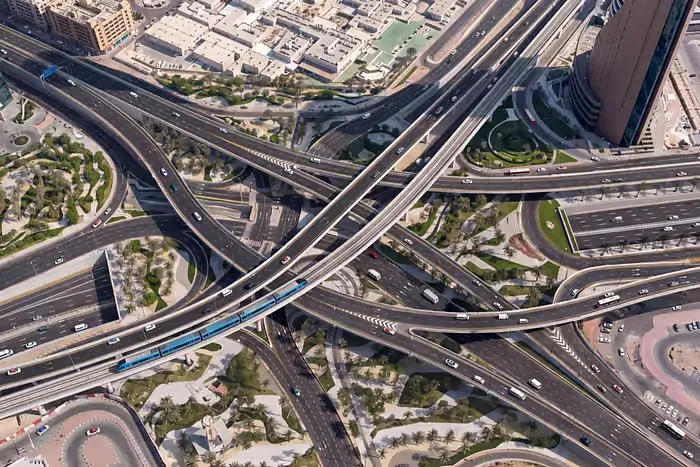
The Dubai World Trade Centre Roundabout is strategically located along Sheikh Zayed Road, providing access to major hubs such as the Dubai World Trade Centre (DWTC) and Dubai International Financial Centre (DIFC).
The Dubai World Trade Centre hosts major international exhibitions, conferences and events, including GITEX, Arabian Travel Market and Gulfood, attracting large numbers of participants and visitors each year.
Meanwhile, the Dubai International Financial Centre is one of the leading financial hubs in the Middle East, Africa and South Asia.
According to Al Tayer, the project will improve connectivity between the business hubs and surrounding neighbourhoods, which experience heavy traffic throughout the day.
He said: “By creating free-flowing routes in several directions and enhancing links between Sheikh Zayed Road and surrounding main streets, the project will significantly improve traffic flow and reduce the average delay at the junction from 12 minutes to 90 seconds.”
More than 500,000 residents and tourists are expected to benefit from the project.
Areas covered by the project include Za’abeel, Al Satwa, Al Karama, Al Jafiliya and Al Mankhool, as well as nearby commercial and residential districts.
In addition to providing shorter and more direct routes to key destinations, the changes will help distribute traffic more efficiently across the surrounding road network.
Details of the Five Bridges in the Dubai World Trade Centre Roundabout Development
As part of the project, the former Dubai World Trade Centre Roundabout has been converted into an at-grade junction, while five bridges have been built to provide direct, free-flowing connections in multiple directions.
The bridges include:
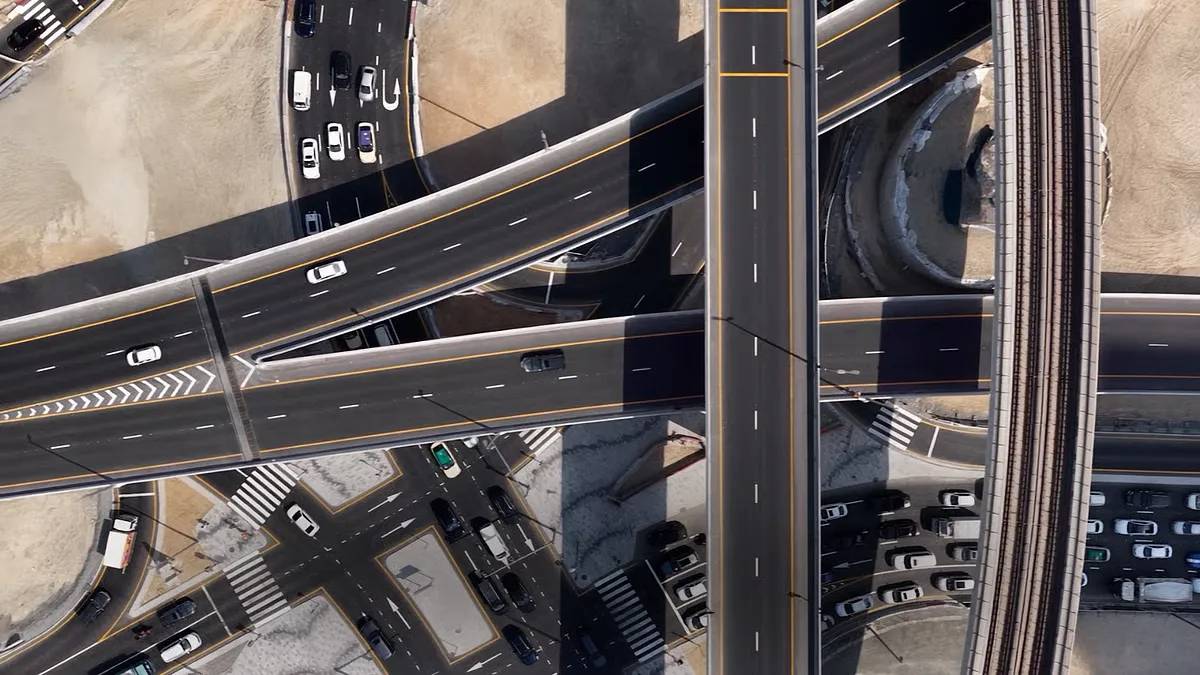
A 1,000-metre bridge connecting Sheikh Zayed Road to Sheikh Khalifa bin Zayed Street towards Deira, with a capacity of 3,000 vehicles per hour.
Two bridges linking Sheikh Rashid Street and 2nd December Street, with a combined length of 2,000 metres and two lanes in each direction, providing a total capacity of 6,000 vehicles per hour.
Two additional bridges linking Al Majlis Street and 2nd December Street, with a combined length of 2,000 metres and a capacity of around 6,000 vehicles per hour.
Together, the five bridges will improve traffic flow between Sheikh Zayed Road, Deira, Jumeirah, Al Satwa and other surrounding areas.
Al Mustaqbal Street Upgrade Project to Be Completed in 2027
The Dubai World Trade Centre Roundabout upgrade is part of Dubai’s broader plan to increase road capacity and improve connectivity across the surrounding area.
Work is also continuing on the Al Mustaqbal Street upgrade project, which is scheduled for completion in 2027.
The project covers the stretch between Zabeel Palace Street and Financial Centre Street and includes the construction of bridges and tunnels, as well as road widening.
Under the announced plan, three tunnels with a combined length of 1,100 metres will be built at the intersection of Al Mustaqbal Street and Trade Centre Street.
A 400-metre, two-lane bridge will also be constructed for vehicles travelling from Dubai World Trade Centre towards the intersection of Zabeel Palace Street and Al Mustaqbal Street.
Another part of the project will widen a 3,500-metre section of Al Mustaqbal Street from three lanes to four lanes in each direction.
The scheme also includes improving connectivity on Exhibition Street and Trade Centre Street, building a pedestrian bridge on Al Sukook Street and upgrading existing intersections.
According to Dubai’s Roads and Transport Authority, the changes will increase Al Mustaqbal Street’s capacity by 33 per cent, from 9,000 to 12,000 vehicles per hour.
The authority also said journey times along the route would be significantly reduced.
According to one project briefing, the current journey time of 13 minutes will fall to six minutes upon completion. Details of the Al Mustaqbal Street upgrade also indicate that travel time will be reduced from eight minutes to three minutes and 30 seconds.
Once the two projects are completed, connectivity between Sheikh Zayed Road and surrounding streets will be strengthened, access to key economic and commercial hubs will improve, and Dubai’s road network will be better equipped to accommodate traffic growth in the years ahead.