
How Would the UAE and Region Be Affected if Iran Cuts Internet Cables in the Strait of Hormuz?
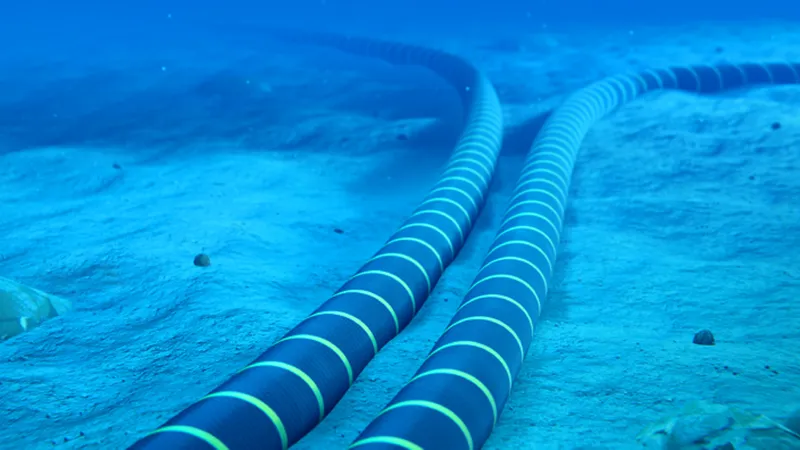
Iran has threatened to target undersea internet cables in the Strait of Hormuz if conflict resumes. According to research firm TeleGeography, the cables carry less than 1 per cent of the world’s international bandwidth, and severing them would not shut down the global internet. However, experts say such an attack could severely disrupt connectivity in Qatar, Kuwait, Bahrain and Iraq, while the UAE is better positioned because most of its cables land in Fujairah, outside the strait.
The threat has been repeated several times in recent days. On Wednesday, October 21, Yadollah Javani, the political deputy of Iran’s Islamic Revolutionary Guard Corps, said that if the US attacked Iran’s civilian infrastructure, Tehran could target “seven major cables” beneath the Strait of Hormuz. On Friday, October 23, two senior Iranian security officials told Reuters that Tehran had prepared a detailed plan to attack the cables, with one adding that Iran would also seek to prevent repairs. However, the International Cable Protection Committee identifies five active cable sections in the strait, while TeleGeography lists three main systems.
In the Middle East, the Red Sea is the main chokepoint for global internet traffic. TeleGeography estimates that more than 90 per cent of data capacity between Europe and Asia passes beneath it. Iran-backed Houthis advanced towards the Bab Al Mandab Strait in September, but Tehran has so far made no public mention of plans to attack cables in the Red Sea.
Among the region’s Arab countries, Qatar, Kuwait, Bahrain and Iraq have limited alternative routes. Iraq has only two active international cables: Falcon and Gulf Bridge International. These are the only two cables that pass through Iranian waters, with the consortia that own most other cables having deliberately routed them through Omani waters. Bahrain, Kuwait and Qatar have terrestrial connections to Saudi Arabia, but TeleGeography assesses that these networks may not have sufficient capacity to carry all traffic. Analysts say the simultaneous severing of several cables could slow internet speeds and disrupt financial transactions, e-commerce and cloud services.
TeleGeography considers the most immediate risk to be an inability to repair cables promptly. Repairs in the region are handled by UAE-based e-Marine, which operates five vessels, although only one was inside the Arabian Gulf during the first months of the war.
In addition to having most of its cables land in Fujairah, the UAE has terrestrial connections to neighbouring countries. Gulf News has assessed that users in the country are unlikely to face serious disruption, although internet speeds could decline.
Iran’s threats are not limited to cables. In early October, senior Iranian security official Mohsen Rezaei warned that US-linked data centres and artificial intelligence facilities in the region could also be targeted if war resumed. In March, Amazon said drones had directly struck two of its data centres in the UAE. Andreas Krieg, a security researcher at King’s College London, said the deep integration of the UAE’s AI strategy with US technology companies had made the country’s infrastructure a more attractive target for Iran.
According to specialist platform INCYBER, Iran itself would suffer less damage, with the cost of severing cables in the Strait of Hormuz falling mainly on its neighbours. Tehran’s National Information Network allows many domestic services to remain operational when the country is disconnected from the global internet. A nationwide internet shutdown imposed by Iranian authorities on February 28 lasted 88 days.
Countries in the region have turned to terrestrial routes to reduce their dependence on undersea cables. Saudi company STC signed an $800 million agreement on February 7 to lay 4,500 kilometres of fibre-optic cable through Syria to the port of Tartus. Iraq also signed an agreement with Qatar’s Ooredoo on September 10 to carry data from Al Faw to Rabia, near the Turkish border. Rest of World, citing an anonymous source, reported that Google and Meta had begun routing some of their traffic through Iraq.
A consortium of Iraqi companies and UAE-based Breeze Investments has also announced the $700 million WorldLink cable project. The cable is planned to run from the UAE to Iraq’s Al Faw Peninsula and then overland to Turkey. However, the project has a five-year timeline, and no contractor has yet been named.
Despite these plans, Doug Madory, an internet expert at Kentik, believes not all the projects will be completed. The Arab Gulf States Institute in Washington also wrote in June that the UAE had until then focused on rerouting oil tankers and had not developed measures to protect its undersea digital infrastructure. In August, Al Modon newspaper reported that there was no publicly available evidence of a joint, tested Gulf plan to respond to the simultaneous severing of multiple cables.