
Self-driving taxis officially arrive on Dubai streets: Book a driverless taxi in Jumeirah and Umm Suqeim.
Dubai Launches Driverless Taxi Service
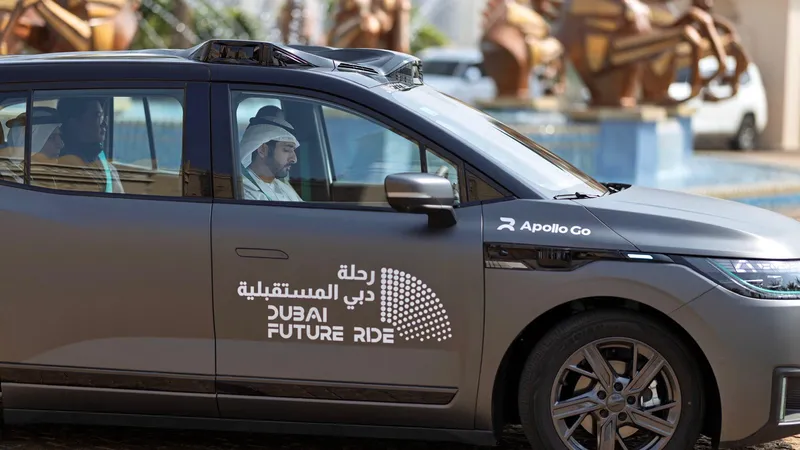
The latest and most forward-thinking mode of public transportation has officially arrived on Dubai's streets. Driverless taxis have now been officially introduced in select areas of the emirate and are available for booking.
Those interested in using the "Robotaxi" can request these vehicles by selecting the "Autonomous" option in the Uber application when in the Jumeirah and Umm Suqeim areas.
The "Apollo Go" driverless Robotaxis, manufactured by the Chinese company Baidu, will be available to all users who book "Uber Comfort" or "UberX" services in these designated neighborhoods.
Uber and WeRide have conducted extensive testing since the initial announcement of the plan in April 2025. Initial testing phases last year enabled precise mapping of routes for the service, and following these successful tests, a fleet of 100 autonomous taxis joined the Dubai transportation network on Monday, March 30, 2026, and are now available for booking.
🟠 The Technology Behind Driverless Taxis
These vehicles operate within an integrated system equipped with artificial intelligence, advanced sensor technologies, and automated decision-making systems. This combination ensures safe and seamless mobility in real-world urban environments and open roads alongside live traffic:
🟠 Real-Time Processing: Utilizing AI, high-definition digital maps, and deep learning algorithms, these taxis process data in real-time and make decisions while in motion.
🟠 Intelligent Interaction: These vehicles are capable of effectively interacting with dynamic traffic conditions, including intersections, traffic lights, pedestrians, and other vehicles, while fully adhering to traffic laws.
🟠 Proven Experience: The system is backed by extensive operational experience; the operator's fleet has already recorded over 150 million kilometers of safe driving and successfully completed more than 10 million autonomous trips in several cities worldwide.
🟠 Why Does Dubai Want Driverless Taxis?
This forward-thinking approach is part of the UAE government's "Dubai Autonomous Transportation Strategy," which outlines the reasons for the necessity of these programs.
According to the strategy, traffic accidents will decrease by 12 percent, and efficiency will increase by 13 percent. The UAE believes that this strategy will generate (and save) AED 22 billion by reducing transportation costs, increasing individual productivity, and saving "hundreds of millions of hours lost in traditional transportation."
Dubai's ultimate plan is to deploy 4,000 driverless taxis on the streets, a move that is expected to reduce traffic, lower emissions, and ultimately lead to fewer accidents.