
Abu Dhabi Launches Wildlife Rescue Network for Injured and Trapped Animals
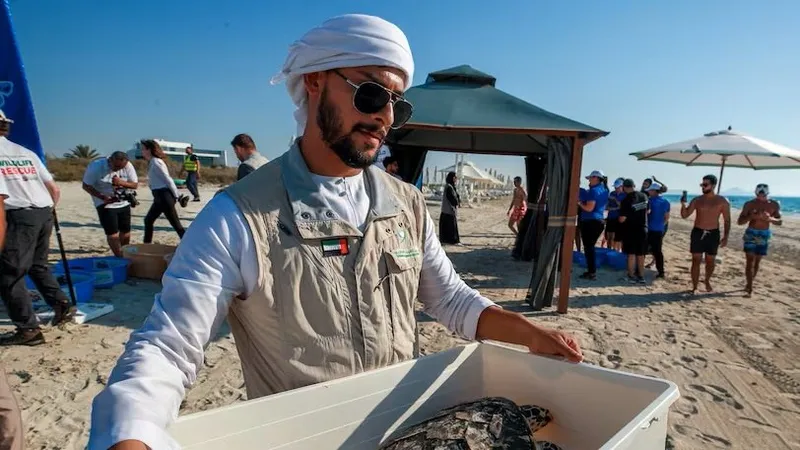
The Environment Agency – Abu Dhabi has launched a new network to rescue, treat and rehabilitate injured or stranded wildlife. The initiative aims to accelerate rescue operations, coordinate efforts among relevant entities and return animals to their natural habitats.
The Abu Dhabi Wildlife Rescue and Response Network brings together government entities, non-governmental organisations, academic institutions, private-sector partners and community members to coordinate emergency reporting, the deployment of rescue teams and animal treatment.
The network was unveiled at an event on Saadiyat Island attended by experts and project partners. At the end of the event, several rescued sea turtles that had undergone treatment and rehabilitation were released back into their natural habitat in the waters surrounding Saadiyat Island.
How Are Injured Animals Rescued?
The initiative is supported by an integrated digital platform that allows the public to report cases, enables experts to assess animals’ conditions and facilitates the management of rescue operations.
Once a report has been received and assessed, a specialist team is dispatched to the site and, if necessary, provides initial care to stabilise the animal. It is then transferred to a rehabilitation centre, where veterinarians and experts provide species-specific care.
Animals are returned to the wild after making a full recovery, while those requiring further treatment remain under care.
The Environment Agency – Abu Dhabi has carried out extensive wildlife rescue and rehabilitation work since 2016. These efforts began with the rescue of sea turtles and later expanded to include species such as sea snakes, dugongs, dolphins and birds.
Maitha Mohammed Al Hameli, Acting Executive Director of the agency’s Terrestrial and Marine Biodiversity Sector, said wildlife conservation requires a rapid response, specialist expertise and close cooperation among relevant entities.
She said the new network would improve injured or stranded animals’ chances of recovery and return to their natural habitats by providing the care they need.
By collecting data on species health, the causes of animal deaths and environmental threats, the network will also support the development of long-term biodiversity conservation plans.
Future phases will expand the network’s capabilities through real-time monitoring and reporting technologies, continuous training for rescue teams and broader international cooperation. Public education and community participation will also be central to the initiative.