
UAE Container Ship Carrying More Than 2,500 Containers Sinks After Projectile Strike in Strait of Hormuz
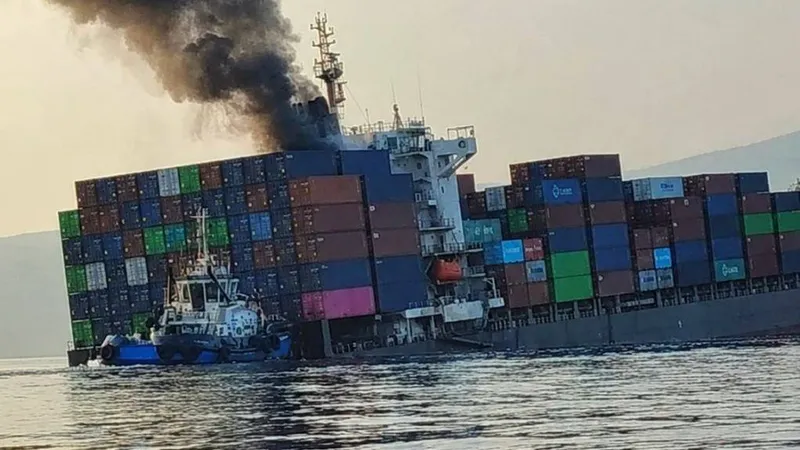
Maritime security sources told Reuters that GFS Pride, a Singapore-flagged container ship managed by a UAE company, sank on Wednesday, October 14, after being struck by a projectile near the Strait of Hormuz. Iran’s Islamic Revolutionary Guard Corps Navy, however, said the vessel, carrying more than 2,500 containers, caught fire after hitting a sea mine and sank in waters south of the strait that morning.
In a statement, the IRGC described the vessel as being in violation of maritime rules and said it had intended to cross the Strait of Hormuz via an “unauthorised and hazardous route”. It urged local vessels and fishermen to exercise extreme caution in the area to avoid colliding with containers floating in the water. Iranian media also released a video purportedly showing the ship, with containers and some of their contents floating on the surface. According to the Associated Press, this is the first time during the ongoing war that Iran has reported a vessel sinking after striking a mine.
Reuters sources said GFS Pride had a capacity of 2,824 twenty-foot equivalent units. Specialist website Seatrade Maritime reported that, according to alerts from the United Kingdom Maritime Trade Operations, a tanker and three container ships were struck by unidentified projectiles in the Strait of Hormuz on Tuesday, October 13. Maritime security firm Vanguard Tech identified GFS Pride as one of the container ships and said it appeared to have sunk. Vanguard said GFS Giselle, another vessel in the same fleet, also sustained minor damage in the attacks but continued on its course. No information has yet been released about the fate of the GFS Pride crew.
GFS Pride is managed by UAE-based GFS Ship Management FZE. According to Container News, another vessel in the same fleet, GFS Galaxy, was attacked in the Strait of Hormuz in July. The ship’s engine room was severely damaged, and an Indian crew member went missing. Seatrade reported that GFS Galaxy was among the first vessels Iran placed on its blacklist of ships deemed to have violated restrictions in the Strait of Hormuz, while GFS Pride was not on the list. Reuters was unable to immediately reach the ship’s management company for comment, and UAE authorities had not responded by the time of publication.
Maritime security sources also told Reuters that the Antigua and Barbuda-flagged bulk carrier Cape Dao, which was struck by a projectile on September 23, was sinking near the strait. Seatrade reported that the vessel was going down after salvage efforts failed. It is managed by a UAE company, and one seafarer was killed in the September attack. The website also reported that the number of UK Maritime Trade Operations warnings about attacks on vessels in and around the Strait of Hormuz had reached 24 since the beginning of October.
Reuters, citing two senior Iranian officials, reported that Tehran had adopted new methods to target vessels passing through the Strait of Hormuz. They said Tehran’s aim was to keep oil prices high and influence the US midterm elections. One official said Iran had been using different tactics since early October against vessels it considered to be violating its restrictions. They added that the geographical scope of the operations would extend beyond the Strait of Hormuz. One said such vessels would not be safe anywhere, even outside the strait. Iran has restricted passage through the Strait of Hormuz since February 28, when the United States and Israel began attacks on the country.