
Dubai Police Order from Suspicious Websites, Find Drugs in Some Packages
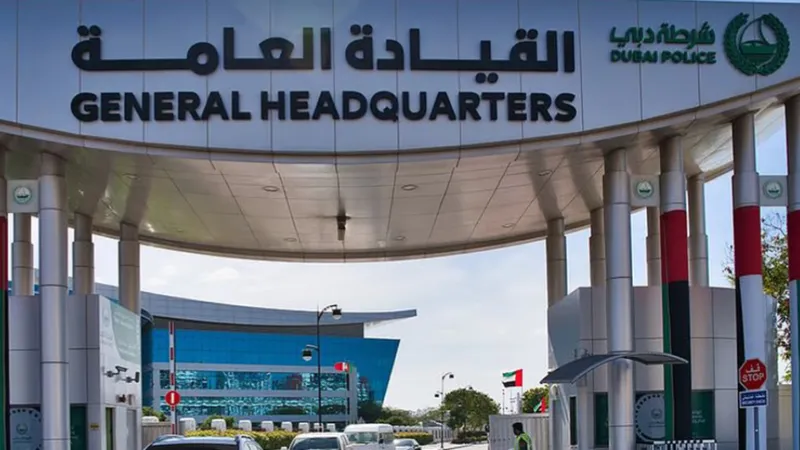
Orders placed by Dubai Police experts through several websites selling suspicious products arrived at the designated address within hours. Laboratory tests showed that some products contained substances listed in the narcotics schedules under UAE federal law.
The test purchases were conducted by the Drug Monitoring Centre at Dubai Police’s General Department of Forensic Science and Criminology. Dr Ibtisam Al Abdouli, director of the centre, said in an interview published by Emarat Al Youm on Tuesday, October 13, that the “online sting” initiative was launched in 2025 after websites selling suspicious products were identified.
Al Abdouli said that after the test results were confirmed, the centre coordinated with Dubai Police’s General Department of Anti-Narcotics and the relevant authorities to take the necessary action. It also asked economic and telecommunications authorities to act against the websites. She said monitoring and follow-up efforts were continuing.
Dubai Police’s General Department of Anti-Narcotics previously said it had identified and blocked 297 websites promoting drugs in the second quarter of 2026, compared with 110 in the first quarter, bringing the total number blocked in the first half of the year to 407. During the second quarter, the department also shared 125 intelligence reports with security agencies in several countries, helping to arrest suspected drug traffickers around the world.
Al Abdouli said one particular type of narcotic had posed a greater challenge to the centre than others, not only because of its prevalence but also because its chemical composition could be easily altered. She explained that after a group of these substances is added to the legal schedules, new compounds sometimes emerge within one or two months, requiring fresh testing and recommendations for their inclusion. She stressed that every substance added to the legal list could signal the emergence of another. The centre therefore does not focus solely on substances found in police seizures but also seeks to identify those likely to appear next.
To detect new substances that cannot be identified using conventional methods, the centre has developed highly sensitive tests and signed a memorandum of understanding with the Erada Rehabilitation Centre to support its response to such drugs. Al Abdouli said that in some cases, a narcotic not covered by routine testing programmes had been identified, giving medical teams a more complete picture of the substance used by a patient and significantly supporting treatment.
Emarat Al Youm also reported on Monday, October 5, that the centre had so far identified more than 95 narcotic substances and their metabolites and recommended their inclusion in the law. The newspaper said the centre was also monitoring new methods of concealing and consuming drugs, ranging from e-cigarette liquids and drug-soaked paper to eye drops.