
UAE Calls at UN for Resolution of Three-Island Dispute; Iran Says Sovereignty Is Non-Negotiable
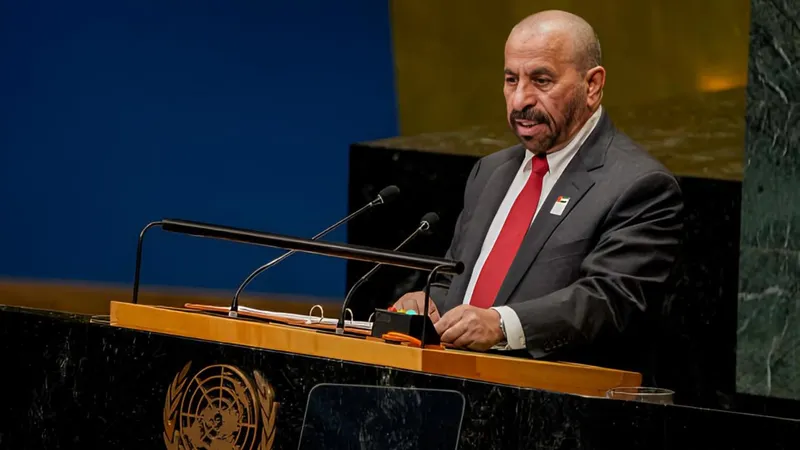
The UAE has again called on the United Nations General Assembly to resolve the dispute over the islands of Abu Musa, Greater Tunb and Lesser Tunb through direct negotiations or referral to the International Court of Justice. Iran rejected the UAE’s claim to the islands, saying its sovereignty over them was non-negotiable. Khalifa Shaheen Al Marar, Minister of State at the UAE Ministry of Foreign Affairs, outlined the country’s position on Monday, September 28, during its address to the 81st session of the UN General Assembly. Iran’s representative responded at the same forum.
Al Marar described the UAE’s position on the islands as part of its broader foreign policy. He said the policy was based on de-escalation, bridge-building, stronger diplomacy and dialogue, and the peaceful settlement of disputes, while rejecting the unlawful use or threat of force and recourse to coercion. He said respect for state sovereignty, good-neighbourly relations, international law and the UN Charter had always underpinned the UAE’s domestic and foreign policies. The UAE minister then referred to what he described as Iran’s continued “occupation” of the three islands, saying his country would not accept it. He added that Abu Dhabi had consistently sought a peaceful resolution to the dispute through direct negotiations or referral to the International Court of Justice.
Immediately after addressing the islands issue, Al Marar spoke of growing threats to freedom of navigation in the region and beyond. He said the UAE remained committed to the principle of freedom of navigation and the right of transit passage. He also stressed the need to ensure the secure flow of supply chains, trade and energy in accordance with international law, including the law of the sea and the principle of state sovereignty, describing this as fundamental to food security, development and the prosperity of nations. Al Marar did not mention the Strait of Hormuz or Iran in this part of his speech.
According to the Mehr News Agency, Nasser Asadi, third counsellor at Iran’s Permanent Mission to the United Nations, responded by saying the three islands had always been and would remain an inseparable part of Iranian territory. He added that Iran’s sovereignty over them was non-negotiable and that Tehran categorically rejected any claims concerning the islands. Asadi also said the “Persian Gulf” was the only correct geographical name for the body of water between Iran and the Arabian Peninsula. He said the name had been used since the beginning of recorded history and was recognised by the United Nations system.
Kazem Gharibabadi, Iran’s Deputy Foreign Minister for Legal and International Affairs, also responded to the remarks on Tuesday, September 29, in a post on X. He wrote that repeating baseless claims about the islands, even from the UN General Assembly podium, would not change the facts, and that Abu Musa, Greater Tunb and Lesser Tunb were inseparable parts of Iranian territory. Gharibabadi urged UAE officials to comply with the requirements of good-neighbourly relations and recognise the region’s historical and legal realities rather than repeat such claims.
According to the UAE’s account, Iranian military forces entered the three islands on November 30, 1971, two days before the country was established. Abu Dhabi first raised the matter at the UN Security Council on December 9 that year. Since then, the UAE has repeatedly cited historical documents in support of its sovereignty over the islands and says it will continue working to restore them to its jurisdiction. Iran, however, considers the islands an inseparable part of its territory.