
Dubai Market Gains, Abu Dhabi Declines in Mixed Week for UAE Stocks
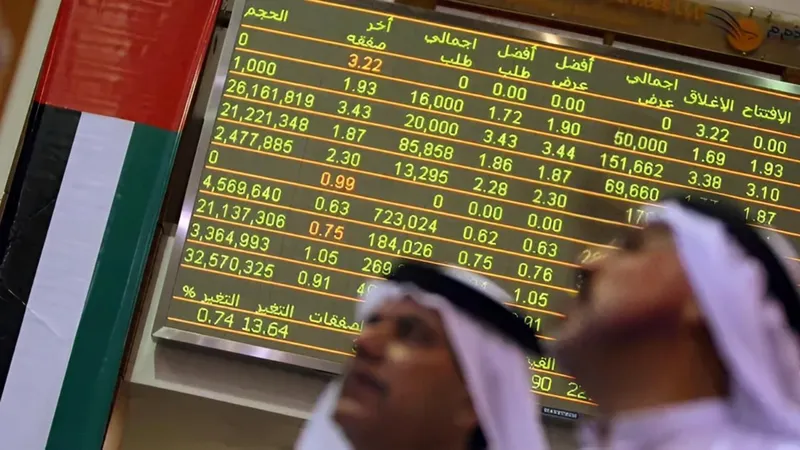
Dubai and Abu Dhabi stock markets posted mixed performances in the trading week ending Friday, October 30, 2026. The Dubai Financial Market General Index gained 0.64 per cent overall to reach 5,770.73 points despite declines in the final three sessions. In contrast, the Abu Dhabi Securities Exchange General Index fell 1.27 per cent to close at 9,466.34 points. Banking and property stocks were among the main drivers of volatility in both markets.
According to the Dubai Financial Market’s official bulletin, the index ended the previous week at 5,734.19 points and gained 36.54 points over five sessions. The Abu Dhabi index fell by 122.07 points, from 9,588.41 points on Friday, October 23, to 9,466.34 points on Friday, October 30.
The total value of trading on the Dubai Financial Market during the five sessions, including direct transactions, reached approximately AED 3.34 billion. Traders exchanged a total of 1.053 billion shares in 73,273 transactions.
Dubai’s index began the week with a 0.31 per cent gain on Monday and rose a further 1.96 per cent on Tuesday. However, the market reversed course on Wednesday, with the index declining over the final three sessions. Friday’s 0.81 per cent drop brought the index to 5,770.73 points, but gains in the first two sessions were sufficient to preserve a positive weekly return.
Among Dubai banking stocks, Emirates NBD fell around 2.6 per cent over the week to AED 29.22. The stock declined 3.5 per cent on Friday alone, weighing on the market index.
Property stocks delivered mixed performances. Emaar Properties gained 2.15 per cent over the week to close at AED 11.38, while Emaar Development fell 1.14 per cent to AED 12.12. Parkin shares rose 6.19 per cent, ending the week at AED 6.18.
Among the stocks recording significant moves, Watania International Holding gained 22.47 per cent over the week to AED 0.725. In contrast, Islamic Arab Insurance Company, known as Salama, fell 11.41 per cent to AED 1.32. Dubai National Insurance and Reinsurance rose 14.85 per cent in the week’s final session, although the increase was based on the trading of just 136 shares and should not be viewed as evidence of broad-based demand.
In the final session of the week, Emaar Properties recorded the highest trading value in Dubai at approximately AED 251.2 million. It was followed by Emirates NBD at AED 54.9 million, Emaar Development at AED 31.1 million, Parkin at AED 26.5 million and Dubai Electricity and Water Authority at AED 19.5 million.
In Abu Dhabi, the index rose 0.55 per cent on Monday and 1.09 per cent on Tuesday before declining by 1.60 per cent, 1.17 per cent and 0.12 per cent, respectively, over the next three sessions. Selling pressure in the second half of the week erased all gains from the first two sessions.
Abu Dhabi Islamic Bank shares fell around 8.56 per cent, from AED 21.74 at the end of the previous week to AED 19.88. In contrast, Aldar Properties gained 4.29 per cent over the week to AED 7.78, while ADNOC Drilling rose around 3.2 per cent to close at AED 5.84.
First Abu Dhabi Bank closed at AED 18.52, showing little change from the previous week. On Friday, the bank recorded the highest trading value among Abu Dhabi-listed stocks at approximately AED 116.5 million. Aldar followed with around AED 108.7 million, ADNOC Gas with AED 73 million, Abu Dhabi Islamic Bank with AED 66.2 million and International Holding Company with AED 65.4 million.
Reuters reported that weaker-than-expected financial results from some companies and growing concerns over regional tensions weighed on Friday’s trading. Dubai Financial Market Company shares fell around 1.6 per cent during the session after it reported a 4.3 per cent decline in quarterly net profit. In Abu Dhabi, 2PointZero Group shares dropped 2.5 per cent after the company reported a 25 per cent decline in quarterly profit.
Overall, Dubai’s modest weekly gain, compared with the decline in Abu Dhabi’s index, highlighted the differing performances of major stocks and corporate earnings across the two markets. Despite gains in some property and industrial stocks, selling pressure during the final three sessions remained a key factor weighing on the indices.