
Suspicious Activity by Iran-Linked Vessels Near UAE Internet Cables
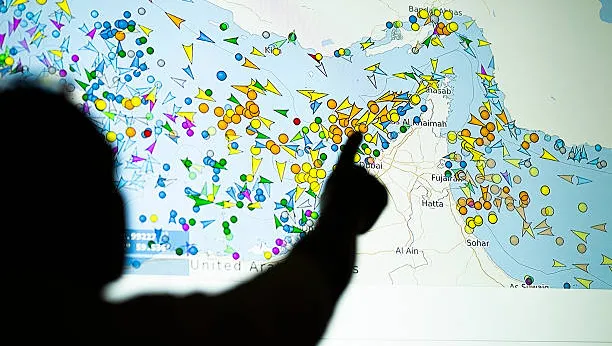
Maritime intelligence company Windward has reported unusual movements by three US-sanctioned commercial ships and an Iranian-flagged vessel near subsea communications cable routes in the Gulf of Oman. During October, the vessels travelled through areas crossed by critical cables serving the UAE and other Gulf countries, displaying unusual slowdowns, course changes, prolonged stops and deactivation of positioning systems. Windward said the activity may have been linked to mapping cable routes or preparations for sabotage, but no evidence has emerged that the cables were damaged or any sabotage was carried out.
In a report published on Thursday, October 29, 2026, Windward said maritime tracking data from October 5 to 28 showed that the vessels had operated near seven international communications cable systems, including 2Africa, Bay of Bengal Gateway (BBG) and Europe India Gateway (EIG). These cables connect the UAE, Oman and other countries in the region to communications networks across Asia, Africa and Europe.
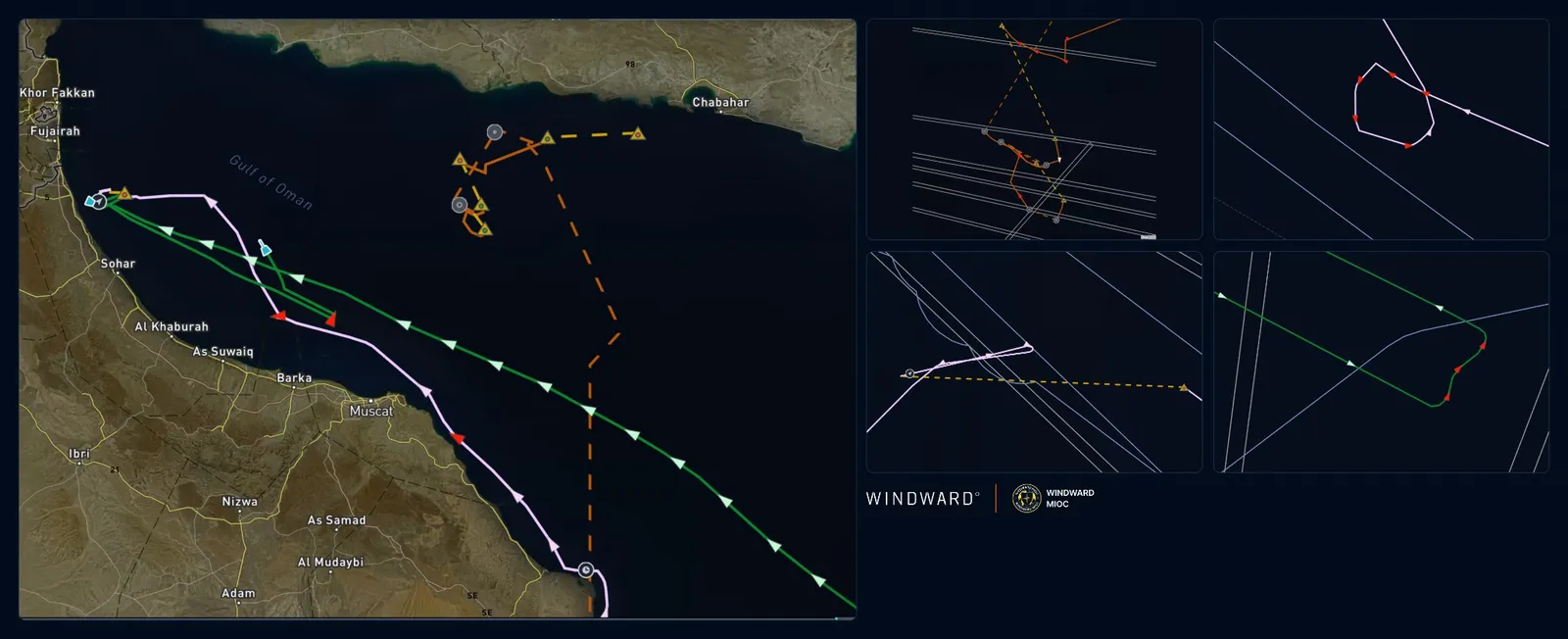
One of the most significant cases involved the Iranian-flagged oil tanker CELESTIAL SEA, IMO number 9397030, which is subject to US sanctions. On October 14 and 15, the tanker conducted circular manoeuvres at very low speed for more than four hours near the 2Africa cable route in waters off Oman’s Port of Sohar before switching off its Automatic Identification System (AIS).
After an 86-hour blackout, the vessel reappeared on tracking systems about 17 kilometres from where its signal had been lost, before heading towards the Shinas anchorage in Oman. According to data from Vortexa, the tanker was carrying no cargo during this period.
Of particular relevance to the UAE is the tanker’s sanctions history. The US Treasury Department sanctioned the vessel under its former name, HARMONY, on April 10, 2025. According to the department, the tanker was part of a shipping network managed by a UAE-based operator whose vessels had transported oil for the National Iranian Oil Company and Iranian military entities. However, this history alone does not establish any connection between the network and the recent activity near subsea cables.
Windward also recorded unusual behaviour by a US-sanctioned very large gas carrier. On October 23, the vessel departed Shinas, Oman, for Malaysia carrying about 494,500 barrels of liquefied petroleum gas. After slowing near the route of the 2Africa cable, however, it abruptly made a 180-degree turn and headed back towards Oman. The vessel switched off its tracking system shortly afterwards, and no new signal was received from it for five days, through October 28.
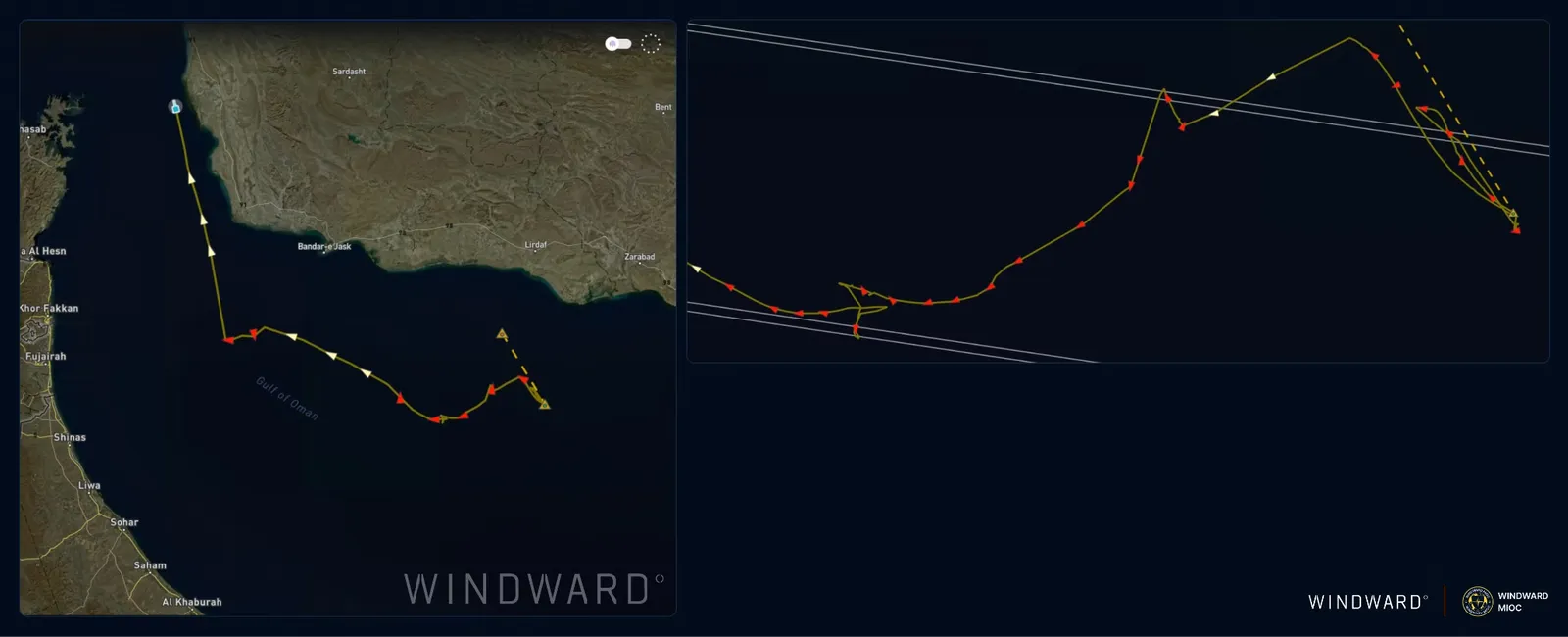
The third vessel, an Iranian-flagged very large crude carrier managed by the National Iranian Tanker Company, spent about 10 days travelling at less than one knot in waters between Jask and Chabahar, near four subsea cable routes, according to Windward. The tanker repeatedly switched off its tracking system, and no signal had been received from it since October 26. Windward did not disclose the names or IMO numbers of the tanker or the gas carrier in its public report.
Elsewhere in the report, Windward highlighted the movements of a 34-metre Iranian-flagged cargo vessel classified in maritime databases as a fishing support vessel. Between October 21 and 24, it made unusual low-speed movements along the routes of the EIG and TW1 communications cables. On October 25, it also crossed the routes of the FALCON cable and the UAE-Iran communications cable near Jask.
The vessel’s ultimate beneficial owner remains unknown. However, Windward stressed that there is no public evidence linking its owner to the Iranian government. The vessel had also stopped transmitting its location on October 26.
Windward’s report comes after Iranian officials warned in recent weeks that Gulf communication cables could be targeted if US and Israeli attacks resume. Reuters also reported on October 23, citing two senior Iranian security officials, that Tehran had drawn up plans to target the region’s subsea cables if war broke out again.
Windward said the pattern of prolonged stops, sudden course changes and disabled tracking systems could be consistent with efforts to map cable routes or prepare for sabotage operations. However, Automatic Identification System data alone cannot reveal what the vessels were doing underwater or whether they carried out any operations against the cables.
Subsea cables are critical infrastructure supporting internet connectivity, financial services and data centres across Gulf countries. Simultaneous damage to several communication routes could slow internet speeds and disrupt digital services across the region, although the UAE also has alternative connectivity routes.
At the time of publication, no damage or communication disruption linked to the activities of the four vessels had been confirmed. Authorities have also not established a direct connection between the vessels’ movements and any potential sabotage plan.