
Gargash: Ending the Iran War Requires Lasting Peace, Not a Temporary Fix
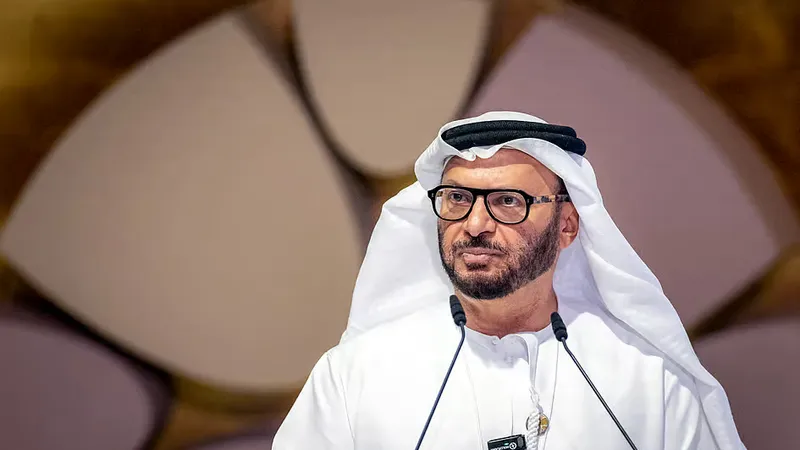
Anwar Gargash, diplomatic adviser to the UAE President, has called for a durable agreement to end the war involving Iran, saying the region needs a solution that prevents hostilities from resuming after a few months. He also stressed that alongside negotiations between Iran and the United States, regional countries should engage directly with Tehran on the future of their relations and regional security.
In an interview with Foreign Affairs published on September 24, Gargash said the region needed a lasting peace, warning that a temporary agreement that merely reduced hostilities for three, four or five months would not resolve the current crisis.
He said achieving such an outcome would require serious negotiations at multiple levels. According to Gargash, talks between the United States and Iran would be one element, but regional countries must also engage directly with Iran, individually or collectively, on fundamental regional issues.
Gargash stressed that these talks should not be limited to day-to-day matters and should address issues such as confidence-building, avoiding conflict and establishing a more sustainable framework for the region’s future. He said the goal should be to develop arrangements that could lay the foundations for greater long-term stability following the current crisis.
The UAE President’s diplomatic adviser also said Abu Dhabi had opposed from the outset the war that began on February 28 with US and Israeli attacks on Iran, and had conveyed this position to US officials and other partners. He said previous conflicts in the region had shown that such a war could become prolonged and complex, with consequences lasting for years.
Gargash added that the UAE had received no specific warning of imminent attacks before the war began, but the widening gap between Washington and Tehran in nuclear negotiations had led Abu Dhabi to take the possibility of conflict seriously.
He said that after the war began, the UAE had expected Iran to attack countries in the region, but the scale and intensity of the attacks exceeded initial assessments.
According to Gargash, Iran launched about 3,300 missiles and drones towards the UAE during the war, with 95 per cent targeting civilian infrastructure. He said UAE defence systems had intercepted the attacks at a rate “in the high 90 per cent range”. These figures were claims made by Gargash in the interview.
Gargash said that from the UAE’s perspective, “two wars” had effectively been taking place simultaneously in recent months: the US-Israeli war against Iran and a separate conflict between Iran and Arab countries in the region.
He added that Abu Dhabi had sought to distinguish the two conflicts, at least politically, and to make clear that regional countries had not initiated the US-Israeli war against Iran. Gargash also referred to the role of countries such as Oman and Qatar, which sought to mediate and find a way out of the conflict during the crisis.
Deterrence Alongside Diplomacy
Gargash stressed that the UAE’s ability to defend itself was not a substitute for diplomacy. He said establishing deterrence had been highly important for Abu Dhabi, but deterrence was not the ultimate objective and could now create greater scope for pursuing political and diplomatic solutions.
At the same time, he said the recent conflicts had severely damaged trust between Iran and the region’s Arab countries. Gargash distinguished between restoring normal relations and rebuilding trust, saying ties with Iran would probably resume and become functional again, but that rebuilding trust would be a more difficult and lengthy process.
The US Role in the Region
The UAE President’s diplomatic adviser also said the recent war, contrary to some perceptions, had increased rather than diminished the importance of the United States to regional security.
However, he stressed that regional countries could not rely solely on US military power for their defence, as Washington would defend its own interests first.
Gargash said a country such as the UAE must strengthen its defence capabilities while keeping the diplomatic track open. He described relations with Washington as a central pillar of UAE foreign policy, while adding that Abu Dhabi was also pursuing “strategic autonomy” and expanding its ties with Asian countries.
Gargash also said China could potentially help ease tensions. He said Beijing could play a constructive role in securing shipping through the Strait of Hormuz and use its influence over Iran to encourage Tehran to pursue a political solution.
UAE-Saudi Relations “Not at Their Best”
A key part of the interview focused on Gargash’s remarks about relations between the UAE and Saudi Arabia. He acknowledged that ties between the two countries were currently “not at their best”, but stressed that their security and economies were closely interconnected.
Gargash said the UAE could not consider itself stable unless Saudi Arabia was also stable, particularly given their shared border and security ties. He stressed that prolonged disagreements would benefit neither country nor the wider region.
Gargash also confirmed that economic competition between the two countries had intensified as Saudi Arabia implemented its Vision 2030 economic transformation plans and the UAE sought to maintain its position as one of the region’s open economies.
However, he said the economic success of one country did not necessarily come at the expense of the other, and that both could grow simultaneously. Gargash said competition should remain “within a defined framework” and that disagreements should be managed and contained.
Referring to Houthi attacks on Saudi Arabia, he said the kingdom’s security was important to the UAE and that Abu Dhabi was concerned about attacks threatening Saudi security.
Gaza, Israel and a Palestinian State
In another part of the interview, Gargash addressed relations between the UAE and Israel, saying Abu Dhabi had used the relationship to facilitate the delivery of humanitarian aid to Gaza.
He said the value of UAE aid to Gaza had reached nearly $4 billion.
He added that relations with Israel had also allowed the UAE to raise its concerns directly over developments in the West Bank, although he acknowledged that Abu Dhabi’s ability to influence Israeli government policies was limited.
Gargash reiterated the UAE’s support for an independent Palestinian state and a two-state solution, saying Abu Dhabi was part of the broader Arab consensus on the issue.
He also said reforming the Palestinian Authority was essential for it to play an effective role in any future political settlement.
Economics Over Confrontation: The UAE’s Vision for the Region
Asked about the emergence of new regional security arrangements, the UAE President’s diplomatic adviser said the country’s policy was based on a “geoeconomic” approach and that the Middle East’s future should focus more heavily on economics, trade and development.
He said the UAE had placed economic development, trade agreements and more open economies at the heart of its regional policy. He added that the region’s future should be built on economic cooperation and shared interests rather than the continued cycle of political and military confrontation.