
WSJ: US Warns Regional States of Possible Short, Intense War With Iran After Elections
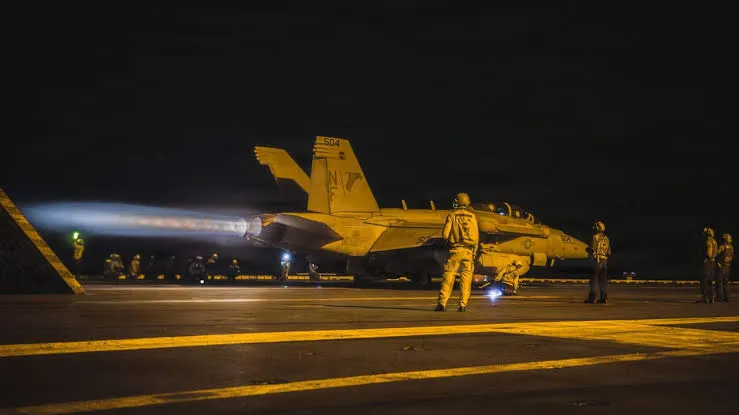
The Wall Street Journal, citing informed sources, reported that the United States has warned several Arab countries in the region through diplomatic and military channels to prepare for the possibility of a new round of “short but intense” military operations against Iran after the US congressional midterm elections on November 3. The warning comes as Washington and Tel Aviv prepare new military options aimed at weakening Iran’s capabilities and forcing Tehran to negotiate.
According to The Wall Street Journal, people familiar with Donald Trump’s thinking said the US president has not yet made a final decision on launching new strikes but is inclined to carry out a large-scale operation after the elections. The operation could target Iran’s infrastructure and nuclear facilities, although reaching a negotiated agreement remains among the options under consideration by the White House. The report came after The New York Times said last week that the United States and Israel had stepped up exercises for a possible “short but intensive” operation targeting Iran’s nuclear facilities, energy infrastructure, and missile and drone arsenal.
According to The Wall Street Journal and flight-tracking data, the US military is transferring another Patriot missile defence system from Texas to Israel while withdrawing some personnel from vulnerable bases in the Middle East. US forces are also replenishing munitions stockpiles and preparing bombers and fighter jets for possible strikes. An aircraft carrier strike group and a Marine expeditionary unit are also expected to join around 20 US warships in the region next month, although some vessels may leave at the same time. Israel, meanwhile, has prepared plans and targets for new strikes, while Prime Minister Benjamin Netanyahu continues to call for attacks to resume with the aim of weakening Iran’s military capabilities and ultimately toppling its government.
Responding to the report, the White House declined to comment on “sensitive military plans that may or may not exist” but stressed that Trump was keeping all options on the table to prevent Iran from obtaining a nuclear weapon. Trump, who had previously said he would not attack Iran before the elections, told a campaign rally in Florida on Friday, October 23, referring to “Operation Epic Fury” — the name of the US military operation against Iran that began on February 28 — “Maybe we’ll launch another little Epic Fury, or they will make a deal.” On the evening of Tuesday, October 27, he also said that prolonging negotiations until the elections would not help Tehran and pointed to possible developments over the following week or two. Asked by reporters on Wednesday about the possibility of an attack after the elections, he said: “I can’t say that, but anything could happen.”
By contrast, The Wall Street Journal reported that Iran has warned through public and private messages that it would target economic and civilian sites across the region if new attacks begin. Two Iranian security officials had previously told Reuters that Tehran had prepared detailed plans to strike undersea communications cables in the Arabian Gulf. The Wall Street Journal said Iran, which targeted US bases, energy facilities and airports in Gulf countries during earlier phases of the war, still possesses hundreds or potentially thousands of missiles despite the damage it has sustained. It has also used the pause in fighting to strengthen its air defences and assemble new ballistic missiles from stockpiled components. The situation has heightened concerns among Arab Gulf states, which are working with the US to replenish their severely depleted stocks of air defence interceptor missiles.
On the diplomatic front, Reuters reported on Wednesday, October 28, citing informed sources, that Qatari mediators had presented Tehran on Sunday, October 25, with a draft of a new agreement aimed at ending the war. The proposal includes a seven-day plan to address mutual concerns and implement confidence-building measures. However, while a source familiar with the negotiations said Tehran was reviewing the text, a senior Iranian official described Qatar’s proposals as “unacceptable” and said the ideas did not constitute a formal offer. Alongside efforts by Qatar and Pakistan, delegations led by Saudi Defence Minister Prince Khalid bin Salman, Pakistan’s army chief Field Marshal Asim Munir, and Turkish intelligence chief Ibrahim Kalin met in Tehran on Monday, October 26, with President Masoud Pezeshkian, Foreign Minister Abbas Araghchi and Iran’s Supreme National Security Council Secretary Mohsen Rezaei to discuss ways to ease regional tensions. However, disagreements over the nuclear programme, sanctions relief and an end to the US naval blockade continue to obstruct an agreement.
The current war began on February 28 with US and Israeli strikes on Iran. Despite a temporary agreement reached in June, hostilities quickly resumed, restricting shipping through the Strait of Hormuz and driving up oil and gas prices. Meanwhile, Rafael Grossi, Director General of the International Atomic Energy Agency, told a UN Security Council meeting on Tuesday, October 27, that no signs of work to repair or rebuild Iranian nuclear facilities damaged in the 2025 and 2026 attacks had been detected since June 2025, although agency inspectors still lack access to the sites.