
Dubai Introduces New Shared Housing Rules to Provide Residents with More Space and Better Amenities
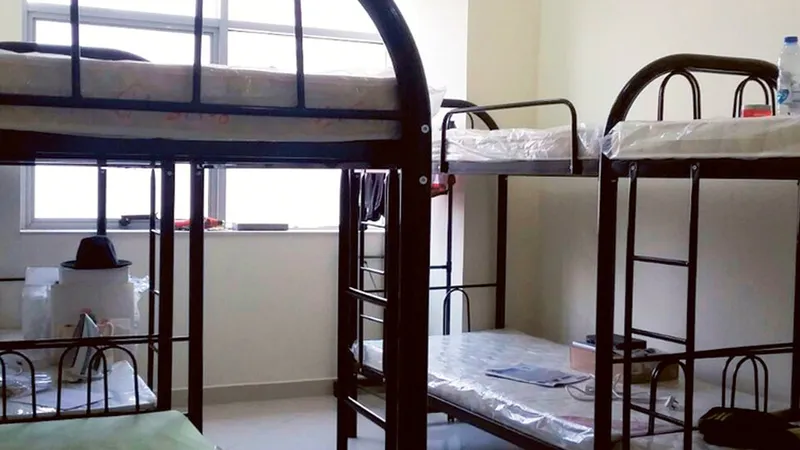
The introduction of new shared accommodation regulations in Dubai will significantly change living conditions in shared apartments and villas. Key requirements include reducing the number of occupants per room, setting a minimum space allowance for each resident and expanding sanitation facilities—changes that could increase bed-space rents in some areas.
Dubai’s new shared accommodation rules came into effect on September 8, 2026. Owners of buildings and villas previously used for shared housing have until September 8, 2027, to bring their properties into compliance with the prescribed standards.
In addition to setting minimum living-space and amenity requirements, the regulations make official permits mandatory and restrict shared accommodation operations to areas approved by Dubai Municipality.
Minimum 5 square metres of sleeping space per person
Haroon Khan, who operates in the shared property rental sector in Dubai’s Al Rashidiya area, said the first step in implementing the new regulations is to measure bedrooms and determine the permitted capacity of each room.
Under the new guidelines, each resident must have at least 5 square metres of sleeping space, he said. As a result, the permitted number of occupants in some rooms may be reduced according to their size.
New standards set for bathrooms and kitchens
Under the new regulations, the number of bathroom facilities must be proportionate to the number of residents.
In shared accommodation for individuals, where toilets and showers are separate, there must be at least 1 toilet for every 4 residents and 1 shower for every 6 residents.
Where the toilet and shower are located in the same space, at least 1 complete bathroom must be provided for every 4 residents.
Kitchens must also provide at least 1 square metre of space per resident and comply with public health and safety standards.
Shared accommodation buildings for individuals must provide laundry and clothes-drying facilities, as well as multipurpose rooms appropriate to the number of residents.
In shared family accommodation, each family must have a private bedroom with its own en-suite bathroom.
Khan said the regulations could make life in shared accommodation quieter and more comfortable.
“These changes will reduce disputes over bathroom use, while allowing all residents to use the kitchen and prepare their meals comfortably,” he said.
Official permits mandatory for shared accommodation
Under the new regulations, shared accommodation may operate only in areas approved by Dubai Municipality, and property owners must obtain the required permits.
An entire building or villa must also be designated for shared accommodation. A property cannot be used simultaneously to house both individuals and families.
Engineering consultants must provide details including room sizes and occupancy capacity, and assess the building’s fire protection, health, environmental, security and electrical systems.
Khan said the properties he manages are located in approved areas, adding that he had contacted engineering consultants to measure the buildings and assess the new requirements.
Dubai bed-space rents could rise by AED 200 to AED 300
Abdul Ghaffar, a property consultant operating in Dubai’s Al Karama area, said he was in contact with an apartment owner who was preparing the documents required to obtain a shared accommodation permit.
He said it was not yet clear how the new standards would affect rents, as owners were still assessing the changes required in their buildings.
He explained that if an apartment had to reduce its number of occupants to comply with room-size or bathroom requirements, the remaining residents might have to pay a larger share of the rent and other expenses.
The property consultant estimated that once the mandatory changes are implemented, monthly rent for each bed space in some areas of Dubai could rise by about AED 200 to AED 300.
However, he stressed that the figure was only an estimate and that any increase would depend on the property’s location, the area and the type of accommodation.
While the new regulations are intended to improve living standards, facilities and safety for residents of shared accommodation in Dubai, their implementation could raise living costs for some tenants.