
UAE: Oil Leak From Damaged Tanker Stopped as Pollution Along Northern Coast Declines Sharply
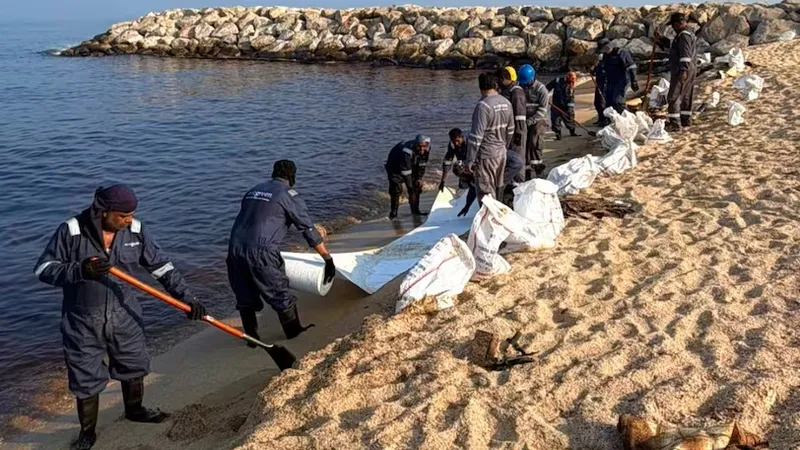
The UAE Ministry of Energy and Infrastructure announced on Friday, October 30, 2026, that the oil leak from the tanker GEM NO. 2, which was struck by a projectile near Ras Al Khaimah on October 9, had been stopped, with the latest field inspections detecting no new leakage from the vessel. Meanwhile, the Ministry of Climate Change and Environment reported a significant decline in oil pollution along the country’s northern coast, although clean-up and preventive operations remain ongoing.
According to the Emirates News Agency (WAM), the Ministry of Energy and Infrastructure said in a statement that specialist teams were continuing efforts to secure the tanker and address damage caused by the incident. The statement marked the first time the ministry had explicitly identified GEM NO. 2 in connection with the recent pollution containment operation.
The ministry said technical measures included repairing damaged sections, restoring some operational systems and assessing the structural integrity of the vessel to determine the safest method for further handling. Marine and aerial monitoring operations are also continuing with the use of satellite imagery.
GEM NO. 2, an oil tanker with IMO number 9735373, was struck by an unidentified projectile on October 9 about 13 nautical miles west of Al Jazirah in Ras Al Khaimah, causing a fire. All 22 crew members were rescued. The party responsible for the attack has not yet been officially identified.
The Ministry of Climate Change and Environment said the latest satellite imagery available as of Friday, October 30, showed that the oil slick was mainly concentrated in waters off Umm Al Quwain, with part of it extending to coastal areas of Ras Al Khaimah, Ajman and Sharjah.
The ministry said the severity of the pollution had declined significantly, while containment, recovery and clean-up operations were continuing. The response primarily involves mechanical oil-recovery methods and the use of chemical dispersants in line with international standards and approved technical guidelines.
UAE authorities also said the temporary closure of several beaches and coastal areas was a preventive measure to protect public health and the marine environment and did not necessarily mean pollution had been detected in all closed areas. The restrictions provide the time needed to complete field assessments and clean-up operations.
The Ministry of Climate Change and Environment also stressed that fish and other food products sold in the country’s markets were safe and fit for human consumption. It added that air quality in areas affected by the pollution was being continuously monitored.
Meanwhile, Etihad Water and Electricity said it had implemented preventive measures to protect drinking water production facilities, including monitoring seawater quality at intake points, testing produced and distributed water, and verifying compliance with established standards.
The company said these preventive measures would not disrupt water supplies to customers.
The Ministry of Energy and Infrastructure, the Ministry of Climate Change and Environment, and the UAE’s National Emergency Crisis and Disaster Management Authority said cooperation between federal and local entities had helped secure the tanker, contain the sources of the oil leak and limit the spread of pollution.
Despite the improvement in conditions, UAE authorities urged citizens and residents to continue following official instructions concerning beaches and coastal areas subject to preventive restrictions until further notice.