
Dubai Aims to Cut Congestion by 5% and Accidents by 20% Using AI
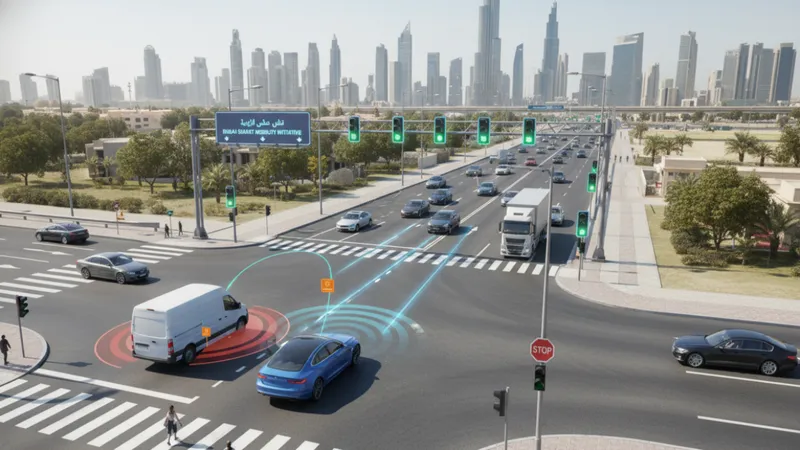
Dubai’s Roads and Transport Authority (RTA) is targeting a 3 to 5 per cent reduction in traffic congestion and a 10 to 20 per cent decline in accidents involving newly licensed drivers under its updated artificial intelligence strategy. The initiative also aims to accelerate government services, reduce customer waiting times and boost productivity across the transport sector.
Under the strategy, the time required to process cases and complaints is expected to fall by 20 to 30 per cent. The RTA also plans to reduce waiting times at customer service centres by 14 to 16 per cent and service delivery times at these centres by 15 to 20 per cent.
Other targets include reducing procurement processes for goods and services by 10 to 15 per cent and saving 10 to 15 per cent of working hours across operational and engineering departments.
The strategy was launched under the direction of Mattar Al Tayer, Director-General and Chairman of the Board of Executive Directors of the RTA, and is designed to expand the use of AI across Dubai’s transport network and government services.
The new strategy covers 41 business areas across the RTA’s agencies, sectors and departments. Its first two implementation phases will focus on 11 areas, including vehicle and driver licensing, traffic management, roads, public transport, customer services, procurement and human resources.
As part of the authority’s broader programme, around 200 AI-powered products are expected to be developed over two and a half years. Of these, 40 have been selected for the initial phases, with 11 already completed and launched. The strategy will also include four infrastructure projects.
The RTA expects the programme to generate more than AED 300 million in added value annually and enable 50 per cent of its operations and services to transition to agentic AI systems.
Agentic AI refers to systems that can not only analyse information and answer questions but also intelligently carry out a range of tasks and multi-step processes.
From digital services to intelligent systems
Highlighting the importance of the new strategy, Al Tayer said the RTA was moving beyond the use of AI to support employees and operational activities towards systems capable of analysing data, predicting outcomes, supporting decision-making and delivering end-to-end services.
He said the programme was aligned with Dubai’s broader goals of accelerating AI adoption across government entities and strengthening the city’s position as a global hub for the development of intelligent solutions.
Al Tayer said: “This strategy marks an advanced stage in the RTA’s digital transformation journey, paving the way for a fundamental shift from using AI to support operations to intelligent systems capable of analysing data, predicting outcomes, supporting decision-making and delivering end-to-end services.”
He added that the authority plans to expand the use of advanced technologies in the planning, operation and management of road and public transport networks, while delivering proactive and personalised services tailored to users’ needs, saving them time and effort and making travel around Dubai easier.
According to Al Tayer, investing in AI is an investment in the future and in Dubai’s competitiveness. He said the authority aims to boost productivity and optimise resources by harnessing advanced technologies, data, skilled professionals and strategic partnerships.
Vehicle services in under five minutes through Mahboub smart assistant
One of the key projects under the new strategy is the upgrade of the RTA’s Mahboub smart conversational assistant.
Previously used mainly to answer customer queries, the assistant is being transformed through agentic AI into a system capable of completing various services and transactions through the RTA app, the authority’s website and WhatsApp.
Users can currently access five vehicle licensing services and around 100 information services through the upgraded system.
Integration with the UAE PASS digital identity platform and Dubai’s electronic payment services has also made it possible to complete certain vehicle-related transactions in under five minutes.
The RTA plans to double the speed of service delivery through the system. It is also targeting a 10 per cent share of services delivered through this channel by the end of 2026, rising to 50 per cent by the end of 2027.
Project no-objection certificates to be issued three times faster
Another initiative under the strategy involves using AI to review and issue electronic no-objection certificates (eNOCs). These certificates are required for construction activities and projects near infrastructure and facilities managed by the RTA.
The new AI-powered system guides applicants through the submission process, conducts an initial review of supporting documents and provides the relevant departments with the engineering data and analysis needed to assess and approve applications.
Around 130,000 such certificates are currently issued each year, with demand growing by approximately 11 per cent.
Through the initiative, the RTA aims to triple application processing speeds and save more than 700,000 days annually across the process.
Customer satisfaction is also expected to rise by more than 5 per cent, while revenue from the services is projected to increase by 5 to 10 per cent.
Vehicle documents to be reviewed up to 21 times faster
The use of AI to audit and review vehicle licensing documents is another component of the new strategy.
A system known as the Agentic AI Auditor uses machine learning and optical character recognition to review documents, detect discrepancies, recommend corrective action and record and retain audit trails.
Covering seven priority services, the system is designed to increase audit speeds by up to 21 times.
The scope of reviews will also be expanded from limited sampling to all documents covered by the system, saving employees more than 25,000 hours of manual work each year.
Another part of the programme involves developing an intelligent system to review outsourcing contracts.
Before payments are approved, the system reviews outsourcing contracts, analyses employee attendance records and work outputs, assesses compliance with contractual obligations and accelerates invoice reviews.
Twenty AI agents to improve Dubai’s bus network
Public transport is another key area covered by Dubai’s new AI strategy.
The RTA is developing an intelligent bus network planning system that will use around 20 AI-powered agents to help specialists assess and improve the network.
The system will support bus network planning and development by analysing performance indicators, identifying service gaps, simulating different operational options and recommending suitable solutions.
The RTA aims to make bus network analysis and assessment five times faster and reduce the time required to implement changes to bus services from around 60 days to 48 days.
The initiative is also expected to improve bus schedule adherence by up to 10 per cent and increase the ratio of operating costs covered by revenue by 3 to 7 per cent.
The ultimate goal is to improve the passenger experience and make buses a more attractive option for travelling around Dubai.
More than 180 AI use cases identified across Dubai’s RTA
Ahmed Hashem Bahrozyan, CEO of the Corporate Technology Support Services Sector at Dubai’s Roads and Transport Authority, said the authority had identified more than 180 artificial intelligence use cases and quick-win initiatives across 11 business areas, involving 12 departments.
Of the 40 AI products identified during the initial stages, 11 have been launched so far, including five in planning and business development, five in vehicle licensing and one in road right-of-way management, he said.
Bahrozyan also highlighted the growing use of Microsoft Copilot among the authority’s employees, saying its active usage rate had exceeded 90 per cent among registered users.
“The use of AI has helped employees perform their duties more efficiently, complete tasks faster and improve organisational productivity,” he added.
According to Bahrozyan, the use of Microsoft Copilot has reduced the time required to complete work-related tasks by 10 per cent.
Dubai’s Roads and Transport Authority has also submitted 34 works for intellectual property registration, received approval for a work related to its rail division’s AI chatbot and won the “AI World Series 2026” award.
The authority has also developed eight strategic initiatives in collaboration with international technology companies, including Huawei, Boston Consulting Group and Microsoft.
Bahrozyan stressed that, in addition to developing smart systems, the new strategy focuses on enhancing employees’ ability to use AI across the authority’s various departments.
He said this goal would be pursued through specialised training, the wider adoption of smart tools and the promotion of a culture of continuous learning.