
Car Imports by Iranians Living Abroad Resume
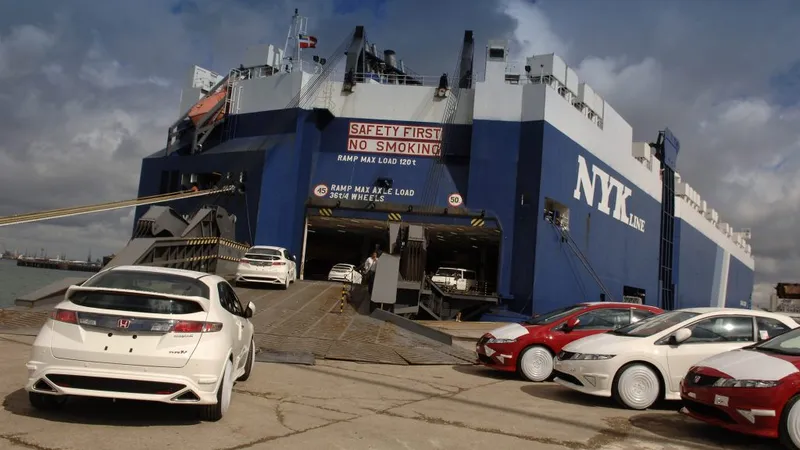
Following the resolution of implementation uncertainties and customs procedures, including valuation rules, imports of personal passenger vehicles owned by Iranians residing abroad have resumed under a new customs directive, with a deadline of March 20, 2027. The imports had previously faced restrictions and temporary suspensions.
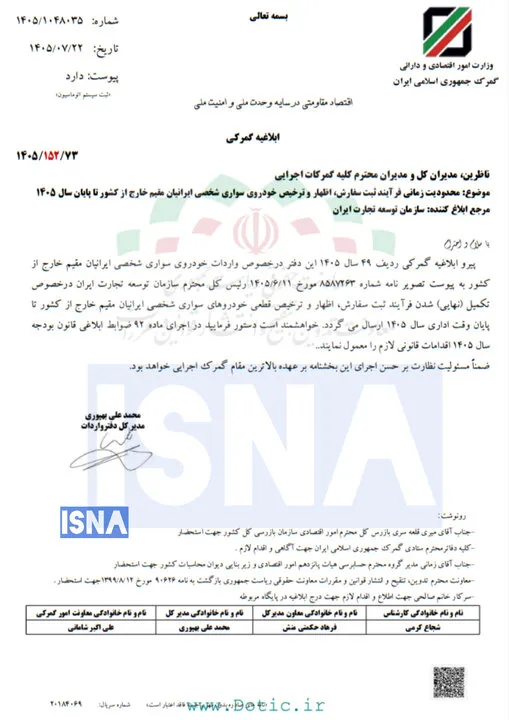
According to ISNA, customs authorities had issued seven conditions for the provisional clearance of vehicles without a valuation identifier (TSC), while the vehicle registration process remained suspended pending price determinations. The Trade Promotion Organisation of Iran and the Islamic Republic of Iran Customs Administration have now authorised the continuation of vehicle imports by Iranians residing abroad until March 20, 2027, in accordance with legal regulations.
Under the new customs directive, issued following correspondence with the Trade Promotion Organisation of Iran, the registration of import orders, customs declarations and final clearance of personal passenger vehicles owned by Iranians residing abroad are subject to a specific timeframe. All procedures must be completed by the close of business on March 20, 2027.
Timeline Set: Deadline for Final Clearance
Under the directive, customs offices nationwide must implement Article 92 of the regulations issued under the 2026-27 Budget Law and manage the entry and clearance of these vehicles within the stipulated deadline of March 20, 2027.
The decision indicates that, contrary to earlier speculation that the process would be suspended or prolonged, the government has kept the import channel open while imposing regulatory requirements and deadlines to prevent cases from remaining unresolved at ports and customs facilities for extended periods.
The deadline comes after the valuation of these vehicles by the working group established under Note 6 of the Automobile Law, as well as the requirement to secure a commitment to pay any difference in import duties before their physical release, created challenges for applicants. With the final deadline now set for March 20, 2027, the government appears to be seeking a balance between foreign exchange market discipline, oversight by bodies such as the Supreme Audit Court and the General Inspection Organisation, and the facilitation of customs clearance procedures.
Source of Foreign Currency and the Market Regulation Test
However, despite the revised clearance deadline, continued imports under this framework will require stringent oversight of financial flows and the source of foreign currency. Previous warnings from Central Bank officials and members of parliament about a reverse cycle of capital flight, with imported vehicles being used as a means of transferring foreign currency out of the country, require regulators to monitor financing methods and the impact of these vehicles on domestic prices more closely while enforcing the statutory deadlines.
Ultimately, the announcement of a firm clearance deadline of March 20, 2027, indicates that the issue of vehicles imported by Iranians living abroad has moved beyond its temporary uncertainty. However, the process will succeed only through coordination among the Ministry of Industry, Mine and Trade, the Central Bank and customs authorities, ensuring that the scheme supports market regulation and legal compliance rather than speculative activity.