
Trump: I Rejected Iran’s Proposal for a Deal and the Reopening of the Strait of Hormuz
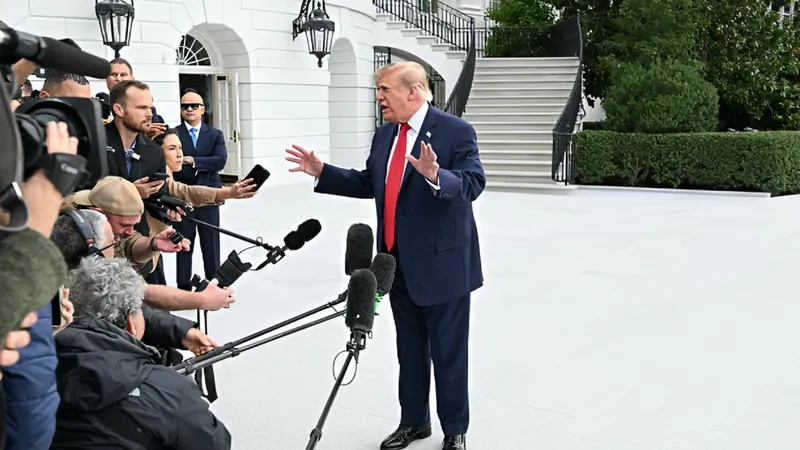
US President Donald Trump told reporters outside the White House on Saturday, September 26, that he had rejected Iran’s proposal for an agreement to reopen the Strait of Hormuz. He said Tehran wanted the waterway reopened immediately because it was “losing badly.” Trump’s remarks came several hours after The Wall Street Journal, citing US officials, reported that Washington had rejected Tehran’s seven-day plan.
“They made an offer, but I rejected it,” Trump said. He added that he was not opposed to an agreement in principle: “They want to make a deal, and I think that is fine. I like making deals too, but that deal would not be acceptable.”
The US president claimed Washington had “complete control” of the Strait of Hormuz and said 29 ships had exited the waterway the previous night. He said vast quantities of oil were flowing through the strait, while Iran was “not getting any money because it makes its money from the Strait of Hormuz.”
Trump said Iran had “trapped itself” by closing the Strait of Hormuz. “They said, ‘Let’s close it and create problems for the world.’ Then I came in, and we imposed the biggest blockade in military history. It is a wall of steel,” he said. Trump added: “They wanted to close the strait, and I said, ‘Fine, we will close it to you, but everyone else can use it.’”
Iranian Foreign Minister Abbas Araghchi said on Friday, on the sidelines of the United Nations General Assembly in New York, that Iran had sent the United States “a specific seven-day plan” through Qatar. He said the countdown would begin once Washington accepted the proposal. The steps required of the United States would take four to five days, the strait would reopen on the sixth day, and negotiations on a final agreement would begin on the seventh.
Under the plan, the United States would be required to lift its naval blockade of Iranian ports, release Iran’s frozen assets, grant sanctions waivers for Iranian oil sales and observe a ceasefire on all fronts, including Lebanon. Araghchi said the terms were based on a memorandum of understanding signed by the two countries in June, adding that “the choice is now America’s.”
The Wall Street Journal previously reported, citing US officials, that Trump had told his aides he expected the bombing of Iran to resume after the congressional midterm elections in November. According to the newspaper, Washington informed Tehran and regional mediators that Trump did not intend to lift the naval blockade of Iranian ports.
The US military reimposed the blockade of Iranian ports on July 14, after the collapse of the ceasefire established under the June memorandum. According to US Central Command, 122 vessels had been diverted between then and Friday. The current war began on February 28 with US and Israeli air strikes on Iran and has continued for nearly seven months.